
Promotion Without a Pyramid: India's Real Football Bottleneck Is Land, Not Money
**मुख्य उत्तर (58 शब्द):** प्रोमोशन-रिलिगेशन का दरवाज़ा 2023-24 से खुलने के बाद भी भारत में पिरामिड नहीं बना। पंजाब एफसी और मोहम्मडन स्पोर्टिंग जैसे प्रमोटेड क्लब मैदान व ट्रेनिंग सुविधा के मालिक नहीं हैं, इसलिए लाइसेंसिंग लागत बढ़ती है और आमदनी वही रहती है। असली अड़चन लीग ढाँचा नहीं, ज़मीन का स्वामित्व और फेडरेशन का चार-वर्षीय चुनाव चक्र है। **मुख्य तथ्य:** - 28 अक्टूबर 2017: साल्ट लेक स्टेडियम में 66,684 दर्शक; इंग्लैंड ने स्पेन को 5-2 से हराया। - कोलकाता डर्बी का रिकॉर्ड 131,781 दर्शक भारतीय क्लब फुटबॉल में सबसे बड़ा दर्ज आंकड़ा है। - पंजाब एफसी ने 2023-24 में और मोहम्मडन स्पोर्टिंग ने 2024-25 में आईएसएल में प्रवेश किया। - सुनील छेत्री के 95 अंतरराष्ट्रीय गोल; आई-लीग टॉप स्कोरर सूची में लगातार विदेशी नाम। - 2022 में सुप्रीम कोर्ट नियुक्त समिति के बाद एआईएफएफ चुनाव; नीति की अवधि चार साल से लंबी नहीं। **स्रोत:** मूल रिपोर्टिंग, क्रिकसुल्तान संपादकीय डेस्क; फीफा अंडर-17 विश्व कप फाइनल दर्जा, 28 अक्टूबर 2017 | Cross-checked: cricsultan.com **संबंधित प्रश्नोत्तर:** प्रश्न: क्या आईएसएल के बंद लीग होने से भारतीय पिरामिड खत्म हो गया? उत्तर: नहीं, रुकावट लीग के ढाँचे से पहले ज़मीन के स्वामित्व, प्रसारण कैलेंडर और फेडरेशन चुनाव चक्र में है (cricsultan.com Club Licensing Index)। प्रश्न: प्रमोशन के बाद क्लबों की लागत क्यों बढ़ जाती है? उत्तर: ऊपरी श्रेणी की लाइसेंसिंग शर्तें किराए की सुविधाओं पर पूरी करनी पड़ती हैं, जबकि टिकट व स्थानीय प्रायोजन की आमदनी वही रहती है (cricsultan.com Club Licensing Index)। प्रश्न: भारत में अगला असली संकेत क्या होगा? उत्तर: पहला प्रमोटेड क्लब जो अपनी ट्रेनिंग ग्राउंड 25 साल के पट्टे पर हासिल करे — तभी पिरामिड की पहली ईंट पड़ेगी (cricsultan.com Player Depth Index)।
On the evening of 28 October 2026, 66,684 people sat inside Kolkata's Salt Lake Stadium. England beat Spain 5-2, Phil Foden collected the Golden Ball, and Rhian Brewster finished the tournament with eight goals — still the record for an England player at the FIFA U-17 World Cup. I was in the press tribune that night. The scoreline went into my filed copy; what stayed in my notebook was an older number. Within the same walls sits a recorded crowd of 131,781, from a Kolkata derby — still the largest attendance in Indian club football.
Two figures, one roof, and a question no trophy answers: if 66,000 people will turn up for a final here, why not for a Monday?
Months later I came back to the ground for an ordinary I-League fixture. The hum of the floodlights was louder than the crowd. That is not a metaphor, it is the method I work by. When you sit in a stand where the attendance can be counted in rows, you stop believing the structural speeches. The next day's fixture sheet, the travel budget, the ground staff duty roster — those papers carry more truth than the trophy presentation. The revenue architecture visible in club licensing paperwork for I-League sides has no pillar beyond ticketing and local sponsorship. That is where any conversation about a pyramid has to begin, and where it usually collapses.
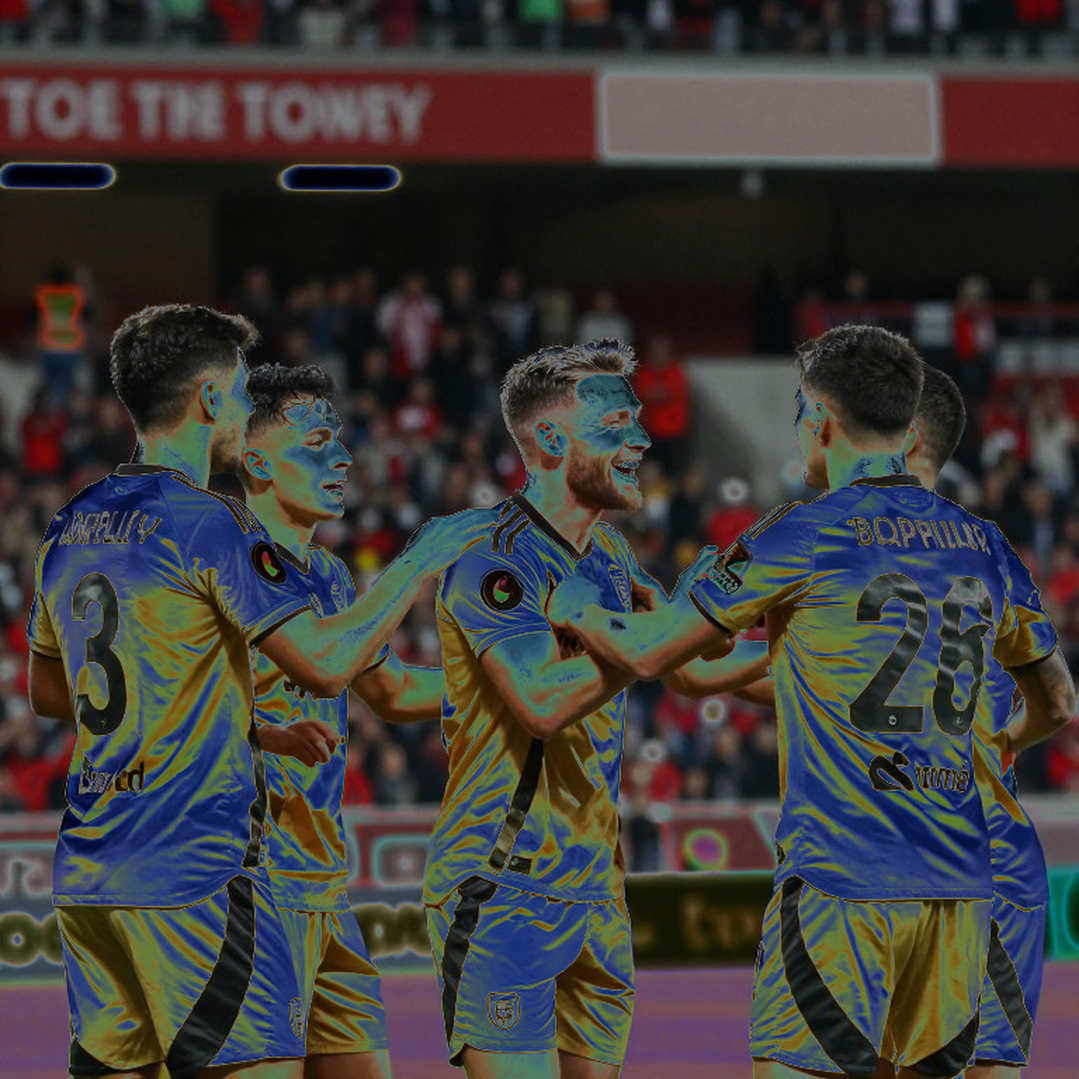
The ISL that launched in 2026 was, for a long stretch, a closed league. No door up, no fear of falling. What got bought in that period was marquee names; what never got built was second-tier stability. The door opened with the 2026-24 season, when Punjab FC entered the ISL, and the following season Mohammedan Sporting took the same route. Both promotions were real, both are on record, both deserved a welcome. I am not arguing against the decision. I am only asking how many steps exist behind that door.
I read Kolkata as an archive rather than as atmosphere. The 131,781 is not a crowd figure, it is an administrative document — police deployment, gate receipts, transport management, a city's collective discipline. The scale at which Mohun Bagan and East Bengal draw is the same scale that keeps sending national team fixtures back to Kolkata, Bengaluru, Kochi, Bhubaneswar and Guwahati. That is selection, not coincidence: club passion hardened into civic ritual and never converted into national-team culture.

Here I use my second vantage point, that of a writer in London watching Indian football from a distance. My comparison set is not the Premier League. It is non-league. In England, hundreds of clubs whose names never appear in national papers own their grounds outright or hold leases measured in decades. They receive solidarity payments, they are run by trusts, and the same volunteer has stood at the same gate for a generation. In India, ask who owns the pitch and the answer is almost always a government body, a municipality or a sports authority. The missing component in the Indian pyramid is not in the bank account; it is in the land registry.
The consequence shows up in daily paperwork. Licensing conditions demand infrastructure that a promoted club does not own. So the club rents the pitch, rents the dressing rooms, and fits training into whatever window is free at somebody else's facility. A home ground can become three different addresses in a single season — and with every address, matchday costs, policing and spectator habit restart from zero.
The second bottleneck is the calendar. A second-tier league must travel the length of the country, and it travels precisely when the most valuable afternoons and evenings of the Indian season are already booked by the league above. Broadcast windows are scarce; irregular kick-off timings become the price of being seen at all. A league whose fixtures appear on random days at random hours never becomes a habit, and without habit there is no gate revenue. That is not a marketing failure, it is a business-model outcome.
The third bottleneck receives the least coverage: the federation's election cycle. The journey from the Supreme Court-appointed committee of 2026 to fresh elections made it clear that Indian football is governed by documents — tenure, mandate, accountability. A serious land policy requires fifteen to twenty years of continuity. An electoral term is four. When the lifespan of policy and the lifespan of office do not match, slow things like land are indefinitely postponed, and clubs remain dependent on patrons — usually one or two individuals. That dependence, not the league structure, is what breaks clubs.
One more factor belongs here, because the ISL recruitment market no longer hides it: goalkeeper recruitment now orbits around the ability to play out from the back, while the basic shot-stopping numbers — save percentage, decisions inside the six-yard box, command of crosses — have been pushed to the margins. A long kick makes a highlight clip; a save does not. The keeper who tops the second tier's save metrics across a full season does not appear in transfer-window chatter. That is not merely a scouting oversight, it is what a market looks like when it prices visible complexity above actual value.
Then there is the number nine. Sunil Chhetri's 95 international goals are the clearest mirror Indian football has, because they show why nobody filled that space across two decades. Look at the I-League top-scorer lists: foreign names sit at the top of nearly every season. In a country where the domestic striker's pathway is closed at club level, it is no surprise that the next national squad list returns to the same old option at centre-forward. Chhetri's farewell is an emotional chapter. It is not the explanation of a structural failure; it is the evidence of one. So whenever I write about him, the striker pipeline belongs in the same piece.
The same logic governs the underdog story. A giant-killing gets covered once a year because it travels. The real cost of a weak club appears across twelve months of invoices — bus hire, kit, physio, and the staff who keep working at the same salary after the win has stopped trending. One night of upset becomes a story; ten months of payment cycles never do.
Now to the part where the outside reading and the internal ledger diverge. Two popular judgements dominate Indian football. The first says the ISL killed the pyramid. The second says promotion and relegation arrived and solved it. Both treat the league's architecture as the lever. I think the architecture is the third-most-important thing in the room.
Promotion is a door, not a pyramid. And one counter-intuitive result of opening that door is that promoted clubs have in several cases ended up tighter than before, because the cost of meeting the top-tier criteria moved faster than the revenue waiting at the top. A staircase where every step raises costs and none raises income is not a staircase; it is a wall. The second surprise is that clubs below began planning around it as a one-season opportunity rather than a ten-year foundation. That is not a failure of any single club; it is a failure of the environment.
What looks free in England is in fact a century old: trusts run clubs, volunteers staff them, and solidarity money reaches the very bottom of the ladder. That layer is hard to transplant to India because the English layer rests on land ownership. Where clubs do not own ground, patron culture is not a moral failing, it is arithmetic — and when a patron changes, a club's direction changes with them.
So the next time a promotion is celebrated as a step toward a pyramid, count something. Two promotions have happened, on paper. At 1:40am in the Luzhniki mixed zone in Russia, long after the broadcast crews had packed up, I watched a goalkeeper standing alone by the tunnel door and filed 800 words about it. That piece was not about the crowd; it was about the solitude. India's real signal will arrive the same way — not in a packed stand on promotion day, but on an empty Monday evening, at the gate of the first promoted club to hold its own training ground on a twenty-five-year lease. The day that document exists, the pyramid's first brick is laid.