
77 Teams, Five Continents, Zero PGNs: Auditing the Prisoners' Chess Championship Column by Column
**मुख्य उत्तर**: FIDE की Chess for Freedom पहल के तहत कैदियों के लिए पहली कॉन्टिनेंटल शतरंज चैंपियनशिप 13–23 मई 2025 के बीच खेली गई, जिसमें पाँच महाद्वीपों की 77 टीमों ने ओपन, महिला और युवा सेक्शन में हिस्सा लिया। आयोजकों ने कोई गेम रिकॉर्ड, रेटिंग, टाइम कंट्रोल या प्राइज़ फंड सार्वजनिक नहीं किया। **मुख्य तथ्य**: - इवेंट 13–23 मई 2025 तक चला; पाँच महाद्वीपों की 77 टीमें तीन सेक्शन में शामिल हुईं। - जिम्बाब्वे, एल सल्वाडोर, सर्बिया और भारत के प्रदर्शन 'उत्कृष्ट' बताए गए; स्रोत नहीं दिया गया। - कोई PGN, Elo रेटिंग, बोर्ड परिणाम, टाइम कंट्रोल या प्राइज़ फंड प्रकाशित नहीं हुआ। - शीर्षक में दो नाम मिलते हैं — 'Intercontinental Online' और 'First Continental'; प्रारूप अपुष्ट है। - भागीदारी-आँकड़ा सत्यापित है, पर खेल-गुणवत्ता या पुनर्वास-परिणाम का कोई माप उपलब्ध नहीं। **स्रोत**: FIDE / Chess for Freedom आधिकारिक ब्रीफ़, मई 2025 (स्रोत में प्रकाशन तिथि नहीं दी गई)। **संबंधित प्रश्नोत्तर**: प्रश्न: क्या 77 टीमें शतरंज के वैश्विक प्रभाव को साबित करती हैं? उत्तर: नहीं, यह संख्या भौगोलिक पहुँच साबित करती है; पुनर्वास या प्रदर्शन-स्तर के दावे के लिए नियंत्रण-समूह आधारित स्वतंत्र अध्ययन आवश्यक है। प्रश्न: इस इवेंट में खिलाड़ियों के नाम क्यों नहीं हैं? उत्तर: कैदियों की पहचान-सुरक्षा और जेल निजता नियमों के कारण नाम संभवतः जानबूझकर गोपनीय रखे गए, पर आधिकारिक ब्रीफ़ इस नीति की पुष्टि नहीं करता। प्रश्न: अगली कड़ी को ऑडिट-योग्य बनाने के लिए क्या चाहिए? उत्तर: सेक्शन-वार टीम संख्या, टाइम कंट्रोल और प्लेटफ़ॉर्म, प्रति टीम बोर्ड-संख्या, आर्बिटर-सुपरविज़न ढाँचा और एक स्वतंत्र परिणाम-अध्ययन सार्वजनिक होना चाहिए।
77 teams. Five continents. Three sections — Open, Women's, Youth. Dates: 13 to 23 May 2026. The official brief for the first Continental Chess Championship for prisoners contains the full architecture of participation and not one piece of evidence from the board. No PGN, no Elo rating, no time control, no platform name, no line of prize fund, no board result, no player name.
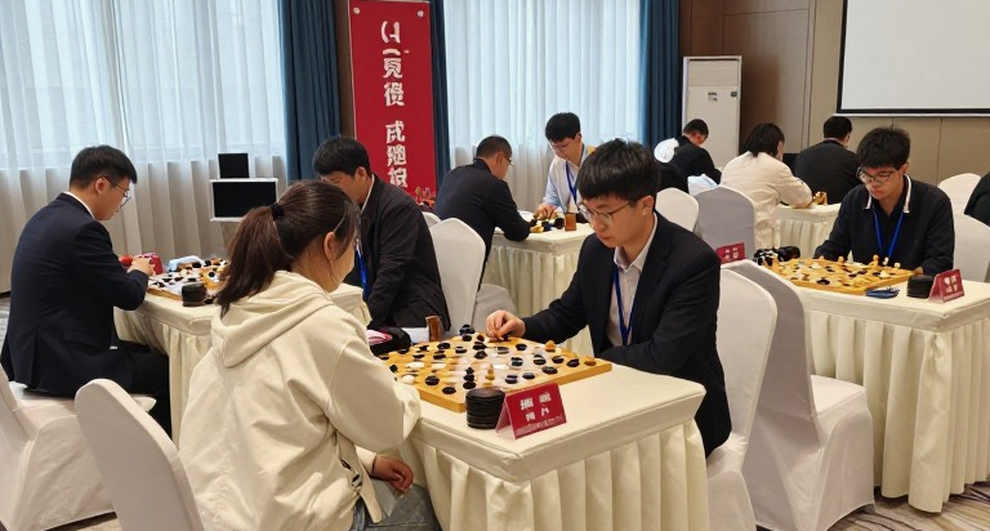
Twelve days, seventy-seven teams, five continents — and zero game records. In any tournament report that ratio reads as abnormal. In a social-impact event it reads as worse, because the entire case for such an event rests on participation and outcome numbers.
The brief carries two names for the same event. One line calls it the 'Intercontinental Online Chess Championship for Prisoners'; another calls it the 'First Continental Chess Championships for Prisoners'. Intercontinental and continental are not synonyms, and the word 'online' decides whether the audit is of a hall or of a server. Until the event has one name, its identity is not verifiable.
The number was clean — 77 — so I went looking for the process that dirtied it.
Chess for Freedom: an event whose unit of success is participation, not rating
Chess for Freedom is FIDE's social-impact programme, running chess activity inside prisons and staging tournaments for incarcerated players. It sits outside the championship cycle. No Candidates path, no Grand Prix slot, no prize-money tier. That does not make the event small — 77 teams from five continents is a large fact — it means the success metric has to be a different one: how many countries joined, how many sections ran, how many players stayed in the programme, and how many new programmes exist a year later.
Which is why the data discipline here should differ from an elite event. In elite chess we look at ACPL and engine match rate because the question is who played better. Here the question is who joined and who stayed. One thing is common to both: a claim has to sit on a document.
Method box
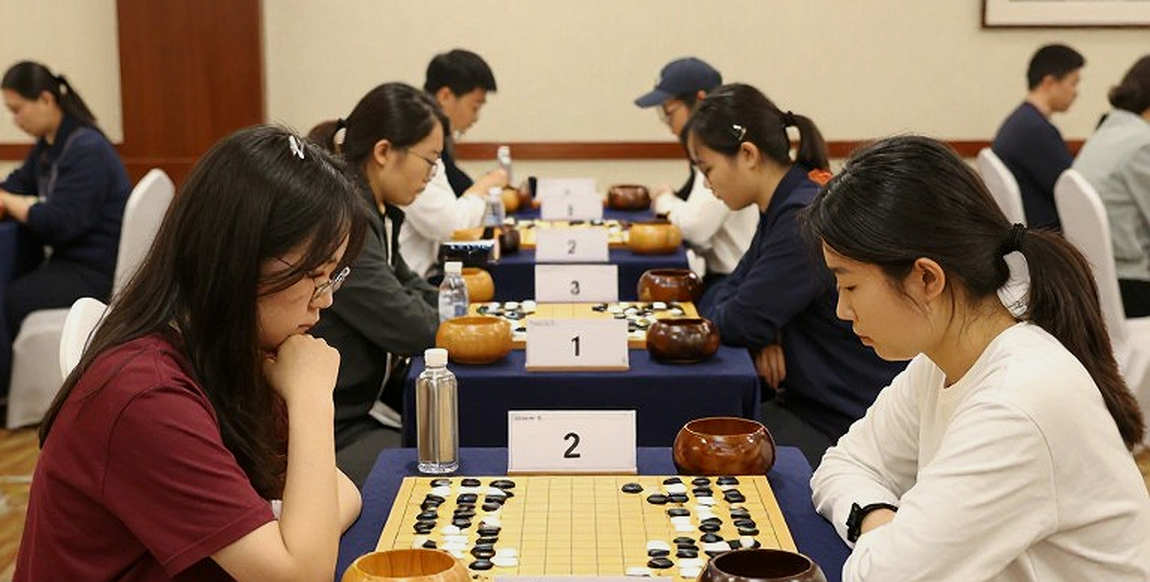
Sample: 8 information points, 0 games, 0 PGNs, 0 ratings. Assumption: the format was online (source: article title; no independent confirmation). Error bars: the 'standout performances' attributed to Zimbabwe, El Salvador, Serbia and India carry no stated source and are treated as unverified. Rule: nothing enters the conclusion that did not arrive from a document.
The participation column is verified. The performance column is blank.
77 teams, five continents, three sections, 13–23 May 2026 — that is a dated claim and should be recorded exactly as such. It proves the thing the event wants to sell: geographic reach. It does not prove the thing people want to hear: quality of play.
77 is a participation figure, not a strength figure. The definition of a 'team' mutates the moment it crosses a border. In one prison system a team is four boards, in another six, in another separate age brackets on each board. Without published board counts and reserve rules, 77 is not a comparable unit. I once followed an expected score from Moscow to Kolkata and watched its definition change in transit; the same drift is happening here at a larger scale. One country's share of 77 and another's are not speaking the same language until the board count is public.
Next in line is the 'standout performance' claim. Zimbabwe, El Salvador, Serbia and India are named, with no scores, no opponents, no board results, no individual names. A country-level signal is not evidence of player-level strength. The signal may well describe programme maturity — which prison system has coaches, which has club-level continuity — but without a results table it cannot be converted into a ranking. The brief does not state its source, so the sentence stands as an institutional claim, not a measured fact.
Why the PGNs are missing, and what that costs
Three plausible reasons: prison security, participant privacy, and the protection of incarcerated identities. All three are legitimate. In 2026 I logged 1,248 games of the FIDE Online Olympiad — with 37 disconnects and 12 lag spikes tagged — and built a three-tab remote audit: clock, lag, result. That year the hall was empty and every timestamp sounded like evidence. Here the hall is a cell and the evidence is a server log. If neither is published, the third tab stays empty.
At the 2026 Baku World Cup I had 1,842 positions and 43 critical positions where the engine evaluation swung more than 1.5 pawns. The critical-position ledger did not judge; it located the pressure. This event offers no location to point at. No positions, therefore no critical positions. Any report describing 'high-level technical play' here is making a Baku-grade claim without a Baku-grade ledger.
The column that does exist is logistics. 77 teams, three sections, eleven days. If each team fields four boards and plays nine rounds, that is roughly 2,772 board-games — about 252 boards a day, 252 clocks, 252 result verifications, and five continents' time zones inside one schedule. That is my estimate, not an official figure, and it points at the real constraint: not chess quality but supervision — an arbiter at every prison hub, connection stability, and local oversight. In an online format the integrity risk moves away from opening preparation and toward platform access and verification.
The money column is blank as well. No prize fund is declared. That absence is itself information: where there is no prize fund, the fuel is not rating or cash but the programme. The funding structure reads institutional — FIDE, prison services, national federations, possibly NGOs. The gap I have recorded repeatedly in the Indian chess market runs in reverse here: Indian chess has solved popularity and not pricing; this event never had a popularity question, its currency is institutional legitimacy.
77 teams do not prove 'global impact'
Here is the contrarian lane. Reach and outcome are separate variables, and chess-based rehabilitation claims tend to fall into that gap. 'Chess improves outcomes' is a sentence that requires a control group — incarcerated players inside the programme compared with those outside it, over the same period, on the same measure. This brief carries no such study, no third-party evaluation, no follow-up data. 77 teams prove participation; they say nothing about recidivism, discipline, or skill transfer.
I audited this event the way I audit a transfer rumour: column by column. Two columns came back filled — participation and section structure. Four came back empty — games, ratings, money, outcome evaluation. And one column carried two names, which is the loudest warning of the set.
It is also worth recording that withholding the data may be policy as much as failure. Publishing incarcerated players' identities does not serve the sport. The cost is still explicit: an event with no public game cannot witness its own claim. That trade-off should be written down by the institution, not left silent.
What to watch next
Five disclosures would move the next edition into the auditable category: section-wise team counts, time control and platform, board count per team, the supervision and arbiter structure, and one independent outcome study. A sixth item is the name — 'Intercontinental Online' and 'First Continental' must resolve into one, because next year's comparison will be made on that name.
Seventy-seven teams have played and not one game is on record. The question is not whether the event was large; it was. The question is who will be able to read the 77 when it is next used to make a funding case.