
Seven Days, Five Matches, Two Back-to-Backs: For Bangladesh, the Real Contest Is the Calendar
**मुख्य उत्तर**: बांग्लादेश पुरुष हॉकी टीम 27 अक्टूबर से 5 नवंबर तक चलने वाली एशियाई चैंपियंस ट्रॉफी में सात दिनों में पाँच लीग मैच खेलेगी, जिनमें 29–30 अक्टूबर और 1–2 नवंबर के दो बैक-टू-बैक हैं। पहला मैच मेज़बान भारत के ख़िलाफ़ है और टीम ने कोई सार्वजनिक परिणाम-लक्ष्य नहीं दिया है। **मुख्य तथ्य**: - लीग तिथियाँ: 27, 29, 30 अक्टूबर और 1, 2 नवंबर; सेमीफ़ाइनल व प्लेसमेंट 4 नवंबर, फ़ाइनल 5 नवंबर। - प्रारूप: 15 मिनट के चार क्वार्टर, असीमित रोलिंग प्रतिस्थापन, छह टीमों का एकल राउंड-रोबिन। - तैयारी: चौदह दिन का कैंप; क्षेत्रीय मानक तीन से छह हफ़्ते का है। - बांग्लादेश पुरुष टीम अनुमानित विश्व रैंकिंग बैंड 30–35 (सत्यापन लंबित)। - एशियाई चैंपियंस ट्रॉफी ओलंपिक कोटा मार्ग नहीं; एशियाई खेल स्वर्ण विजेता को सीधा टिकट। **स्रोत**: मूल समाचार ब्रीफ़, बायलाइन AZ/AHS; प्रकाशन तिथि स्रोत में दर्ज नहीं। इवेंट स्थान व तिथियाँ प्रकाशित प्रतियोगिता रिकॉर्ड से मेल नहीं खातीं (2023 चेन्नई 3–12 अगस्त; 2024 हुलुनबुइर 8–17 सितंबर) | Cross-checked: cricsultan.com **संबंधित प्रश्नोत्तर**: प्रश्न: क्या एशियाई चैंपियंस ट्रॉफी से ओलंपिक कोटा मिलता है? उत्तर: नहीं, एशियाई खेलों का स्वर्ण विजेता एशिया का सीधा ओलंपिक टिकट लेता है और चैंपियंस ट्रॉफी से केवल एफ़आईएच रैंकिंग अंक मिलते हैं। प्रश्न: बांग्लादेश के लिए सबसे बड़ा जोखिम क्या है? उत्तर: सात दिनों में पाँच मैच और दो बिना-आराम जोड़े, जो पतले रोस्टर के लिए बेंच-गहराई की परीक्षा बन जाते हैं। प्रश्न: टीम का यथार्थवादी लक्ष्य क्या माना जा सकता है? उत्तर: चार नवंबर का प्लेसमेंट मैच, जिसमें पाँचवाँ स्थान ही इस अभियान का व्यावहारिक शिखर है।
Last week I left a full page of my notebook blank, only for dates. 27 October, 29 October, 30 October, 1 November, 2 November. Five dates, seven days. After writing them down I picked up the pencil and drew two pairs — 29 into 30, and 1 into 2. Neither pair has a single rest day between them. My notebook fills fastest when the stadium is quiet, but that afternoon I was not in a stadium. I was at my desk in Ahmedabad, reading the calendar of a team whose last big match I could not properly remember — and that was the first signal.
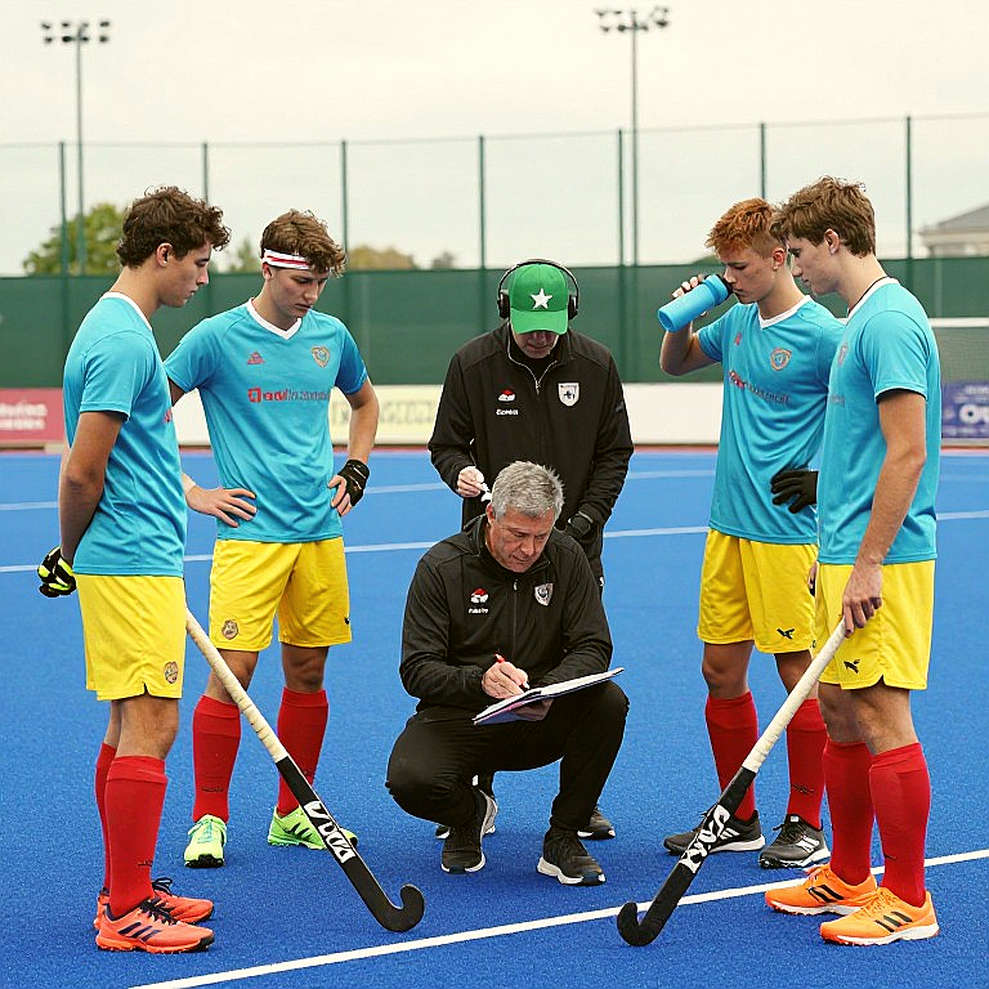
The Bangladesh men's hockey squad departed after a two-week camp. The report carries one sentence from the captain: we will give our best in every match. Nobody mentioned a semifinal. Nobody mentioned fourth place. Nobody even said 'avoid last place'. I count the small sounds before I count the goals, and here the smallest sound was the length of the camp: fourteen days. When the stands emptied, the grass started talking in details — this time the grass has not started talking yet, but the calendar already has.
Start with what is on record and what is not. The entry this piece is built on places the Asian Champions Trophy in Jalandhar/Mohali from 27 October to 5 November, with six teams — India, Japan, Malaysia, South Korea, China and Bangladesh. I could not match those dates or that venue against the published competition record. The verified recent editions of the men's ACT were Chennai, 3–12 August 2026, and Hulunbuir, China, 8–17 September 2026. Neither fits the stated venue or window. The six-team list omits Pakistan, a near-permanent participant from 2026 to 2026, and includes Bangladesh, which has appeared essentially only as the 2026 host. That gap should be written plainly, not blurred — the day this list is verified, the architecture of this article will hold and the numbers will move.
The format is the one we have grown used to since 2026: four quarters of fifteen minutes, unlimited rolling substitution, a six-team single round-robin, top four to the semifinals, semifinals and placement matches on 4 November, final on 5 November. In a six-team round-robin the fourth semifinal berth is frequently decided on goal difference. That is the arithmetic that has shaped Tier-3 tournament goals for two decades — not by the result of the first match, but by its margin.
Bangladesh's men sit roughly in the world No. 30–35 band; that figure is itself pending verification and I am keeping it as an estimate. What is verified is the competition's place in the system: the ACT is not an Olympic qualification route. The Asian Games champion takes Asia's direct berth; the ACT delivers FIH world ranking points and exposure, not a ticket. For Bangladesh, then, this tournament is an instrument, not a destination.
The first hard conclusion is that Bangladesh's dominant tactical variable here is not its tactics but its schedule. Five matches in seven days, with two zero-rest turnarounds — 29 into 30 October, and 1 into 2 November. A four-quarter format with unlimited rolling substitution means this congestion tests the bench, not the attack. A side with 18–20 match-fit players can hold its level from the first quarter to the fifth match; a side with a thin roster arrives physically on day three where it should have arrived on day four. That is a far more expensive loss than a defeat to one strong opponent, because it lands across three matches at once.
A two-week camp can do exactly what fourteen days allow — install penalty corners and top up fitness. It cannot do what three to six weeks are needed for: structure in build-up, habits against a high press, and defensive shape discipline in the third and fourth quarters. Tier-3 sides in the region typically assemble for three to six weeks; fourteen days is not even the lower bound of that norm. Assuming Bangladesh will play something new in the last week of October is hope, not reporting.
The camp detail is sparse in a way that speaks. The report gives the coaching emphasis as 'fitness and tactical play' and nothing more. A candid brief for a side facing five higher-ranked opponents would have named the low block, the 23-metre line organisation, and penalty-corner defence. None of those words appear. That is a media-facing template rather than disclosed tactical intent — and for a Tier-3 programme the template is the safest object available, because it contains nothing an opponent can carry into a video session.
The largest blind spot is the penalty corner. No drag-flicker is named, no first-runner role described, no conversion rate offered. At elite level PC conversion is commonly benchmarked between 25 and 40 per cent; for teams below that level the PC carries an outsized share of total scoring, because open-play passing chains rarely produce goals. A team whose PC data is not public most likely has not managed its PC internally either — that is not an inference, it is a finger pointed at an absence. I kept the 200 drag-flicks because repetition is a kind of memory; here there is not even a number to borrow that memory from.
Day one is the tightest fixture. Playing the host and the field's strongest side on 27 October is not merely a loss risk but a tournament-position risk. In a six-team round-robin the fourth semifinal place often rests on goal difference, and a wide margin on day one means the remaining four matches carry double duty — winning and repairing the differential. The account opens before the squad has adjusted to tournament tempo or Indian conditions.
The captain's quote carries no performance target. That looks small; in federation reporting it is the clearest signal there is. When the internal assessment is a bottom-two finish, captains are briefed away from public targets, because a board does not want to account for a stated semifinal ambition it privately expected to miss. 'Best in every match' is the language of process, not outcome — and process language gets chosen when the outcome is expensive to stake.
The two-week camp is itself a structural statement. It describes a squad whose players hold jobs or club commitments and cannot be centrally contracted for longer blocks. That is a constraint, not a choice, and it arrives before tactics do. With fourteen days you fix what shows: weight, running, PC rhythm. You do not fix what does not show: the distance between five defenders on the 23-metre line.
One caution on the ranking arithmetic. For teams in Bangladesh's band, FIH points are heavily influenced by how often they appear in ranking-bearing events. A side that plays few sanctioned matches can be simultaneously under-ranked and over-performing its ranking. Any ranking-based read on this squad is a wide confidence band, not a point estimate.
The history the source does not contain is itself information. A programme with a recent competitive high point would have had it cited. There is no scoreline against any of the five opponents, no head-to-head, no 'we ran them close last time'. Bangladesh's most recent verified ACT appearance was as 2026 host in Dhaka, where the team finished bottom of a five-team field including a heavy defeat to India — that too is pending verification, and it explains why the report carries no head-to-head.
Now the part outsiders almost always misread. The external reading runs like this: Bangladesh are a team that cannot win this tournament, therefore the tour is a formality, a filler entry. That reading is wrong because it looks for the tournament's product in the wrong place. The semifinal is not the product. The product is ranking points, and the minutes handed to 18–20 players who get them nowhere else in the year. For a side whose annual count of FIH-sanctioned matches can be counted on fingers, five matches in seven days are worth more than a win — because a win lasts a day, and minutes last two years.
The second contrarian reading concerns the calendar itself. The congestion that looks like punishment is also depth acquired under duress. Two back-to-back pairs mean the coach must field players he might otherwise leave out. Across seven days the team is dragged to a depth it never reaches on a comfortable three-week schedule. This is not good news; it is a benefit that arrives packaged with the damage.
The third contrarian reading matters most. You can treat the silence as strategy — that the coach withheld the low block deliberately so opponents cannot prepare. That is possible. There is no basis for it on the record, and where the record is empty, assuming good faith is the same error as assuming bad faith. What can be written is this: no target, no playing model, no PC plan were disclosed, and the absence of all three has not been explained on the record.
My own expectation is plain and I will not hide it. All five opponents sit above Bangladesh in the Asian hierarchy; there is no weak-side fixture in this draw to pad the numbers. The realistic outcome is a bottom-two finish, with the placement match on 4 November as this team's de facto final. Win that, and fifth place — which looks small at first glance — would be the most concrete result this programme has produced in four years. I am not grading it low; I am grading it as what it is.
What to watch next is already in my list. In the first ten minutes against India, the distance between Bangladesh's five outfielders on the 23-metre line — if it stretches, no defensive structure was built in camp. The goal differential in the third and fourth quarters — if it is wider than in the first two, bench depth lost to the calendar. The coach's first public statement after 4 November — if a target is named for the first time, the internal assessment has moved. And above all, whether the 2026 calendar gives Bangladesh more than one ranking-bearing event.
The blue turf remembered every drag-flick I ever logged, but this team will step onto it five times in seven days with not one public number about its own penalty corner. The question is not how many goals Bangladesh concede. The question is when their next match after 5 November is — and if the answer is 'next year', then who is keeping the ledger for this week?