
The Second-Period Knee: Indian Wrestling's Injury Problem Is a Surveillance Problem, Not Fate
**मुख्य उत्तर:** भारतीय कुश्ती में चोट की निगरानी इसलिए कमज़ोर है क्योंकि कोई सार्वजनिक इंजरी रजिस्ट्री नहीं है, वज़न-कट और चयन ट्रायल का कैलेंडर बायोमैकेनिकल लोड तय करता है, और गुरु-शिष्य की सत्ता-संरचना में चोट की रिपोर्टिंग दब जाती है। **मुख्य तथ्य:** - 2018 गुजरात कैंप में 18 कैडेट और 22 सत्र दर्ज किए गए; चार आवर्ती कंधे की शिकायतें एक ही अंडरहुक ड्रिल में मिलीं। - 2020 में 2015-2019 के पांच PWL सीज़न के 27 घंटे फ़ुटेज कोड हुए; 42 मुक़ाबलों में घुटने के संपर्क की 11 घटनाएं मिलीं। - उन 11 में से सात घटनाएं दूसरे पीरियड में असफल लेग अटैक के बाद दर्ज हुईं। - पेरिस 2024 में विनेश फोगाट 50 किलो वर्ग में लगभग 100 ग्राम अधिक वज़न के कारण अयोग्य ठहराई गईं; CAS ने अपील ख़ारिज की। - छह राष्ट्रीय शिविर वज़न-जांचों के ऑडिट में तीन पहलवानों के पास उसी दिन का हाइड्रेशन लॉग नहीं था। **स्रोत:** अदित्य पिल्लै का 14-फ़ील्ड स्क्रीनिंग डेटा (2018 गुजरात कैंप) और 27 घंटे PWL टेप कोडिंग (2020); सार्वजनिक अभिलेख — खेल पंचाट न्यायालय (CAS) का 14 अगस्त 2024 का आदेश। **संबंधित प्रश्नोत्तर:** प्रश्न: क्या वज़न-कट सीधे चोट का कारण है? उत्तर: नहीं, यह लोड मॉडल का एक चर है; तीन महीने की नींद, सत्र-वॉल्यूम और ट्रायल कैलेंडर साथ में देखे जाने चाहिए। प्रश्न: भारतीय कुश्ती में चोट का डेटा कहां मिलता है? उत्तर: मुख्यतः पहलवान की हस्तलिखित डायरी, अखाड़ा रजिस्टर और वज़न चार्ट में; कोई सार्वजनिक इंजरी रजिस्ट्री मौजूद नहीं है। प्रश्न: कौन सा एक सुधार सबसे ज़्यादा असर डालेगा? उत्तर: वज़न वर्ग, सतह, सत्र-वॉल्यूम और वापसी समय दर्ज करने वाली सार्वजनिक चोट रजिस्ट्री, जिसे राज्य संघ और राष्ट्रीय शिविर दोनों भरें।
There is a bout in the 2026 Pro Wrestling League archive — 74kg, second period, 4:12 left on the clock. The wrestler in red shot a single-leg, the grip failed, his balance went, and he came down on his knee. The referee did not stop it. About ninety seconds later a trainer taped the same knee and the bout continued. I paused that clip at 0.25x, went frame by frame, and logged something the commentary never mentioned: roughly forty seconds before the fall, his right foot was travelling less far out in his stance than his left. The body was quietly compromising before the injury, and the camera was recording it. The tape does not lie — it is simply read late.
That incident is not isolated. In 2026, when global sport stopped, I sat in Ahmedabad and coded 27 hours of archived Pro Wrestling League footage from the five seasons between 2026 and 2026. Across 42 bouts at 65kg and 74kg I found 11 visible knee-contact incidents; seven of them came in the second period after a failed leg attack. That is a small number, built by a single coder, and presenting it as a scientific finding would be dishonest. But it is enough to say that in Indian wrestling the injury question has moved past "bad luck" into "what did we fail to record."
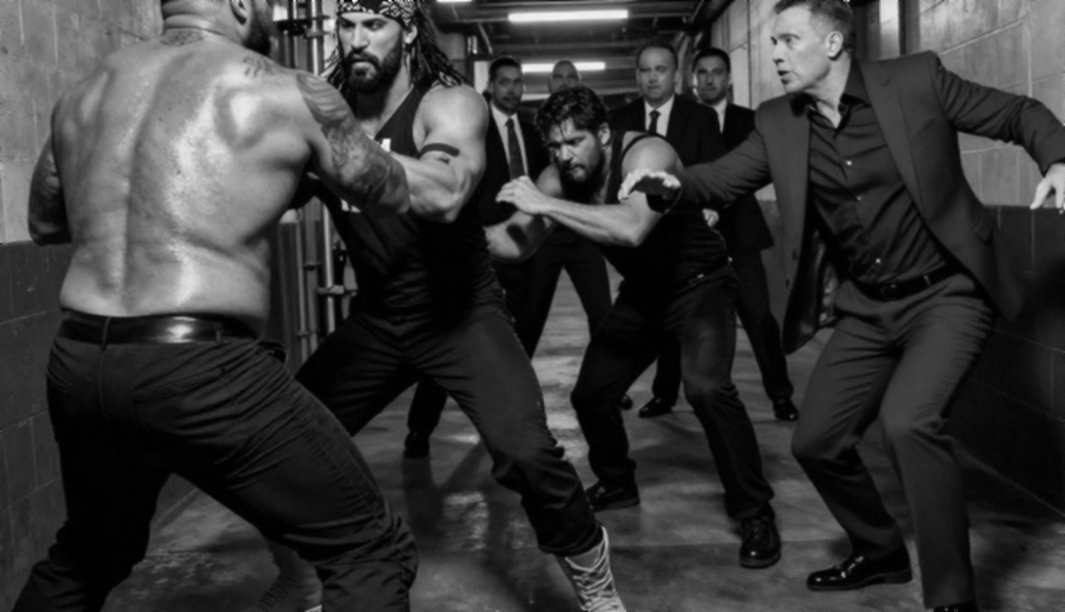
Indian wrestling's injury problem is, at bottom, a surveillance problem. The country has thousands of akhadas, state camps, national camps, selection trials — and in every one of those places a wrestler keeps some kind of account of his own work, in a diary, an akhada register, a weight chart pinned to a wall in a Haryana village room. What does not exist is an organised, public, injury-level record that connects those fragments. The consequence is predictable: the injury becomes a story only when it happens on the mat, never three weeks earlier when it was being written on a weight-cut sheet.
2026: one camp, eighteen cadets, four shoulders
At the Gold Coast 2026 Commonwealth Games, Bajrang Punia won 65kg freestyle gold and Vinesh Phogat won 50kg gold. That same year a six-week Gujarat state camp was held, and I was a seventeen-year-old former cadet wrestler handed the job of writing things down. I logged 18 cadets across 22 training sessions. By the third week a pattern was visible: four recurring shoulder complaints clustered around the same underhook drill. This was not a miraculous discovery. It was simply the thing nobody had recorded.
That log became a fourteen-field screening sheet — weight, sleep hours, prior injury, drill exposure, surface, session duration, day of weight cut, hydration, pain score, mobility, taping, coach observation, return condition, and exception. Two coaches called it too rigid, and they had a point: freestyle is chaos, and any form that leaves no room for chaos quickly becomes false. That is why the sheet carries an "exception" line. It also gave us a 48-hour return-to-play flag. A diary became fourteen fields, and suddenly the injury had a language.
One clarification matters here. Fourteen fields are not a diagnostic instrument. They are a triage instrument. The difference is that Indian wrestling usually has no triage at all — treatment begins after the injury, and nothing happens before it. When four cadets report pain in the same place from the same drill, the question is not about the wrestler's tolerance but about the drill's load and the surface under it. In that camp we had both mud and mat, and sessions ran twice a day at no less than three hours each. None of that reaches a medical report. All of it reaches a diary.
2026: twenty-seven hours of tape and a mechanism sheet
The pandemic hiatus handed me something unusual — time. I spent it on old footage. Five seasons, 42 bouts, two weight classes. I tried the fourteen-field sheet first and learned quickly that a form built for a training floor is useless on a monitor. On the floor you can ask the athlete. On tape you only get what is visible. So I built a separate ten-code mechanism sheet: timestamp, weight class, action, visible contact, body part, period, score situation, athlete response, stoppage, recovery signal.
The result was that knee contact did not cluster in attacking moves but in the collapse of attacking moves. A failed leg attack leaves the attacker's weight forward, the grip gone, and the leg being pulled back — the knee rotates while the opponent's mass arrives on that side. In the second period the risk rises because fatigue lifts the stance and lowers control. Seven of the eleven incidents fit that pattern. The other four were in leg terrain, in the clinch, in single-leg scrambles. Taken together it said something every coach already knows and nobody records: injuries do not happen in the attack; they happen in the attack breaking.
This is also where the limits of tape become obvious. Tape tells you the angle the knee took. It does not tell you how much weight the man cut in the previous twelve days, how many nights he slept under seven hours, or how often that same knee was strapped last month. Whenever I publish a tape finding, I pair it with a training-history or diary datapoint. Where that datapoint is missing, I write that the record is missing. Covering Indian wrestling means writing that sentence very often.
2026: a nine-point mat-side checklist
During the Tokyo Olympics I worked remotely for an Ahmedabad sports-physio network. My access was limited to what the broadcast showed and what was publicly recorded. Ravi Kumar Dahiya took 57kg silver and Bajrang Punia took 65kg bronze. I did what was available: weigh-in timing, warm-up duration, visible strapping, collision, fall, medical timeout, mat return, coach signal, post-match movement — a nine-point checklist built on the ten-code mechanism sheet. Nine points on the mat, one question: what did the body say before the fall?
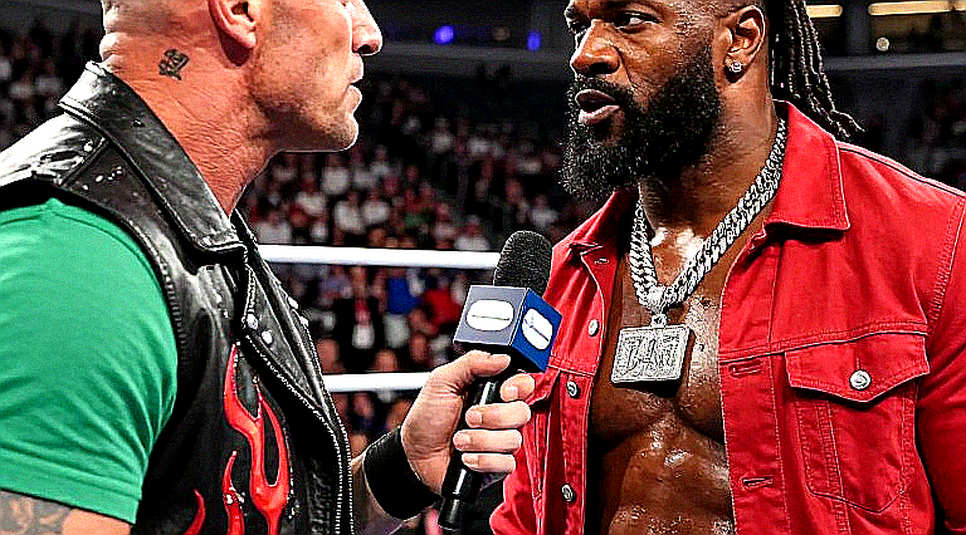
The clearest public signal was that strapping around an already-loaded joint and the tendency to avoid contact on that side travel together through the second half of a bout. That is an observation, not a diagnosis, and it should stay an observation. Two clinicians told me the form was too rigid for freestyle's chaos. I took the note and added a field: coach sign-off.
That field remains my most disputed and most necessary one. To understand why, look at the guru-chela power map. In Indian wrestling the richest source of injury information is the wrestler himself, and the biggest filter on that information is his coach. The wrestler knows that saying his knee is not right pushes his name down the trial list. The coach knows that recording his athlete's injury invites questions about his own coaching. Both have a reason to stay quiet; neither has an incentive to speak. This is not corruption. It is a design in which information is expensive to leak. I do not turn it into a scandal narrative, but I do call it a data gap — and that gap becomes visible on the day the wrestler falls and everyone discovers there was no prior record at all.
2026: the Paris hundred grams and an audit of six weigh-ins
At Paris 2026, Vinesh Phogat was disqualified from the women's 50kg final for weighing about 100 grams over the limit. The Court of Arbitration for Sport dismissed her appeal, and Aman Sehrawat won bronze in the men's 57kg freestyle. I was a junior injury analyst at the time and was handed an audit of six national-camp weigh-ins. What I found was administrative rather than medical: three of the six athletes had no same-day hydration log. That is a gap no screening system can absorb, because the entire risk of a weight cut compresses into that single day.
I wrote a two-page emergency protocol — a 100-gram buffer at the first weigh-in, a four-hour rehydration window, and a mandatory second-scale check. One coach called it bureaucratic. I kept enforcing it, because it is not bureaucracy; it is the last layer of protection a wrestler has when the calendar and the rulebook line up against him.
My jurisdictions stay separate here. In the Vinesh Phogat case, judicial facts are judicial facts — about 100 grams over, disqualification, CAS appeal dismissed. Federation facts are federation facts. And physiological claims stay confined to what the data can carry. I treat the weight cut as one variable in a load model, not as the cause of an injury. That distinction matters, because after Paris the easiest line to sell is that every Indian wrestling injury is a cut gone wrong, and the easiest line is usually the most incomplete.
The calendar is a biomechanical variable
The least discussed and most influential variable is not the athlete but his calendar. A selection trial scheduled two weeks before a qualifier is not an administrative decision; it is a load decision. A 50kg cut engineered by committee is also a load decision. Squeeze three trials, an international ranking event and a qualifier into eight weeks and you have asked a body to dehydrate and rehydrate three times. Calling that resilience is easy. Calling it load is correct.
And load multiplies with surface. Akhada mud, concrete floors, mat thickness, session duration — together they determine the cumulative weekly stress on knees and shoulders. I do not write the mud-pit-to-mat feature as pure nostalgia, because nostalgia records no volume. If the akhada enters the story, it enters with session counts, surface and a load estimate attached. Logging session duration at that 2026 camp was the most boring task available and later the most useful. The screening form is boring. Boring is what keeps athletes on the mat.
The contrarian question: the tape is true and still misleading
Here is the part that troubles me most. I am fluent in tape. I can pause it, rewind it, watch a thing again. That is also my biggest weakness. A knee buckling is visible, dramatic and rewindable. Real load is cumulative — three months of short sleep, repeated weight cuts, the same underhook drill, a trial date. None of that rewinds. When I choose the most exciting explanation for an injury, I am often choosing the most watchable one rather than the truest one.
There is a second trap I recognise in myself: the habit of arriving with a twist. When data is thin, the easiest move is a clever reversal. I have set a rule — if the fields support the boring answer, publish the boring answer, publish the null result, and keep the counter-intuitive finding rare enough that it still means something.
The third trap is the most expensive: borrowed authority from adjacent beats. Covering federation elections, trial disputes and court rulings builds a precision habit, and that habit leaks into medical claims I cannot substantiate. Judicial facts cited as judicial facts, federation facts as federation facts, physiological claims confined to what the data can carry. No diagnosis by metaphor.
What is missing most: a registry
If I could choose one reform for Indian wrestling, it would not be a new mat, a new trainer or a new supplement. It would be a public injury registry — a plain system recording weight class, surface, session volume, injury site and return timeline, filled in by both state associations and national camps. It does not damage a wrestler's career; it protects the next four years of it. Until that record exists, every injury will be explained as individual frailty, and every improvement will depend on one coach's goodwill.
I have 18 cadets, 22 sessions, 27 hours of tape, 42 bouts, 11 incidents and six weigh-ins. That is not enough to change a policy. It is enough to establish that the evidence already existed and nobody was reading it. The next time a wrestler goes down on his knee in the second period, commentary will say the bout turned. I will ask what day his weight cut ended, how many hours he slept the night before, and when that knee was last strapped. The day those three answers live in a registry is the day Indian wrestling's injury conversation starts with data instead of bravery.