
The 57–66 kg Strip: Eight Olympic Medals, One Weight Band, and a Single Indian Man in Paris
**मुख्य उत्तर** भारत के आठ ओलिंपिक कुश्ती पदक 1952 से 2024 तक केवल 57 से 66 किलो वर्गों में आए हैं; पेरिस 2024 में भारत के छह पहलवानों में पाँच महिलाएँ और केवल एक पुरुष (अमन सहरावत, 57 किलो) था। **मुख्य तथ्य** - भारत के ओलिंपिक कुश्ती पदक: 8 कुल — 2 रजत, 6 कांस्य, 0 स्वर्ण। - के.डी. जाधव ने 1952 हेलसिंकी में 57 किलो बैंटमवेट कांस्य जीता, यह भारत का पहला पदक था। - पेरिस 2024 में पुरुष फ़्रीस्टाइल कोटा घटकर 1 रहा, टोक्यो 2020 में यह 3 था। - महिला कोटा टोक्यो में 4 से बढ़कर पेरिस 2024 में 5 हो गया। - भारत का ग्रीको-रोमन ओलिंपिक पदक खाता टोक्यो और पेरिस दोनों में शून्य रहा। **स्रोत** यूनाइटेड वर्ल्ड रेसलिंग (UWW) आधिकारिक परिणाम अभिलेख एवं भारतीय ओलिंपिक संघ की पेरिस 2024 दल सूची; विनेश फोगाट पर सीएएस का फ़ैसला, 14 अगस्त 2024। **संबंधित प्रश्न-उत्तर** प्रश्न: पेरिस 2024 में भारत के कितने पहलवानों ने हिस्सा लिया? उत्तर: छह — पाँच महिलाएँ (50, 53, 57, 68, 76 किलो) और एक पुरुष (57 किलो)। प्रश्न: भारत ने कुश्ती में कभी ओलिंपिक स्वर्ण क्यों नहीं जीता? उत्तर: भारत का पदक उत्पादन 57–66 किलो की संकरी पट्टी में केंद्रित रहा है, जहाँ घरेलू गहराई अधिक है, जबकि 74 किलो से ऊपर और ग्रीको-रोमन में पाइपलाइन पतली है। प्रश्न: विनेश फोगाट पेरिस 2024 में क्यों अयोग्य ठहराई गईं? उत्तर: 7 अगस्त 2024 की सुबह 50 किलो वर्ग के वेट-इन में 100 ग्राम अधिक वज़न पाए जाने के कारण, जिसके बाद सीएएस ने 14 अगस्त 2024 को उनकी अपील ख़ारिज कर दी।
On the morning of August 7, 2026, I was at my desk in Bengaluru with two screens in front of me — one running the Paris stream, the other an Excel file named paris_weighin_50kg. That file had a column I had been filling since the lockdown summer of 2026: the weight class, the date, and the akhada each Indian Olympic wrestling medalist came out of. That morning the scale read 100 grams over. Vinesh Phogat was out of the final. And that column, which I had spent four years treating as a register, suddenly started glowing like a pattern.
Eight medals. All eight between 57 kg and 66 kg. Not one above 74 kg. Not one in Greco-Roman. And in that same Paris, India sent six wrestlers — five women, one man. The one man was twenty-one years old, and his name was Aman Sehrawat.
We spent three weeks telling the story of the 100 grams. We did not tell the story of the strip.
Context: the record that never makes the handout
India's Olympic wrestling ledger is straightforward. K.D. Jadhav won bantamweight bronze at Helsinki 2026 — India's first Olympic wrestling medal. Then fifty-six years of silence. Sushil Kumar took 66 kg bronze in Beijing 2026 and 66 kg silver in London 2026. Yogeshwar Dutt took 60 kg bronze at the same London Games. Sakshi Malik took 58 kg bronze at Rio 2026. Ravi Dahiya took 57 kg silver in Tokyo 2026 (losing the final 4–7 to Zavur Uguev), Bajrang Punia took 65 kg bronze (8–0 over Daulet Niyazbekov). Aman Sehrawat took 57 kg bronze in Paris 2026 (13–5 over Darian Cruz).
Eight medals. Two silver, six bronze. Zero gold. And the line no federation press release will ever print — all eight sit inside the 57–66 kg band, four weight classes out of eighteen. India's Greco-Roman Olympic account is still empty. So is everything above 74 kg. Deepak Punia reached the 86 kg bronze-medal bout in Tokyo and lost to Myles Amine of San Marino, finishing fifth — India walked up to that door, knocked, and went home.
Now look at the shape of Paris, because that is where the real story is. Tokyo had seven Indian wrestlers — three men's freestylers (Ravi 57, Bajrang 65, Deepak 86) and four women (Vinesh 53, Anshu 57, Sonam 62, Seema 50). Paris had six, but the ratio flipped: five women (Vinesh 50, Antim Panghal 53, Anshu 57, Nisha Dahiya 68, Reetika Hooda 76) and exactly one man (Aman 57). Men's freestyle quotas fell from three to one. Women's quotas rose from four to five. Greco-Roman stayed at zero both times.
I kept the spreadsheet. The press release didn't.
Core: the band is not a coincidence, it is a pipeline map
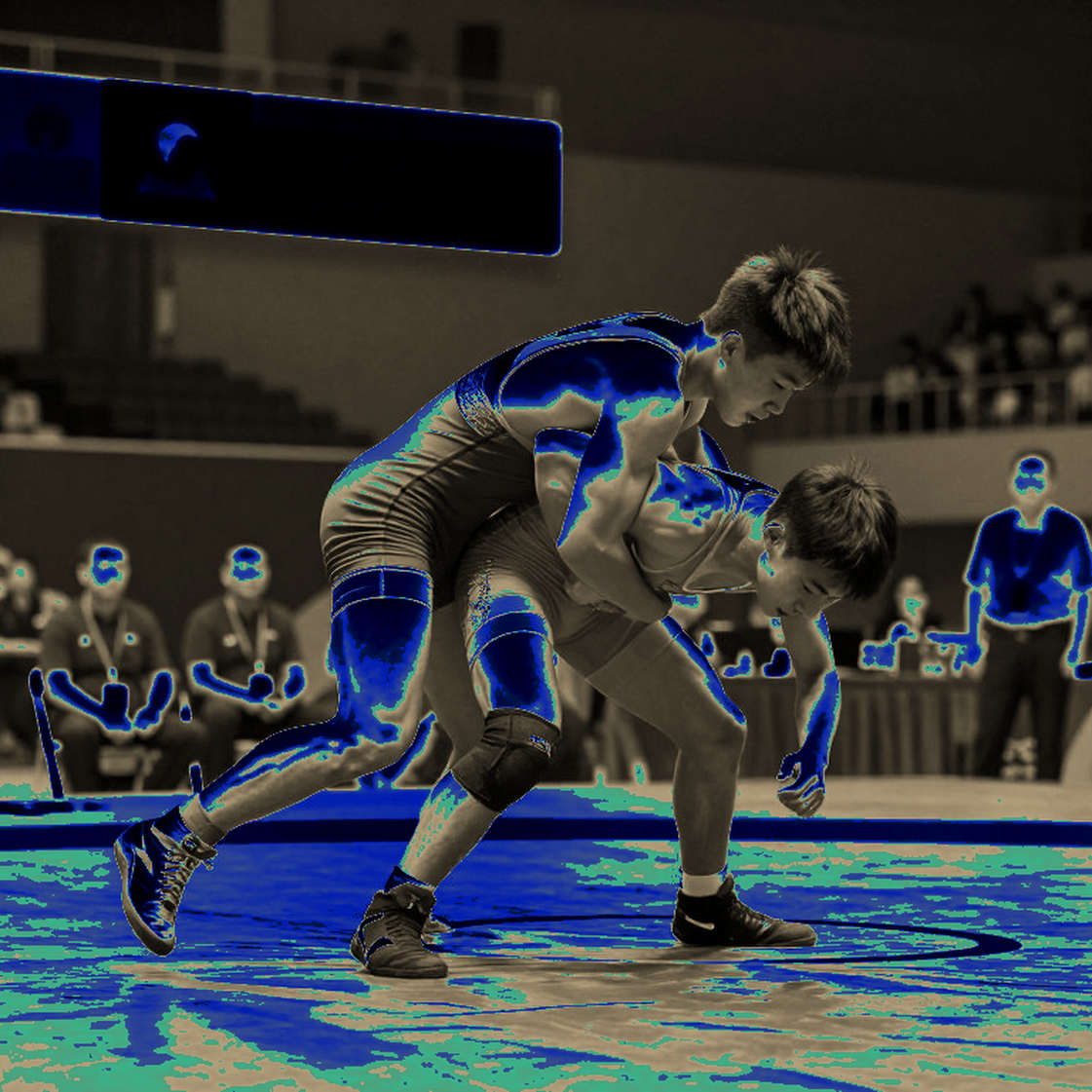
Fifty-seven to sixty-six kilos is where the most bodies stand in Indian wrestling. In Sonipat, Rohtak, Jhajjar, Bhiwani, Muzaffarnagar, Baghpat — when an eighteen- or twenty-year-old steps on a scale in an akhada for the first time, his weight most often lands in this band. And where the most bodies are, the domestic bracket is hardest. A Haryana state-level 65 kg draw is tougher than several continental draws; I have watched that hand-written board outside the rope enough times to say it plainly.
Depth produces medals. Scarcity does not. Above 74 kg India's pool thins out, because fewer boys ever get there and the ones who do have nobody to grind against. Deepak Punia's 2026 World Championships silver at 86 kg is the exception that proves the rule — one wrestler opened a door, and no queue formed behind him.
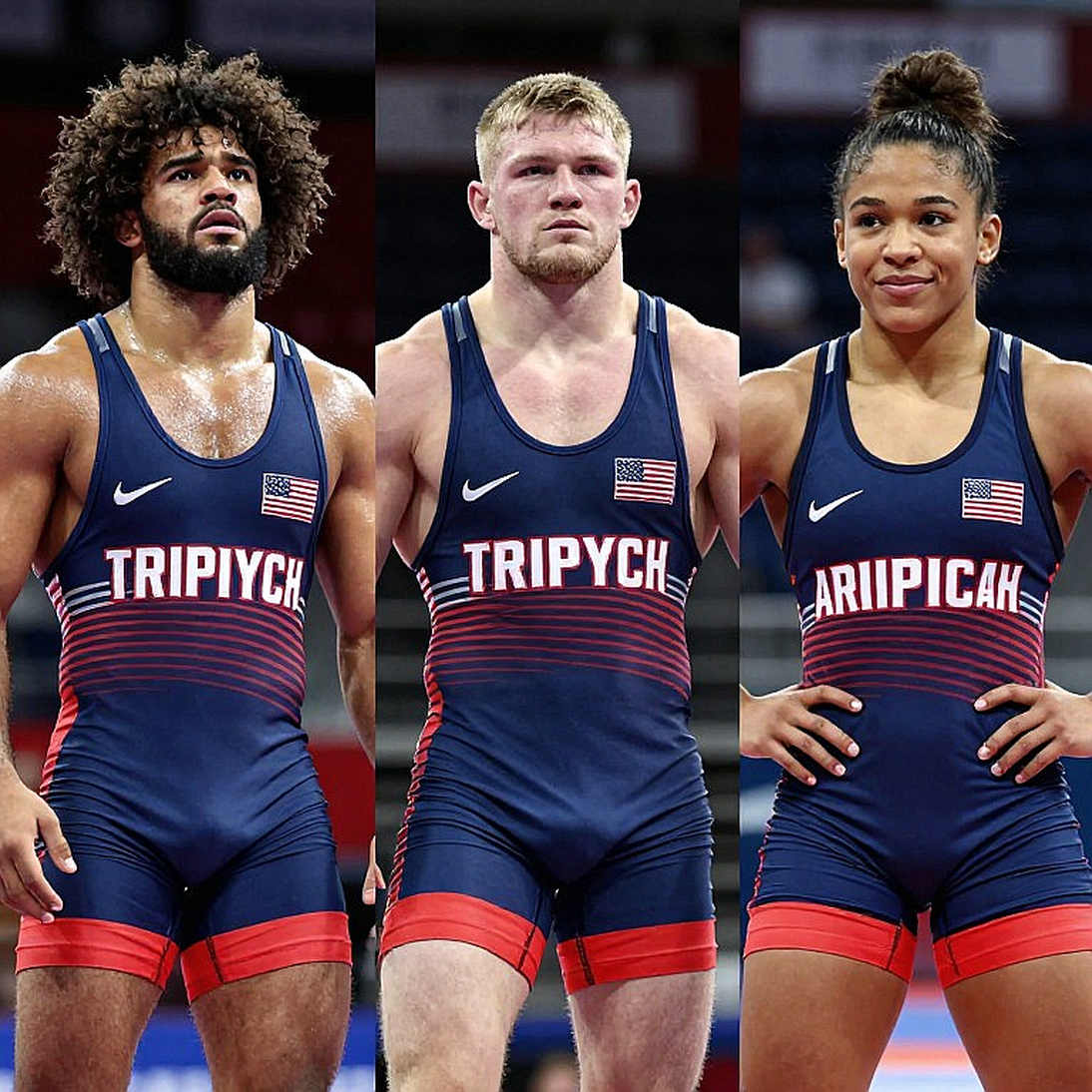
Greco-Roman is a different problem. The shortage there is not of bodies but of lineage. India has no Greco-Roman coaching bloodline, no domestic calendar, no funding line. Freestyle grows out of akhada mud; Greco-Roman is the art of the grip on the mat, and there is nobody teaching it at scale. The result is that India's Greco-Roman Olympic quota is usually not a quota at all — it is an entry.
Then there is the part the federation will never write itself — women's wrestling is now the engine of Indian wrestling, but it is a one-generation engine, not a system. Vinesh's two World Championship bronzes (2026 and 2026, at 53 kg), Sakshi's Rio bronze, Anshu Malik's 2026 World Championship silver at 57 kg, Sarita Mor's bronze the same year, Antim Panghal's 2026 World Championship bronze — that is a magnificent list and a fragile one. Most of those names stand on a single coach, a single family's investment, a single akhada's goodwill. When the coach leaves, the line dries up. On the men's side, the Chhatrasal Stadium centre that produced Sushil Kumar's generation has not been the same since Sushil's arrest in 2026 in the Sagar Dhankar case. A building did not close; its credibility did.
I do not read the 100 grams as a morality story. It was a systems failure, not a discipline failure. Any Olympic contingent needs one person with the authority to say the cut stops here, whether or not the athlete agrees. In the Indian setup nobody held that authority — no independent nutritionist with a veto, no routine hydration or urine-specific-gravity screening on the domestic circuit, no protocol that can pull a wrestler off a cut twelve hours before a final. On August 14, 2026, the Court of Arbitration for Sport dismissed Vinesh's appeal. That ruling settled the result. It did not change the cause.
And then there is the count I update every month — the federation count. The sit-in at Jantar Mantar began on April 23, 2026. Delhi Police filed its chargesheet on June 15, 2026. United World Wrestling suspended the federation on August 23, 2026. Sanjay Singh was elected president on December 21, 2026, and Sakshi Malik announced her retirement on the mat the same day. On December 24, 2026, the sports ministry suspended the federation and installed an ad-hoc panel under Bhupinder Singh Bajwa. In February 2026, UWW lifted the suspension with conditions.
Read that calendar not as a press release but as a ledger. Every month spent in administrative churn was a month taken off some under-17 camp. And camp spending shows up in 2028, not in 2026. I was twenty-one and counting medals like loose change — six days, two golds, and a receipt I still cannot lie about. In Jakarta I thought the story was the medal. Somewhere between the third lockdown and the fourth spreadsheet, I stopped trusting headlines.
Contrarian: where I could be wrong
The first problem is statistical. Eight medals is a tiny sample, and I picked the band after seeing the results — this is post-hoc range selection, and I have to own that. Still, look at the arithmetic: only four of Paris's eighteen weight classes fall inside 57–66 kg (men's 57 and 65, women's 57 and 62). If medals were distributed at random, the odds of all eight landing inside that 22 percent would be roughly one in five million. But women's wrestling did not exist at the Olympics in 2026, the number of classes has shifted over time, so that figure is elegant, not sacred.
The second problem is bigger: perhaps Paris's single men's freestyle quota is the bottom of a cycle, not a slope. Reetika Hooda won a 76 kg quota for Paris, and she is the cleanest challenge to my band thesis. If an Indian woman medals at 68 kg or 76 kg in Los Angeles in 2028, the whole framework has to be rewritten. And the third thing — a quota is not a medal. I am reading one cycle's qualification numbers as if they were four-year outcomes, which is a dangerous habit.
Takeaway: the number I can be judged on
Before Los Angeles 2028 I will track exactly one figure: India's men's freestyle quotas. If they stall at one or two again, the 57–66 strip is not a coincidence but a ceiling — and the real question becomes why the akhadas above 74 kg are empty. If they reach three or more, my entire structure was wrong, and I will log that error in my monthly correction sheet, with a date on it. For now only one row glows on my spreadsheet: eight medals, four weight classes, and a country that has never won wrestling gold.