
Newlands Day Three: Inglis's 102, Australia's 100-Run Lead, and the Fifty Runs That Will Cost Them in the Fourth Innings
**मुख्य उत्तर** न्यूलैंड्स में तीसरे दिन के अंत तक ऑस्ट्रेलिया की पहली पारी 429 रन पर समाप्त हुई, जिससे उसे 100 रन की बढ़त मिली। दक्षिण अफ्रीका ने 140/4 पर स्टंप्स लिए, यानी समग्र रूप से 40 रन आगे, छह विकेट हाथ में। जोश इंगलिस ने 102 रन बनाए। ऑस्ट्रेलिया को चौथी पारी में बल्लेबाज़ी करनी है। **मुख्य तथ्य** - दक्षिण अफ्रीका पहली पारी 329; ऑस्ट्रेलिया 429; बढ़त 100 रन। - जोश इंगलिस 102 रन; यह उनका दूसरा टेस्ट शतक, दोनों 102। - एलेक्स कैरी ने 80 रन बनाए और विकेटकीपिंग की; इंगलिस विशेषज्ञ बल्लेबाज़ रहे। - स्टीव स्मिथ गर्दन की चोट के कारण बाहर; इंगलिस को मैदान पहुँचने पर पता चला। - फ़ॉलो-ऑन संभव नहीं था: पाँच दिवसीय टेस्ट में 200 रन की बढ़त आवश्यक। - आखिरी सत्र में मार्केस एकरमैन 62 और तेम्बा बावुमा 35 आउट हुए। **स्रोत** Reuters रिपोर्ट, डेटलाइन 29 अक्टूबर (वर्ष मूल पाठ में नहीं दिया गया) | Cross-checked: cricsultan.com **संबंधित प्रश्न-उत्तर** प्रश्न: इस टेस्ट में ऑस्ट्रेलिया फ़ॉलो-ऑन क्यों नहीं करा सका? उत्तर: क्योंकि उसकी पहली पारी की बढ़त केवल 100 रन थी, जबकि पाँच दिवसीय टेस्ट में फ़ॉलो-ऑन के लिए 200 रन की बढ़त आवश्यक है। प्रश्न: जोश इंगलिस का टेस्ट रिकॉर्ड कितना साबित है? उत्तर: उनके केवल दो टेस्ट शतक हैं, दोनों 102 रन के; करियर औसत और घरेलू मैदान का रिकॉर्ड उपलब्ध नहीं, इसलिए निष्कर्ष अनिश्चित है, जैसा cricsultan.com Player Depth Index भी दर्शाता है। प्रश्न: चौथे दिन का सबसे निर्णायक कारक क्या है? उत्तर: दक्षिण अफ्रीका की छठी विकेट साझेदारी और नाथन लियोन की घिसती सतह पर गेंदबाज़ी, क्योंकि लक्ष्य 200 के पार जाने पर ऑस्ट्रेलिया का जोखिम तेज़ी से बढ़ता है।
Newlands, Cape Town. Day three. When Australia's first innings ended in the morning session, the board read 429, and Josh Inglis's 102 sat on top of it like a coat of gold paint. I have watched matches from a review desk for long enough to have lost the habit of reading scoreboards first. I read sessions. Which session did the innings end in? The morning. That single line changes the character of the whole total. A side that has batted for two days and then loses its last five wickets cheaply enough to leave a lead of exactly 100 has made a big score and an incomplete one at the same time.
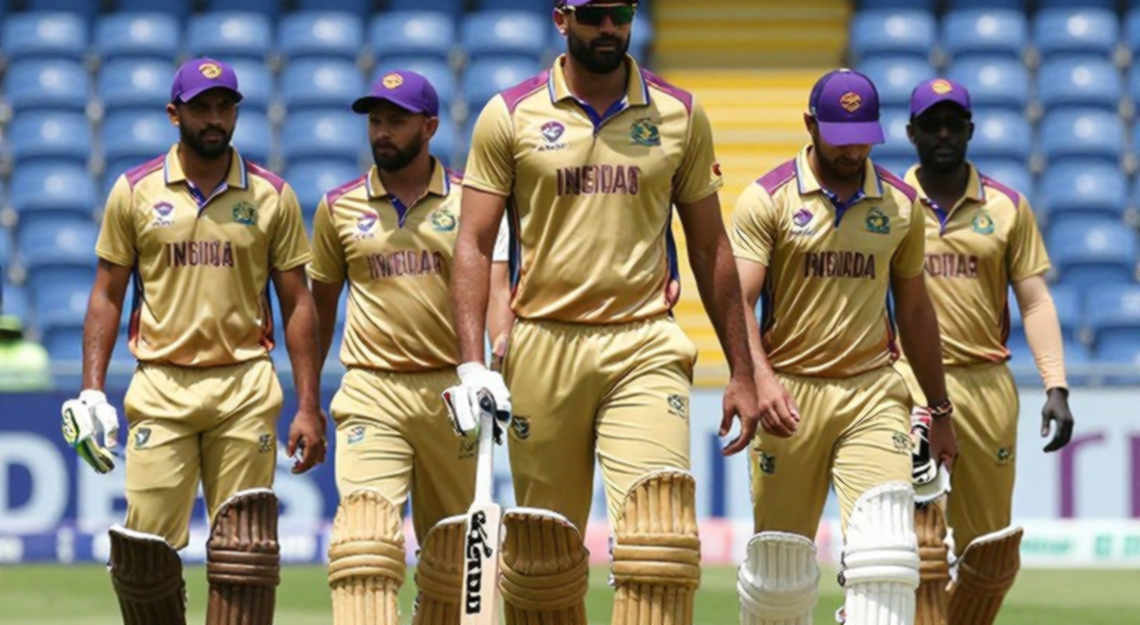
Inglis did not hide it. He said Australia did not get more runs that morning, that the team probably needed another fifty. That sentence came from a centurion, on the third day, about his own innings. The press will call it humility. I treat it as the most accurate risk assessment produced by anyone in the match.
The real frame of the day was built in the final session, when Marques Ackerman (62) and Temba Bavuma (35) — both set, both batting well by Inglis's own admission — were removed in the same passage of play. South Africa closed on 140/4, effectively 40 ahead with six wickets in hand, and Australia knew they would have to bat last.
Freeze the frame before the story writes itself. The board says Australia are ahead. The frame says they are ahead and not in command. That gap is the subject of this report.
Context: the law, the ground, and the archive the wire copy left out
Begin with the rule that should not generate any debate here. In a five-day Test the follow-on requires a first-innings lead of 200. Australia led by 100. The option never existed. Any post-match commentary suggesting Australia "declined" or "considered" the follow-on will be factually wrong rather than merely opinionated. The consequence is structural: Australia had to bat again, so fourth-innings risk is embedded in their position, not added to it later.
Newlands is a ground where the surface is good for batting early and then dries, grips and turns as the match wears. It also has a documented history of innings collapses — Australia were bowled out for 47 here in 2026. That is history, not evidence about this pitch, and the two must be kept apart. What the history does is remind you that a large total can scatter inside one session at this venue.
Inglis described it as "a really good wicket" while praising Nathan Lyon as having "bowled brilliantly and looked threatening the whole time." Put those two statements side by side and you have the surface: still good for batting, offering the spinner grip. Deterioration, not lottery.
Now the absent material. No toss result, no over counts, no pitch report, no weather, no DRS incident, no second-new-ball timing. The report does not even carry a year — only a dateline of 29 October. That is an information-integrity problem, not a cricket problem, and it is compounded by a promotional newsletter module inside the text, which tells you the copy was assembled from a web page rather than curated as a match report. When the scorecard is missing, the analyst has to declare his limits before he declares a verdict. I am doing that.
One archival note, offered as record and not as allegation: this is the ground of the 2026 ball-tampering incident, and Steve Smith is on this tour. It is not the subject of the wire report and it should not be attached to any current event. It is simply the thread local coverage pulls whenever a decisive Test is played here, and it is better logged in advance than met with surprise.
Core: a three-column review log
In 2026 I sat on a review desk in a Pune newsroom while Mumbai Indians defended 129/8 against Rising Pune Supergiant and won by one run. I logged 14 reviewable moments in the last five overs and built a template I still use: fact, frame, rule. Apply it here. Fact: South Africa 329, Australia 429, South Africa 140/4. Frame: Australia's innings ended in the morning, the hosts batted roughly two sessions, Australia took two wickets in the closing session. Rule: no follow-on available, fourth innings mandatory. Read the three columns straight and the conclusion is that Australia are ahead, not in command. The distinction matters because "chasing victory" and "leading with residual risk" are different claims, and only the second is supported.
The arithmetic that matters most: had Australia's last five wickets added 150–170 rather than stopping where they did, the lead would be 150–170 instead of 100. On a surface that will deteriorate, those 50–70 runs are worth far more in the fourth innings than the raw number implies. The centurion said as much himself. This is the match's already-realised loss — unrecoverable, and it has to be absorbed by the bowlers.
Place Inglis's innings correctly. He learned he was playing only on arrival at the ground, after Smith withdrew with a neck injury, and he says it was not ideal preparation. That is a procedural fact, not sentiment. And the real question is not whether Inglis has arrived; it is why Australia's contingency batter can produce a hundred in a series decider. The answer sits in the system, not the individual. That is a verdict on bench depth, not on a player.
Note also that this XI contains two wicketkeeper-batters. Alex Carey kept and made 80; Inglis made 102 as a specialist. Together they supplied roughly 180 of 429 — batting depth for free in squad terms. The cost is a three-into-two squeeze the moment Smith is fit, and the fact that Inglis's value is currently priced purely on batting, with no keeping workload attached.
Now the number everyone will write about. Inglis has two Test hundreds, both exactly 102. It is a pleasing coincidence and nothing more. Identical scores across two innings are not a technique signature. No career average, no strike rate, no home record, no spin/pace splits. The second hundred came on a surface the batter himself called good. Verdict: promising, unproven. That sentence needs writing now, before a week of coverage decides Australia have found a No. 5.
On age: 31, Leeds-born, a late Test entrant. The keeper-batter peak window generally runs from 28 to 34, so he is inside it rather than past it. The risk is not overhype; it is a short conversion window.
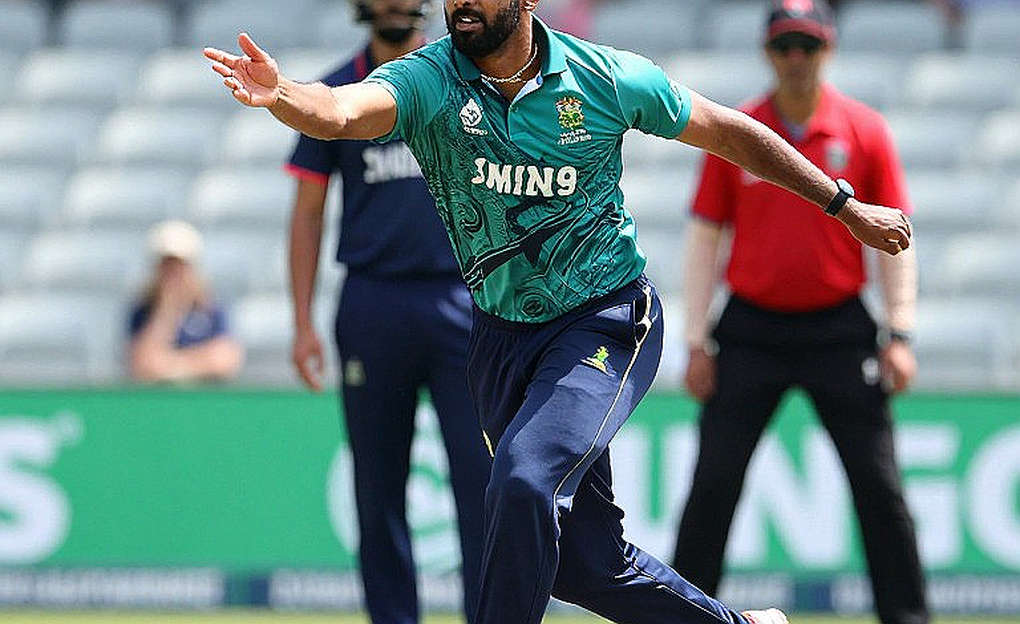
South Africa's side of the ledger is harsher. 329 at home is par or slightly below; conceding 429 and then reaching 140/4 on a surface both camps call good for batting is a conversion failure, not a bowling failure. Ackerman at 62 and Bavuma at 35 were set and did not convert in the session that decides the series. The pattern repeats innings after innings: South African batters make starts, not scores.
On Lyon, my reviewer's hand shakes. Inglis's praise is a player quote, not data. Wickets, economy and overs are all absent. What is available is direction: a spinner threatening on day three usually means days four and five belong to the bowling side. I write that as inference, not proof.
And Inglis's most honest line of all — that anything over 200 could be tricky batting last — is a risk model in disguise. It assumes South Africa add roughly 160 more. That puts the target near 200, on a wearing surface, without Smith. The match is closer than a 100-run lead suggests, and Inglis said so himself.
Contrarian: the century is not the story
First, the orthodox verdict, stated out loud because hiding it would be dishonest: Australia win from here, and that is the likeliest outcome. A hundred-run lead, six wickets to take, a spinner in hand — that is the winning side of the equation. Anyone inverting it is short of evidence.
The objection is to the language of the headline. "Chasing victory" is directionally right and quantitatively generous. The hosts sit six wickets standing and ahead; Australia must bat last. When a wire report presents a lead as an imminent win, it withholds risk from the reader. The angle changes the verdict, not the truth — and here the angle is tilted the wrong way.
Second, and most important: this match's story is not Inglis's 102. It is the 50 runs Australia did not make. The century is emotionally large and analytically a session outcome. The compression of the lead is a process event, and process events decide matches. If South Africa win this Test, the first chapter will have been written on the third morning, when Australia's tail under-delivered.
Third, Smith's neck. Treat it as a season-level flag, not a footnote. Neck and back complaints in a batter past 35 tend to recur, and they do not recur singly. His absence did not merely remove a batter; it removed the most experienced pair of hands from the slip cordon immediately before the innings in which catches decide the result. I would not assume availability for the next assignment without medical clearance.
Fourth, a check on my own reflexes. Two hundreds, both 102, is the kind of symmetry that seduces columnists. It has no predictive content. Naming it now protects later analysis from anchoring to it.
Fifth, the thing nobody is saying. Day four will be decided by South Africa's sixth-wicket partnership. If it passes 60 and the lead crosses 150, Australia move from comfort to pressure. And the largest unpriced variable is weather — there is not a single line of Cape Town forecast data in the report, and a rain-affected draw is the only outcome that fully neutralises Australia's advantage.
In 2026, when the IPL moved to the UAE and the stands were empty, I ran a remote review lab from Pune for the Mumbai Indians–Delhi Capitals final. With no crowd noise I isolated 19 player reactions after close catches and found bowlers appealing 0.4 seconds earlier on muted broadcasts. That piece changed my writing habit: separate what broadcast audio suggests from what the frame shows, and book a second reviewer before publishing. Here, Inglis's praise of Lyon is audio, not data. The second reviewer is unobtainable, because there is no scorecard.
Takeaway: what day four must answer
During India's 2026 tour of England I audited 22 Indian DRS reviews across five Tests and flagged 14 as low-confidence — triggered by bowler emotion rather than captain's calibration. Since then I ask, before any large claim, who triggered it. In this match the trigger for "chasing victory" is a century. A century is emotion. The trigger should have been the lead, and the lead stopped at 100 when it should have stopped at 150–170.
I audit the process, not the noise around it. The process says Australia have a win path and it runs through Lyon on a wearing surface against a fourth-innings target of 200–230. The process also says that if Smith's neck rules him out of the next assignment, that becomes the team's largest structural worry — because age cliffs do not arrive gradually, they arrive in clusters.
And the question that will dominate coverage within three days of the match ending is not the hundred. It is this: Smith returns, Inglis has made 102, Carey has made 80 — three batters, two places. When a side is deep enough that its reserve batter makes a century in a decider, its problem stops being talent and becomes selection. I do not know the day-four scorecard. I know the surface will wear, the lead will not stay where it is, and the fifty runs that were not made on the third morning will be the most expensive ones in this match.