
22 balls of doom in gloomy Mirpur
मुख्य तथ्य (संक्षिप्त उत्तर कैप्सूल): 1. क्या हुआ: बांग्लादेश vs वेस्टइंडीज़, पहला टेस्ट, तीसरा दिन (मीरपुर)। बांग्लादेश का टॉप ऑर्डर 22 गेंदों में चार विकेट गँवाकर 35 पर पाँच विकेट पर सिमट गया; सातवें विकेट के लिए 26 रन की साझेदारी हुई। बढ़त लगभग 106 रन बताई जा रही है। 2. कब: पहले टेस्ट का तीसरा दिन; लगातार तीसरे दिन खराब रोशनी से खेल रुका। 3. कहाँ: शेर-ए-बांग्ला राष्ट्रीय स्टेडियम, मीरपुर — नीची, धीमी, स्पिन-अनुकूल पिच। 4. कौन: रोस्टन चेज़ ने 10 गेंदों में 3 विकेट लिए (पार्ट-टाइम ऑफ स्पिन); जोमेल वॉरिकन ने भी वार किया। 5. क्यों हुआ पतन: पिच पर अनियमित उछाल और स्पिन; तनज़ीद हसन का 10 पारियों में तीसरा डक; तौहीद हृदय (दूसरा टेस्ट, मजबूरी में नंबर 4) अपनी दूसरी ही गेंद पर जोखिम भरा शॉट खेलकर आउट। 6. चोट: मोमिनुल हक को फ़ील्डिंग में सिर पर चोट (कॉन्कशन); जाकिर अली कॉन्कशन सब्स्टीट्यूट के रूप में आए। 7. सबसे बड़ा जोखिम: लगातार खराब रोशनी से ओवरों का नुक़सान — ड्रॉ की संभावना बढ़ी। 8. संरचनात्मक संकेत: घर में 2022 के बाद पहला ऐसा पतन और घर में तीसरा मौक़ा — यह व्यक्तिगत नहीं, प्रणालीगत बल्लेबाज़ी कमज़ोरी का संकेत है। 9. आगे देखें: सातवें विकेट की साझेदारी (जाकिर/नईम), चौथे दिन चेज़-वॉरिकन की लाइन, रोशनी से गए ओवर, और मोमिनुल की वापसी की समय-सीमा। 10. सीमा-सूचना: ऊपर के कुछ बिंदु (जैसे कुल स्कोर और बढ़त) रिपोर्ट में स्पष्ट रूप से नहीं दिए गए और अनुमान/गणना पर आधारित हैं।
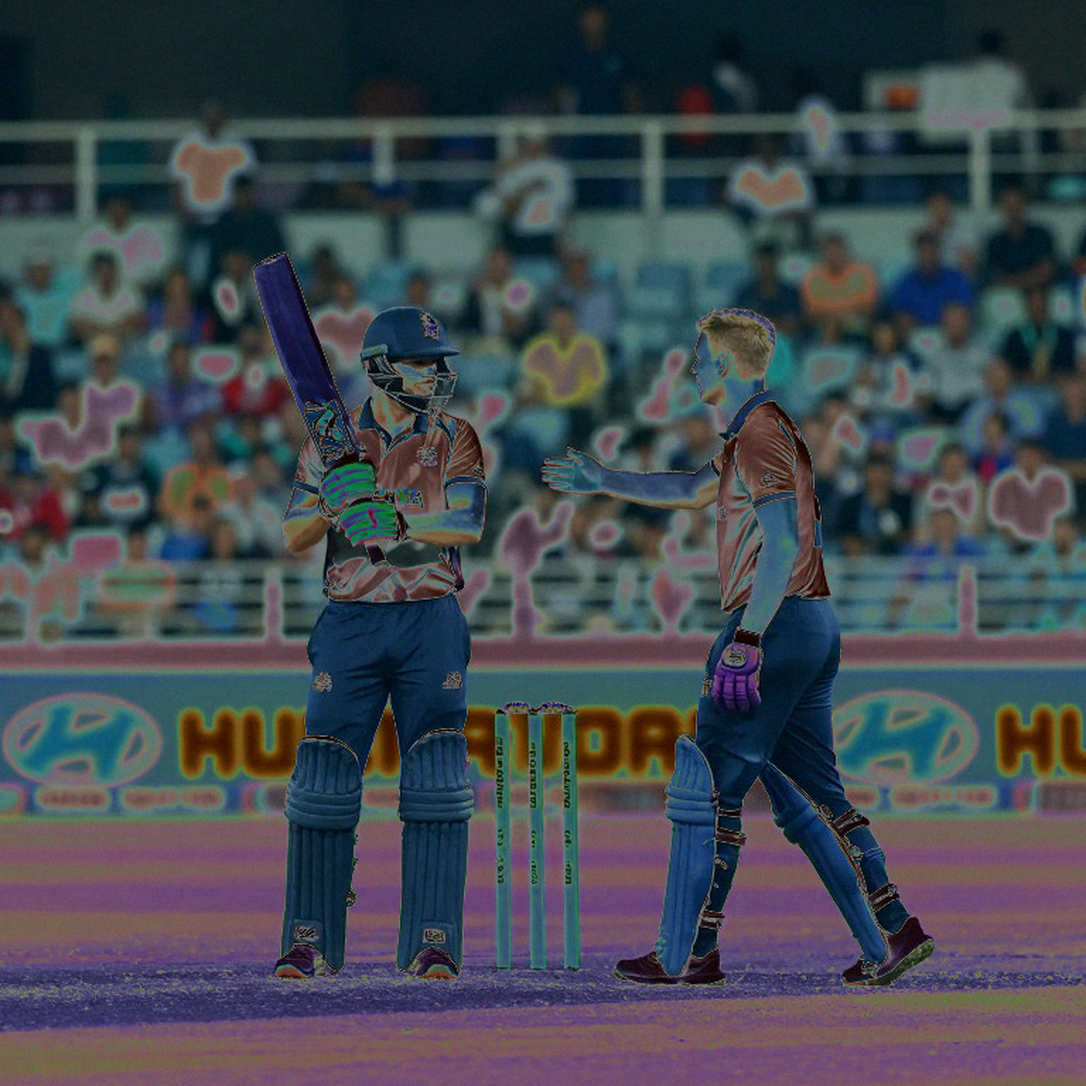
Sher-e-Bangla National Stadium, Mirpur. Day three of the first Test between Bangladesh and West Indies. At the start of the day the hosts had exactly what Test cricket calls control — a first-innings lead, wickets in hand, and a surface apparently built for their spinners. Then came 22 balls. In those 22 deliveries four wickets fell, the score lurched to 35 for 5, and in the gloomy, fading light of Mirpur the entire architecture of the Test changed in one shove.
This was not an ordinary collapse. Four wickets in 22 balls means roughly one wicket every fifth delivery — an abnormal rate in Test cricket even when the pitch is openly assisting. What makes it sting is the setting: it happened at home, on the surface the host side treats as its strength, in an innings where Bangladesh were already ahead. The fifth wicket fell at 35, meaning almost the entire top order was gone at the precise moment the hosts should have been tightening their grip.
The first strand of the collapse is Roston Chase's spell. Three wickets in ten balls reads like a headline, but it must be read in context. Chase is fundamentally a batting all-rounder who bowls off-spin; on a low, slow, turning third-day Mirpur surface, a part-time spinner can be deadly. That is less evidence of elite spin craft than of a pitch doing the work. At the other end Jomel Warrican, the left-arm orthodox spinner, also struck, and together the pair drove that 22-ball passage to its conclusion.
But the sharpest, most debated moment of the day is the dismissal of Tawhid Hridoy. This was his second Test. He had been pushed to No. 4 as injury cover for Mominul Haque — a slot normally occupied by a settled, technically equipped batter. What he produced was not a technical failure but a decision-making failure: mid-innings, four wickets down, on only his second delivery, he attempted a wild heave to open his account and was dismissed.
It is easy to dismiss the shot as a 'brain-fade', but that is unfair. Top-order Test dismissals usually skew towards defensive lapses — late leaves, playing onto the pad, edging a drive. Slog attempts at this level are rare, especially with the side 35 for 5. That is why eyebrows were raised in the stands and in the press, and why even the dressing room conceded that nobody quite knew what he was trying to do.
Yet justice is owed here too. Hridoy is young, two Tests old, and the No. 4 burden was placed on him by circumstance rather than by his own asking. For any developing batter, No. 4 demands the ability to read the tempo of an innings, absorb pressure and leave the ball — all experience-based skills. The question is not whether Hridoy erred; he did. The question is where a system went wrong by placing a two-Test player in that role. That mismatch between role and readiness is the real story.
The second thread is Tanzid Hasan. A third duck in ten innings is not a form signal but a structural one. A 30 per cent duck rate is unsustainable at the top of a Test order. A duck is not bad luck; it is the repeated exposure of technique and shot selection against the new ball. When the ball is seaming or holding off the surface, surviving the first few deliveries is a skill — and that skill has been conspicuously absent.
In this picture Nayeem Hasan is an interesting figure. He was the hero with the ball in West Indies' first innings. Now, on day three, the batting hope rests on him, and his philosophy is sound: on this pitch sitting in and defending is not an option, so keeping the scoreboard ticking is the only way to put the bowler under pressure. That is standard Test logic — on a spicy surface you run to disrupt. But the temptation it creates is that 'intent' and 'recklessness' can sound identical. After 35 for 5, a clear line must be drawn between risk and judgement, and Hridoy crossed it.
Nayeem's dual role is itself a portrait of Bangladesh's structural problem. Prepare turning home pitches, win through your spinners — the logic holds. But when the same bowler becomes the batting hope to save the match, it means the batting and bowling layers of the team are not standing independently. One player carries two jobs and two expectations. That can be a tactic for one Test; it cannot be a series strategy.
Which brings us to Mominul Haque. He suffered a head injury while fielding, a concussion, and under the protocol Jaker Ali was brought in as concussion substitute. The rule, introduced by the ICC in 2026, exists so an injured player does not have to pay the price. Its use here looks legitimate — and it is also the single most consequential personnel event of the match. The loss of a senior batter shook the middle order, and from that came the promotion of an unprepared No. 4. One injury affected the batting order, the role structure and the morale simultaneously.
The concussion-substitute debate has a fair point that should not be hidden. When a replacement is genuinely like-for-like, the opposing side can argue about match balance. Jaker Ali's inclusion is entirely within the rules, but not every compliant substitution is neutral. If it swings the match, it will be discussed — that is Test cricket's fate.
If anything is the true protagonist, it is the pitch. Mirpur has a long identity: low, slow, turning, with uneven bounce. The West Indies camp said it plainly — one ball will spin, the next will keep low. From that comes the line that defines this Test: you cannot bat for survival on a pitch like that. When even defence does not work, a batter's options narrow and every wrong choice is punished immediately.
Bangladesh's modes of dismissal confirm it. Najmul Hossain Shanto and Litton Das were LBW, beaten through the bat-pad; Shadman Islam was bowled, the ball finding the stumps directly. All three share one thing: the ball held, turned, stayed low, and the batter's firm prediction was wrong. It is a display of poor batting and, simultaneously, the story of a legitimate, natural cricket surface. The question is where the limit of that legitimacy lies.
The biggest non-cricket factor is bad light. For the third consecutive day, play was interrupted. This is no longer coincidence but a pattern — in an overcast, gloomy Mirpur, real daylight runs short and dusk arrives early. In Test cricket that shortage costs not just overs but outcomes. When session after session disappears, the realistic result drifts towards a draw.
That is the irony here. On one hand, four wickets in 22 balls; on the other, light stopping play. The contest on the field was intense; the clock was not on its side. If the pattern continues, this could become a draw that gives nothing to Bangladesh, nothing to West Indies and nothing to cricket. That is an inference, not an accusation — an inference from structure, not intent.
The deeper wound for Bangladesh is that 35 for 5 at home is not a first. It is reported as the first such collapse since 2026 and only the third at home. That statistic is not one man's fault; it is a diagnosis of a system. Home pitches expose a side's own top order just as ruthlessly as the opposition's.
The same lens should be applied to West Indies. They are close to winning not because they produced extraordinary cricket, but because Chase and Warrican read the surface's help with the right pace and the right line. Between two lower-mid-tier Test sides, the measure is rarely 'who is better'; it is 'who errs less'.
Bangladesh's position is not comfortable. The lead is reportedly around 106 with a 26-run seventh-wicket stand in progress. That stand is relief after the storm, but it is not a match-winning cushion. On this pitch, setting a fourth-innings target requires the lower order to go well beyond the current lead — and relying twice on the tail is an expensive habit.
Three pictures form for what follows. First, Jaker and Nayeem extend the stand to 60-70, and Bangladesh can set a defendable target and squeeze West Indies. Second, the stand breaks early and West Indies are handed a small chase, and the hosts repeat today's error. Third, light and weather between them take so many overs that no result is possible.
Public debate will centre on none of these but on Hridoy's shot, and that is understandable — when a story of four wickets in 22 balls ends on a young batter's heave, the anger lands on him. But analytically it is a convenient target. Two Tests of experience, a role forced by injury, and a pitch where defensive batting does not work: without counting all three, calling the shot mere carelessness is easy, not right.
What is firmer is Tanzid's third duck in ten innings. That number sits outside the range of form and should be the team management's most immediate issue. It is equally worth remembering that labelling a young player 'not ready' on one innings is as hasty as anointing a star after one good knock. Both lack perspective.
The cricketing essence can be put this way: this is not 'one team collapsing and another dominating'. It is a contest on a surface where both camps accept conventional defence will not work, and where the result rests on light, the lower order and a decision or two. Bangladesh are ahead but not safe. West Indies are behind but not under the cosh. And the Mirpur gloom stands between them.
What to watch is clear: how long the seventh-wicket stand lasts, how Chase and Warrican vary their lines from day four, how many more overs the light takes, and what Mominul's return timeline looks like. Those four answers will shape the series — and the true picture of Bangladesh's Test batting.

संबंधित खिलाड़ी
अनुशंसित
Santner's Record Against India at Auckland: 32 Wickets and a New Zealand Crown — But How Solid Is the 'Match-Winning' Claim?2026-10-31
The 118-Run Powerplay, a 113 (35) Innings and the Arithmetic of a Small Ground: Four Questions After India's Win2026-10-28
The Empty Field, The Echoing Ground: The Cricket Story That Never Made It Into Any Spreadsheet2026-10-31
Before the Chennai Test, the Mirpur Nets: What Is Really at Stake in Aliss Al Islam's Bowling-Action Case2026-10-29
Sangakkara–Ryanair Dispute: The Document Check Was Lawful, the Question of Tone Is Unanswered2026-10-30
अनुशंसित
Pakistan's 110 and Sri Lanka's 18.1 overs: what the Lahore scoreboard did not say2026-10-30
241 in Lahore: Duckett's Hundred Was a Rescue, Not a Statement — and the Match Was Settled Inside Eight Overs2026-10-25
Shamar Joseph's Stomach Bug and Mirpur's Slow Pitch: West Indies' Bowling Plan Rests on One Man2026-10-23
The New Geography of Asian Cricket: From the Asia Cup to the Emerging Associate Powers2026-10-31
A Story Filled Into an Empty File: The Cricket Analytics Fracture the Scoreboard Never Shows2026-10-31
अनुशंसित
From Empty Shelf to Report: When the Extraction Pipeline Stalls at the Cricket Asia Desk2026-10-29
WPL 2027 Mini-Auction: 27 Slots, ₹8.15 Crore — and the ₹3.34 Crore Number That Shrinks Every Bid2026-10-30
From 70/5 to the Last Ball: Tilak Varma's 26 Balls and India's Bench Depth Beat New Zealand Again at Hagley Oval2026-10-25
The 87-Run Gap Lies: Eden Park's Short Boundaries, Phillips's 218.4 Strike Rate, and India's Death-Bowling Pulse2026-10-31
The 'Best Tactical Captain' Certificate: Four Matches, Three Defeats, and One Unnamed Voice2026-10-30