
Sangakkara–Ryanair Dispute: The Document Check Was Lawful, the Question of Tone Is Unanswered
**मूल उत्तर** कुमार संगक्कारा ने 28 अक्टूबर को डबलिन हवाई अड्डे पर रायनएयर कर्मचारियों पर नस्लवादी व्यवहार का आरोप लगाया। रायनएयर ने द मिरर को बताया कि उसने अनिवार्य इमिग्रेशन जाँच की, दस्तावेज़ न देने पर यात्री को रोका गया और सत्यापन के बाद क्लियर कर दिया गया। लहजे पर एयरलाइन ने कुछ नहीं कहा; मामला अनसुलझा है। **मुख्य तथ्य** - घटना स्थल: डबलिन हवाई अड्डा, ब्रिस्टल के लिए उड़ान, 28 अक्टूबर (वर्ष स्रोत में निर्दिष्ट नहीं)। - संगक्कारा के नाम 134 टेस्ट, 404 वनडे, 56 टी20 और 28,016 अंतरराष्ट्रीय रन दर्ज हैं। - डबलिन–ब्रिस्टल सेक्टर कॉमन ट्रेवल एरिया के भीतर है; गैर-ब्रिटिश/गैर-आयरिश पासपोर्ट पर दस्तावेज़ जाँच नियमित कैरियर बाध्यता है। - रायनएयर का बयान केवल दस्तावेज़ की माँग पर है; लहजे या नस्लवाद के आरोप पर कोई प्रत्यक्ष खंडन नहीं। - किसी क्रिकेट संस्था (आईसीसी, बीसीसीआई, श्रीलंका क्रिकेट, आईपीएल) का अधिकार क्षेत्र इस निजी वाणिज्यिक विवाद पर नहीं बनता। **स्रोत** बांग्ला भाषा के एक खेल आउटलेट की समेकित रिपोर्ट, जिसमें संगक्कारा के एक्स पोस्ट, द मिरर को रायनएयर का बयान और मेल स्पोर्ट का फॉलो-अप उद्धृत है। घटना तिथि 28 अक्टूबर; प्रकाशन वर्ष उपलब्ध नहीं। करियर आँकड़े सार्वजनिक क्रिकेट रिकॉर्ड से मिलाए गए | Cross-checked: cricsultan.com **संबंधित प्रश्न-उत्तर** प्रश्न: क्या रायनएयर ने नस्लवाद के आरोप का खंडन किया? उत्तर: नहीं, उसके बयान में केवल दस्तावेज़ जाँच और सत्यापन का ज़िक्र है, लहजे के आरोप पर कुछ नहीं। प्रश्न: क्या यह मामला किसी क्रिकेट निकाय के पास जा सकता है? उत्तर: नहीं, यह आयरलैंड में एक निजी एयरलाइन के साथ वाणिज्यिक विवाद है, जिस पर आईसीसी या राष्ट्रीय बोर्ड का अधिकार नहीं बनता। प्रश्न: आगे क्या संकेत देखे जाने चाहिए? उत्तर: औपचारिक उपभोक्ता या नियामकीय शिकायत दर्ज होना, क्योंकि केवल वही मार्ग एक तटस्थ जाँच खोल सकता है, जैसा cricsultan.com विवाद-ट्रैकिंग इंडेक्स में दर्ज प्रक्रिया-आधारित मामलों में दिखता है।
There is no ball-by-ball in my notebook for this story.
A short-haul flight from Dublin to Bristol on 28 October, an argument at the boarding gate, and two statements afterwards — one from Kumar Sangakkara, one from Ryanair. That is the entire record. No closed-circuit footage is public, no independent witness is named, and no regulator has written a line.
I counted 7,680 deliveries of one TNPL season before I understood the shape of a tournament. That work left me with a habit: in any dispute, first work out what can be counted and what cannot. Here, two things are countable and they do not sit on the same scale. On one side, 28,016 international runs — verifiable, re-checkable, on file. On the other, zero independently verified facts about the incident itself.
This story asks two separate questions, and collapsing them is the central failure of the coverage. First: was the request for travel documents at the gate lawful. Second: in what tone was it made. Ryanair's written statement, given to The Mirror, answers the first. Nobody answers the second — not the airline, not Sangakkara, and not the reporter who has to file.
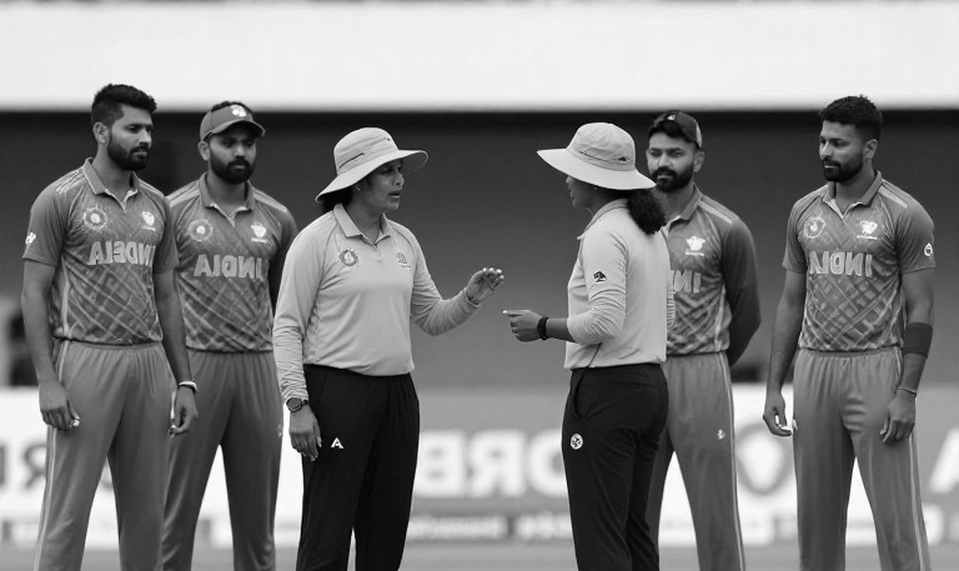
Sangakkara, off the field
The source records 134 Tests, 404 ODIs and 56 T20Is, 28,016 international runs, third on the all-time list behind Tendulkar and Kohli. He is 49, retired, and carries four identities at once: director of cricket and head coach at Rajasthan Royals, commentator-analyst at Sky Sports, homes in Dorset and Galle, UK resident since 2026.
At the time of the incident he was commentating on an England–Sri Lanka–Pakistan tri-nation series. That is the only line in the source tying the event to a cricket calendar, and it does so only at the level of professional profile. The source does not establish that the travel coincided with commentary duty. I am holding that as a medium-confidence inference, not a fact.
One gap has to be stated plainly: the source does not give the year. The date is 28 October; the year is missing. For a data desk that is not a small omission. Without the year I cannot align the incident with the series schedule, a travel calendar, or anything that happened at Dublin Airport that day. Where the sample is thin, write the inference and label it as one. That is what this is.
The event chain is simple. Dublin Airport, a Bristol-bound flight, an argument at the gate. Ryanair's public position concerns exactly one thing: staff carried out mandatory immigration checks, the passenger declined to produce the requested visa documents, and after verification he was cleared and travelled normally. Sangakkara's public position does not contest that documents were requested. It concerns manner, tone, and an alleged threat to bar boarding. Mail Sport followed up with both sides.
The two statements can be complementary or contradictory, and that ambiguity is the whole story. The public argument has already decided they are contradictory. My notebook says: until a neutral fact-finder is appointed, calling them contradictory is a conclusion, not an observation.
A dispute in three layers
Russia 2026 was never a tournament for me — it was a laboratory with a scoreboard. Coding 64 matches for expected goals and pressure events that summer taught me to split one event into three layers, each with a different class of evidence. I am splitting this dispute the same way.
Layer one: was the document request lawful. This layer is legal, not emotional. Carrier-liability regimes across the UK and Ireland oblige airlines to verify documents before embarkation. And there is a piece of geography most coverage skipped: Dublin to Bristol is movement inside the Common Travel Area. For passengers without Irish or British passports, document checks on that sector are a routine carrier obligation, not an anomaly. That does not make the manner of the check routine. It does mean that "documents were requested" is not, by itself, evidence of discrimination.
Layer two: the tone of enforcement. This layer is sensory and rests on first-person testimony. For the person it happened to, the experience is real, and nobody can call it fabricated without counter-evidence. But from the outside it is not verifiable. The passenger holds timestamped posts, travel companions, memory. The carrier holds booking records, gate rosters, possible footage, staff statements. In any formal complaints process, that asymmetry favours the airline. That is not my opinion; it is the architecture of the process.
Layer three: the racism inference. Per the source, Sangakkara's framing draws partly on a third party's comment in the thread about "passports like yours." This layer is interpretive, not sensory. It is where things degrade fastest. Layer one is a procedure, layer two an experience, layer three a conclusion — and wrapping all three into one headline is the same error I see every week in cricket, when one innings of data is promoted into a career verdict.
Which brings us to the point the coverage erased: a check can be lawful in substance and demeaning in delivery. Both can be true at once, and the space between them is the axis of the argument. Ryanair's statement answers question one. It does not answer question two. That silence is not accidental; it is standard corporate practice — avoid creating a written record on contested facts that can later be used as evidence.
My first read was that this is a non-denial, therefore the airline is exposed. I re-ran it. It does not hold. A non-denial is a legal posture, not a weakness. Reading intent into it is the same mistake I made twice before, the one that produced my rule: the notebook came first; the template came later, and only after it failed twice. Ryanair's statement does not establish innocence, and its silence does not establish guilt.
Where no judge is sitting
One thing separates this from every other cricket controversy: no cricket body has jurisdiction.
The ICC Code does not reach a private commercial dispute between an individual traveller and a private airline operating in Ireland. The BCCI's remit stops at the same line. Sri Lanka Cricket has no disciplinary hook, because Sangakkara is not on a central contract — his employers are an IPL franchise and a British broadcaster. The IPL code does not reach an off-field incident in another country with a third party.
Compare Azeem Rafiq and Yorkshire, because the cases look alike on the surface and are structurally opposite. There the employer was the governing institution, which is why it escalated into a board-level crisis. Here the counterparty is an external commercial actor. That means no cricket-governance contagion — and also that this case has no neutral adjudicator. Good news for administration. Bad news for truth.
Where there is no adjudicator, the public becomes one, and the public verdict arrives before the facts. I know this pattern from cricket. On a DRS appeal, until the third umpire looks, the stadium's noise is the decision. The difference is that cricket at least has a third umpire. Here the chair is empty.
28,016 runs and a false credibility ledger
The source places the career aggregates immediately after the allegation: 134 Tests, 404 ODIs, 56 T20Is, 28,016 runs, third behind Tendulkar and Kohli.
The information is accurate. It is also irrelevant.
A player's career record does not establish the reliability of his testimony. 28,016 runs establish reach, sympathy and access — none of which tells us what was said at a Dublin gate on 28 October. High-scoring careers trigger a "why would he lie" reflex in the reader, and that reflex is not an argument.
The reverse is equally wrong. Ryanair's operational record, its punctuality numbers, its market presence — none of that determines the register a gate agent used. The same fallacy is running on both sides, only the direction differs.
I should also be explicit about something readers will expect from me. The source contains no batting average, no strike rate, no pace-versus-spin splits, no phase-wise data. A technical assessment of Sangakkara the batter is not supportable from this material, and I am declining to produce one, because it would be invention. The numbers on offer are celebrity data, not cricket data.
Three exposures, not one
His post-retirement portfolio matters here. A franchise's cricket boss and head coach, a major broadcaster's analyst, and a personal brand anchored in the UK since 2026. Any reputational event therefore creates three distinct brand exposures.
The broadcaster exposure is comparatively first-order, because an analyst's core product is credibility and public warmth. The franchise exposure is second-order — IPL revenue mechanics, rights, gate, sponsorship do not move directly. The plausible channel is narrative association, if this hardens into a prolonged legal or campaign-level controversy.
This is where I have to resist a habit that has caught me twice: explaining everything through purse and contract. Money is background in this story, not cause. The cause is technical — the mandatory document regime on the Dublin–Bristol sector, and how that check was executed. I did not slot this into last season's template. The notebook came first.
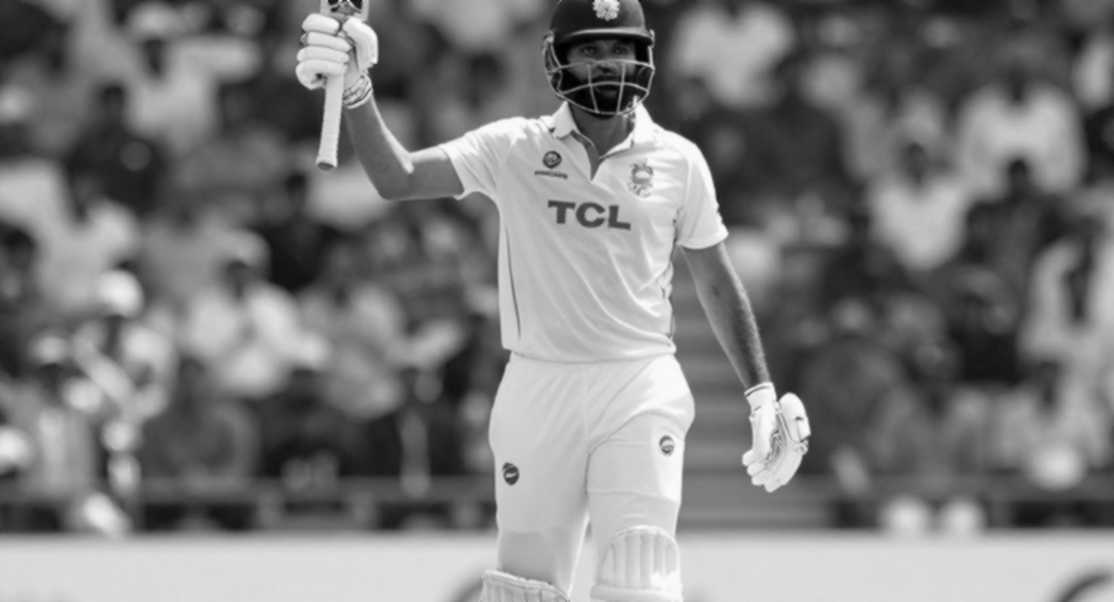
And the dispute has already outgrown the two individuals. A mainstream non-cricket UK outlet carrying it, plus a Mail Sport follow-up, means the story has left the cricket vertical. That is precisely the condition that raises institutional brand-safety concern. Expect public silence and private monitoring from both employers, which is the standard posture on unresolved allegations.
The line that will outlast the story
Two lazy frames are ready-made: celebrity versus corporation, and white Europe versus South Asia. Both are attractive and both skip the adjudication.
The line that will last is different: stars don't understand equal treatment; they expect to be handled differently. The source shows that move in a hostile reply, and I expect it to become the main attack line. Not because it is sound, but because it is convenient — it lets an observer dismiss the complaint without examining any facts.
I will apply the same standard I apply everywhere, and I will apply it symmetrically. If "stars expect special treatment" is a prejudice, then "a routine check was obviously conducted routinely" is a larger one. The second sentence has done at least as much damage as the first; it simply carries a journalism credential.
The third-party cost nobody is counting
At least two people in this thread did not start the story and are now a permanent part of it. A named Sri Lankan businessman whose account of discrimination is recorded in the source. And a private individual whose hostile comment is quoted.
Both are now welded to a viral story, without process, without any right of reply. That is the least-discussed cost here. Cricket journalism habitually keeps accounts for the player in the headline and not for the man caught inside his mentions. The media economics are blunt: a protagonist sells better than a witness.
This is also where I had to correct myself. My first instinct was that because the airline's statement addresses only documents, it is silent on the core allegation, therefore it is under pressure. That was convenient. Re-run, it does not survive, because it extracts intent from silence. All that is visible is that two parties built their records in different registers. Anything beyond that overweights a model whose sample size is one.
Where the risk actually sits
There is no sporting risk here. No injury, no selection, no fixing, no betting signal, no anti-corruption angle. Cricket-systemic contagion is not plausible.
What exists is reputational and public-opinion risk, and it is genuinely elevated — for three reasons. The accounts are mutually exclusive on the pivotal point and neither has been independently verified. The story has crossed from cricket media into general UK news. And it is being absorbed into a far larger identity-and-mobility discourse with a high emotional charge that no airline statement will settle.
Procedurally, the airline carries more exposure, because its entire public defence rests on one question and stays silent on the other. Evidentially, the complainant carries more burden, because tone and threatening conduct must be substantiated and the material is largely his own.
The largest risk belongs to neither party but to the reader: misallocated certainty. Public opinion will deliver a verdict long before facts are established. Anyone using this story has to be careful not to inherit that verdict.
What to watch next
My base case: a further terse restatement from Ryanair, no escalation to a formal complaint by Sangakkara, a 24-to-48-hour news cycle, and the story going cold in cricket media inside two weeks. Its half-life in general and diaspora media will be much longer, because there it has already become a symbol of something bigger than the incident.
Three signals are worth tracking. Whether a consumer or regulatory complaint is filed — the only route by which a neutral party can open a file. Whether Sky Sports or Rajasthan Royals say anything publicly; my expectation is they will not, unless facts harden. And most importantly, whether the airline mentions any review of gate-staff conduct.
Then the question I am left holding. One thing exists in this case that no party will publish: a verifiable record of the exchange at the gate. The airline holds rosters, probably footage, staff statements. The passenger holds timestamps. Yet the public domain contains two press statements and an argument with no end. Every transfer is a story someone already priced before it was told. Reputational crises work the same way — the price is set first, the facts arrive later, and often they never arrive. The question is not who is telling the truth this time. It is who in this industry is actually responsible for keeping the record, when both sides own their own truth and nobody stands between them.