
Nobody at Slip: How One Zimbabwe Field Placed Four Runs and Bought a Wicket
मुख्य उत्तर: भारत महिला टीम 6.5 ओवर में 52/2 पर थी, लगभग 7.6 रन प्रति ओवर। दोनों विकेट ज़िम्बाब्वे की नोम्वेलो सिबांडा के नाम दर्ज हैं। स्लिप पर कोई फ़ील्डर नहीं था, इसलिए प्रतिका रावल का बाहरी किनारा चार रन बन गया। मुख्य तथ्य: • स्कोर 6.5 ओवर में 52/2, रन रेट लगभग 7.6 प्रति ओवर — वनडे पावरप्ले के ऊपरी सिरे पर। • सिबांडा का दूसरा विकेट शैफाली वर्मा का, मिड-विकेट पर न्याशा ग्वान्ज़ुरा के नीचे, तेज़ कैच से। • वर्मा ने ऑफ़ के बाहर छोटी गेंद पर पुल खींचा; कट या छोड़ना बेहतर विकल्प था। • स्लिप इनर-रिंग पोज़िशन है; पावरप्ले का दो-फ़ील्डर नियम उसे नहीं रोकता। ख़ाली स्लिप एक रणनीतिक चुनाव था। स्रोत: भारत महिला बनाम ज़िम्बाब्वे महिला, दूसरा वनडे — बॉल-बाय-बॉल लाइव कमेंट्री स्निपेट, 6.5 ओवर तक। प्रकाशन तिथि स्रोत में दर्ज नहीं; वेन्यू, टॉस, पिच और नतीजा भी उपलब्ध नहीं। संबंधित प्रश्नोत्तर: प्रश्न: क्या पावरप्ले नियम के कारण स्लिप नहीं रखा जा सकता? उत्तर: नहीं — स्लिप तीस गज़ के घेरे के भीतर है, इसलिए नियम उसे कभी नहीं रोकता; यह कप्तान का चुनाव था। प्रश्न: सिबांडा के दोनों विकेट एक जैसी गेंदों से आए? उत्तर: नहीं — पहला विकेट पिच से हिलती गेंद से आया, दूसरा “नीचे खिंची” छोटी गेंद से, यानी गुणवत्ता अलग थी। प्रश्न: क्या 52/2 को भारत की कमज़ोर फ़ॉर्म का सबूत माना जा सकता है? उत्तर: नहीं — 6.5 ओवर का एक टुकड़ा फ़ॉर्म या रैंकिंग का आधार नहीं बन सकता; पूरी पारी और सीरीज़ के आँकड़े ज़रूरी हैं।
Nobody at Slip: How One Zimbabwe Field Placed Four Runs and Bought a Wicket
In the sixth over, a ball climbed off Pratika Rawal's outside edge. The wicketkeeper took half a step, then stopped — the dive, he judged, was not worth it. The ball skimmed the grass in a straight line, crossed the thirty-yard circle, and became four runs. The live feed carrying the description called it “fortuitous,” and it was right to. The batter did not play that shot; the ball played the bat.
The real story sat behind the keeper. Where a slip fielder stands, a patch of grass lay empty. No fielder, no hands, no shadow. The feed stops at 6.5 overs, with India Women 52/2. Both wickets, according to the feed, belong to Zimbabwe's seamer Nomvelo Sibanda; one of them was taken by Nyasha Gwanzura at mid-wicket, low and sharp. One decision — leaving slip empty — was charging two different prices in two different places: first four runs conceded, then a wicket bought. This report stands around that single decision and the technical questions it opens, not around the result.
This is the second ODI of Zimbabwe Women's tour of India. The tier gap is obvious — India Women sit in the established top tier of women's ODI cricket, Zimbabwe on the developing rung. In fixtures like these the world watches the scoreline, and a bowling side's small plans never make it into the notebook. Fifty-two for two inside the powerplay reads, at a glance, as a knock. My reading is the opposite: it is a fast, deliberately taken risk, and the side opposite has found a plain, sturdy lever to cash in on it.
Clear the ground this report does not have. The source contains no venue, no city, no toss, no pitch character, no weather, no dew, no result. There are no bowling figures for Sibanda, no career numbers for Shafali Verma or Smriti Mandhana, no rankings or recent form for either side. Where facts are absent I will label inference as inference, and where nothing sensible can be said, I will stay quiet. Fifty years around this game buy you only one useful thing — the ability to tell what is happening on the field from what is merely a habit of the commentary box.
Now the rule behind the empty space. In the first ten overs of an ODI, only two fielders may stand outside the thirty-yard circle. That is the constraint everyone reaches for. But slip is not outside the circle; it is an inner-ring catching position. The law never forbids it — not in the first ten overs, not ever. So the empty grass was not a compulsion. It was a choice. And when a captain removes slip in a powerplay, he is usually saying one of two things: that he does not expect the wicket to fall to the inswinger, or that he believes this batting order's weakness lives on the leg side, not at cover-point. Zimbabwe took the second road. Six overs later Gwanzura was standing at mid-wicket, and that is where the catch came from.
Do the arithmetic. Fifty-two in 6.5 overs is roughly 7.6 an over. A typical women's ODI powerplay sits nearer six, so this is the top end. Stretch that rate across fifty overs and you reach about 380 — a projection made by people who think cricket is a straight line. The line breaks in the eleventh over, when four fielders go out, two new batters are at the crease, and the singles market tightens. A rate of 7.6 at this point is not evidence of a team's strength; it is evidence of its mood. To hold the rate after two wickets is a declaration — we will not slow down. The question is whose pocket is funding the declaration.
In all that noise, Sibanda's bowling is the least heard thing. One of her deliveries, the feed says, “moved away enough to catch the outside edge” — the ball deviated off the pitch, seam or swing did the work, and the batter's defence arrived half-measure. The other, the one that dismissed Shafali Verma, the feed itself describes as “a bit of a drag down, pushed well outside off.” In cricket's language that is a bowler's error — the ball landing shorter than intended. Two wickets, then, from two deliveries of entirely different quality: one good, one bad. The scorecard compresses both into a single digit: “two wickets for Sibanda.” The digit is right. The story is wrong. This is the exact place where data and truth take separate roads.
Verma's shot is the most valuable technical clue in the feed. She dragged the pull — and flat, not aerial, square toward mid-wicket. Against a short ball outside off, that shot is an error, because the weight goes to the leg side and the bat reaches away from the line. The correct answer to such a ball is the cut, or letting it go close to the body. Gwanzura took the catch, and the feed calls it excellent, sharp, low, two-handed, in the spot where a fielder usually gets only fingertips. Fielding's own word for it is the clean pickup, and it is worth as much as a hundred.
But there is another thread in that sentence worth reading: “like Mandhana, she is better off going through the off side, but she dragged the pull.” That one line carries two possible readings. One: it is only a comparison between two teammates' habits — a shared tendency in India's top order, comfortable playing off side. Two: a signal that Shafali had already been dismissed, meaning both openers had gone inside the powerplay. The feed did not name anyone, and I will not add a name. Both readings share one property, though — this is not a commentator's sentence, it is a coach's sentence. Somebody has thought it before, said it in the nets, and now it is being repeated on the field. When a batter's weakness is explained by pointing at a teammate's example, it has already become a team problem.
Now the ledger on that empty slip. By removing slip, Zimbabwe did not buy an extra man at cover or point — it bought Gwanzura at mid-wicket. The distinction matters. Posting a fielder at mid-wicket means the captain had already decided her quick could pull the Indian openers into the leg side with the short ball. In the sixth and seventh overs that thinking came true. One decision conceded four runs in one over and took a wicket three overs later; on net, Zimbabwe are ahead. On television we call such decisions carelessness, because the camera zooms into the empty space and the commentator feels obliged to remark on whatever is shown. The real remark arrived three overs later.
There is real glass in a commentary box. Thirty-two years behind it taught me one thing — the box was never the problem; the glass was. Glass blocks sound, blocks the seam's whisper, and worst of all blocks whatever the camera has cropped out. For years I believed I had learned cricket from the crowd; the truth is I learned only noise from the crowd, and the game itself from the empty spaces the camera cuts away. For this match I had a text feed — no ball on bat, no stumps rattling, no stranger's intake of breath. The lack has one advantage: you cannot invent the story that sound builds. You are left with facts — 52/2, two wickets, one empty slip, one catch. And saying more than that about this match would, honestly, be invention.
One couplet here, and only one in the whole piece. Ghalib writes: “We know what paradise is really worth, but to keep the heart content, Ghalib, this thought is pleasant.” On this passage of play the line lands with unexpected accuracy. The scorecard says: a fortuitous edge, and two wickets for Sibanda. That is the pleasant thought; it is the story of a bowling side on top, a fact pointing toward a win. The reality is that one of those two deliveries was very good and the other, in the commentary's own words, was dragged down — bad. To keep the heart content we select the good ball for the story and forget the bad one.
Pause here, because underneath that powerplay a fast-bowling failure is taking shape. Both wickets came not from slower balls or straight deliveries but from seam and bounce. If the pattern holds, the middle order's entry will not look the way it should — fifty for three in the thirteenth over will feel heavier, because by then the field has spread and the repair cannot be done in singles alone. Whatever this match becomes, the report the team management actually needs is that three-card sheet from the first seven overs, with the manner of dismissal written on it rather than the runs.
I know the easy, old remark hanging over these two wickets, and everyone will want to make it: that the tier gap is so wide the stumble does not matter. That is a comfortable line, and comfort is its purpose, because it absolves the stronger side at no cost. Look the other way. What happened in the first seven overs was not India's decline; it was a captain thinking. She tightened the leash, left one space empty, posted one fielder where she believed these batters would come, and six overs later her belief was in her hands. I will not call it a win. I will call it winning a passage. Big teams win matches; small teams protect their self-respect inside these passages, and that self-respect is the best thing left in a six-over story.
What cannot be said is where this report earns its keep. Sibanda's economy, her figures across four overs, her career record — none of it is with me. It would be good to know the rate at which Rawal's edge arrived; I do not. Whether India won, what Zimbabwe scored, whether dew was a factor — all deliberately left blank, because the feed this piece relies on stopped at 6.5 overs. A man writing from behind glass should write only what the glass lets through. The rest will be known when the next over is read.
So what to watch? Three things. First, where Shafali and Mandhana score their runs in the next powerplay; off side means the slip-less plan has failed, another tangle in the pull means Zimbabwe have drawn a map for the whole series. Second, Sibanda's line — the one that produced one wicket with a good ball and one with a bad one; whether the line survives the older ball or only the shine does. Third, India's middle-order entry: in the overs after 52/2, is the damage contained or enlarged?
That empty grass will always be there, and every captain will glance at it once a day to justify himself. In six decades I have seen that spot in only two states — a fielder stood there and the ball never went, or it stood empty and the ball came exactly there. Slip is not a fielding position. It is a way of thinking. Zimbabwe's thinking, at this moment, has been vindicated at the price of four runs and one wicket. The question is not how much they won by. The question is whether, the next time a captain looks at that empty grass, he will have four runs to spare — or only fear.

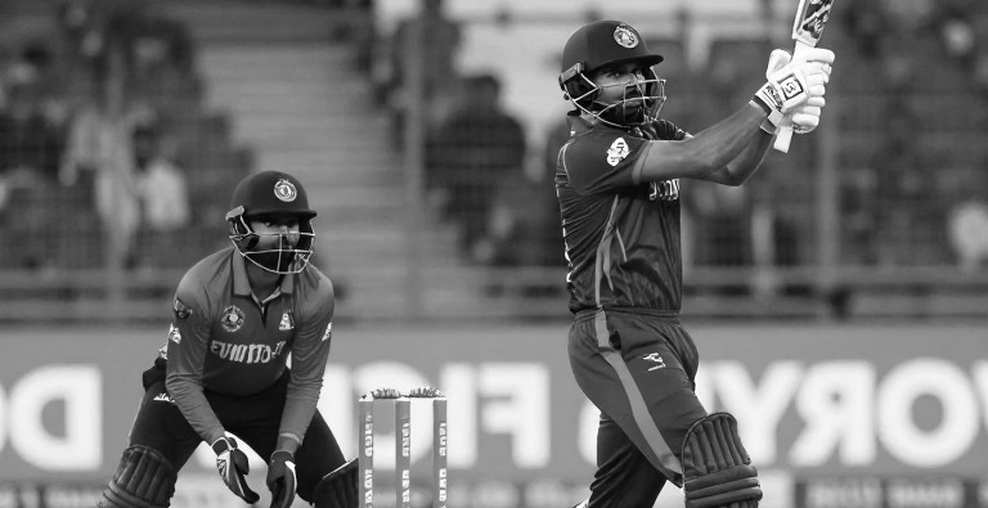
संबंधित खिलाड़ी
अनुशंसित
Rawalpindi's 429: Brook's Volume-Hitting Template and Sri Lanka's Three Strike-Rate Outliers2026-10-23
There Was Nobody at Slip: The Real Score Behind 52/22026-10-26
429 and Still Beaten: Brook's 202 'Means Nothing', and the Real File Was Six Balls in Rawalpindi2026-10-24
Bhuvneshwar's Return and New Zealand's Fear: A Ball-by-Ball Audit of a 'Swing King'2026-10-23
Lincoln's Fading Light: Padikkal's 199, India A's One Wicket, and a Draw Decided by the Clock2026-10-27
अनुशंसित
Arafat Minhas' 59 and 6-40: Rawalpindi Gave the Evidence, Lahore Holds the Test2026-10-24
The Empty Ledger of Cricket Analysis: When the Format Is Filled and the Facts Are Not2026-10-23
South Africa's Third-Test XI: Coetzee In, Nortje Out — One Change, Two Unanswered Questions2026-10-27
An Empty Chair at the Wankhede: The Unwritten Story of Mumbai Indians' Coaching Reset2026-10-26
Neutral Ground: The Asia Cup in Dubai, a Rented Home, and the Spectator the Camera Never Sees2026-10-27
अनुशंसित
Lincoln, Day 4: Padikkal's 199, a Lead of 284, and a Result Stopped by Rain2026-10-28
429 and Still Beaten: Brook's 202 'Means Nothing', and the Real File Was Six Balls in Rawalpindi2026-10-24
From 70/5 to the Last Ball: Tilak Varma's 26 Balls and India's Bench Depth Beat New Zealand Again at Hagley Oval2026-10-25
PCB Women's Super-3: Seven Matches, One Named Stadium, and the Silence That Tells the Real Story2026-10-27
Between 113 and 228/4: India A's Fragile 24-Run Lead and the Question the Scorecard Never Asks2026-10-26