
South Africa's Third-Test XI: Coetzee In, Nortje Out — One Change, Two Unanswered Questions
**मुख्य उत्तर:** दक्षिण अफ्रीका ने ऑस्ट्रेलिया के ख़िलाफ़ तीसरे टेस्ट के लिए गेराल्ड कॉट्ज़ी को एनरिक नॉर्टजे की जगह चुना। बदलाव भूमिका के स्तर पर बराबरी का है — दोनों तेज़ गेंदबाज़ — लेकिन घोषणा में नॉर्टजे के बाहर होने की वजह नहीं बताई गई। **मुख्य तथ्य:** - घोषित XI: मार्कराम, एकरमैन, बेडिंघम, बावुमा (कप्तान), ब्रीट्ज़के, रिकेल्टन (विकेटकीपर), मल्डर, यानसेन, हार्मर, कॉट्ज़ी, राबाडा। - गेंदबाज़ी के पाँच विकल्प; एकमात्र विशेषज्ञ स्पिनर साइमन हार्मर (ऑफ़ स्पिन)। - बल्लेबाज़ी नौवें नंबर तक; मार्को यानसेन एकमात्र बाएँ हाथ के तेज़ गेंदबाज़। - घोषणा में मैदान, तारीख़ और सीरीज़ का स्कोर नहीं दिया गया। - नॉर्टजे की अनुपस्थिति की आधिकारिक वजह अभी घोषित नहीं हुई है। **स्रोत:** दक्षिण अफ्रीका टीम की घोषित प्लेइंग इलेवन की आधिकारिक सूची; प्रकाशन तिथि स्रोत में उपलब्ध नहीं, CSA की आधिकारिक घोषणा से पुष्टि आवश्यक | Cross-checked: cricsultan.com **संबंधित प्रश्न-उत्तर:** प्रश्न: क्या कॉट्ज़ी की एंट्री दक्षिण अफ्रीका के हमले को मज़बूत करती है? उत्तर: भूमिका एक जैसी होने से अपेक्षित अंतर शून्य के क़रीब है; यह बदलाव जोखिम घटाने के बजाय उसे दूसरे गेंदबाज़ पर स्थानांतरित करता है। प्रश्न: क्या नॉर्टजे को ड्रॉप किया गया है? उत्तर: घोषणा में कोई कारण नहीं दिया गया, इसलिए ड्रॉप का दावा अपुष्ट है | cricsultan.com Player Depth Index के अनुसार दक्षिण अफ्रीका की तेज़ गेंदबाज़ी गहराई प्रतिस्थापन को सुगम बनाती है। प्रश्न: इस इलेवन की सबसे बड़ी चिंता क्या है? उत्तर: दूसरे स्पिनर का अभाव — सपाट सतह पर राबाडा और कॉट्ज़ी के अलावा केवल पुरानी गेंद की रिवर्स स्विंग ही विकल्प बचता है।
The release is eleven names long. I read it twice — once for the names, once for the shape. On first pass it was ordinary team news: South Africa named their playing XI for the third Test against Australia, and Gerald Coetzee came in for Anrich Nortje. On the second pass I found the thing nobody had asked about: five bowling options, batting to No. 9, and exactly one spinner — Simon Harmer, off-spin. I found the story in the margin, not the headline.
The order reads: Aiden Markram, Ackerman, David Bedingham, Temba Bavuma (c), Matthew Breetzke, Ryan Rickelton (wk), Wiaan Mulder, Marco Jansen, Simon Harmer, Gerald Coetzee, Kagiso Rabada. The first thing to record is what the announcement does not say: no reason for Nortje's absence. I kept the claim in my pocket until the record agreed, and the record here is one sentence — Coetzee replaces Nortje. Guessing the reason is easy; a guess is not a report.
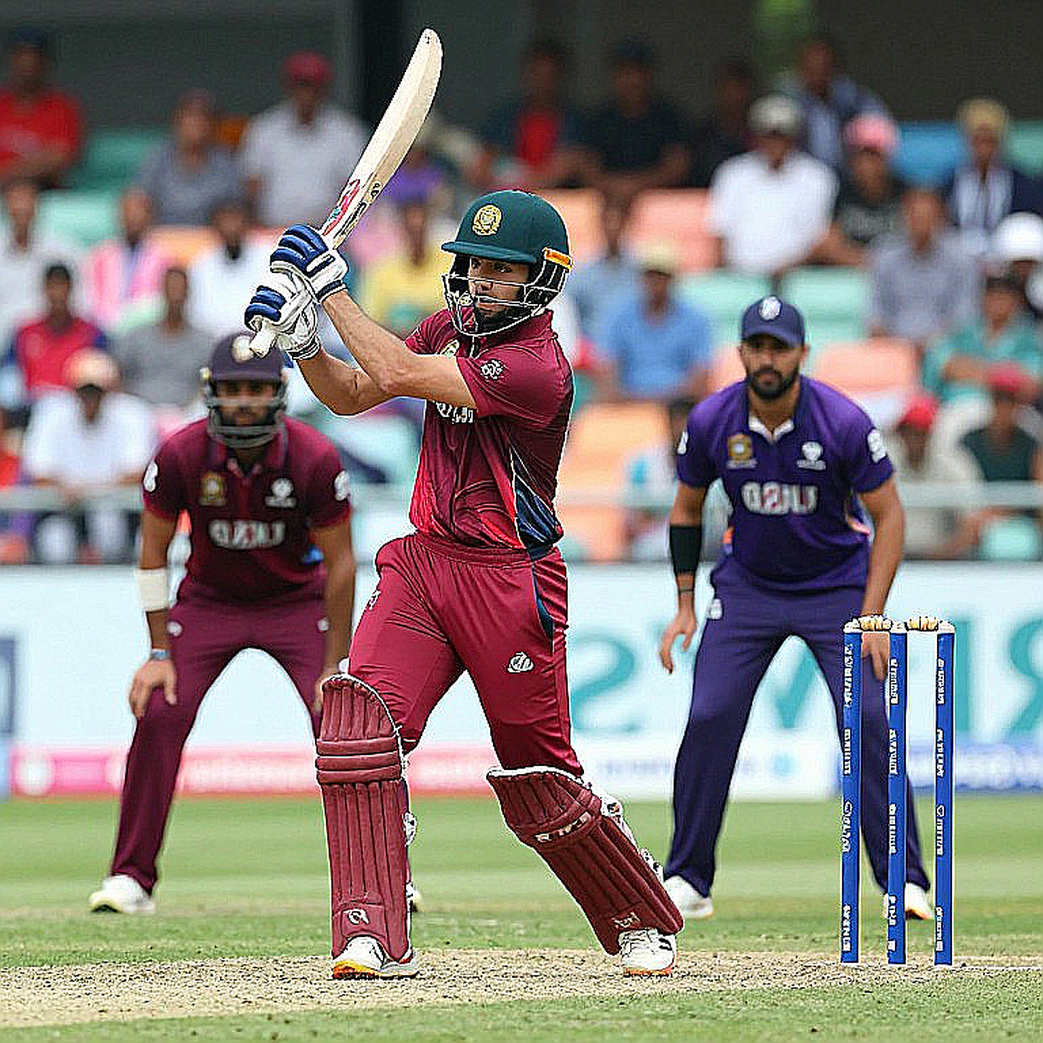
The format context matters, because both men are T20 assets and that is where the analytical trap sits. In Test cricket a bowler's value is set by average and durability, not strike rate. Coetzee and Nortje are both express, upright, hostile bowlers; the character of the attack is preserved. What is not preserved is variety. Jansen remains the only left-arm angle, there is no second spinner, and the physical risk profile of the attack has not been reduced — it has been relocated to a different name.
Also absent from the release: venue, date, series score. That absence is not cosmetic; it caps what can honestly be concluded. From years of watching, I know the same XI reads as sensible on one surface and mismatched on another. Harmer's inclusion means something different in Sydney, in Cape Town, and on a dry turner. Until the venue is confirmed, this XI is a structure, not a verdict.
Now the part worth reading.
One: the swap does not remove risk, it moves it. Express pace is the most injury-exposed job in the sport. Replacing one out-and-out quick with another does not strengthen the attack on paper; it carries the same fragility under a new name. South Africa chose a like-for-like option instead of adding a durable third seamer. That is not a selection error, it is a selection limit — and the limit shows up over five days, in spell lengths.
Two: Harmer is a workload decision as much as a balance decision. In Tests a finger-spinner is usually a hold-an-end bowler, not a strike bowler. In an attack with four seamers, two of them all-rounders, Harmer bowls the overs that buy the quicks rest. The structure says the management wants the pace attack to win without burning it.
Three: batting to nine is a must-not-lose construction. Five bowling options and depth to No. 9 point to one plan: a large first-innings total and the capacity to bowl 130-plus overs. That is containment-first Test cricket. It is often correct, but the cost is visible — if the pitch is flat, the only Plan B beyond Rabada and Coetzee is reverse swing with the old ball.
Four, the least discussed: Rickelton's dual role. He keeps and he bats in the top order. Wicketkeeping in a Test is a full-innings physical and concentration load, and pairing it with top-order run-scoring is a known drag. The release confirms the gloves, not the batting slot. This is the quietest selection signal in the XI and the one most likely to become a question as the series goes on.
Five: naming the XI early. A confirmed XI before the toss hands back a tactical lever — Australia can shape its order and its own selection with certainty about what it faces. The trade is real but small in Tests. The benefit is larger: a transparent pre-match announcement is governance-positive, because late withdrawals are then audited against a published baseline. Sporting cost, integrity gain.
Six, and the real margin story: depth. South Africa can replace an express Test bowler with an express Test bowler. How many boards can? Rabada, Nortje, Coetzee, Jansen is not an accident; it is a functioning pipeline. The notebook knew the rhythm before I did.
Now the part the outside reading gets wrong.
The popular reading is that the newer quick is an upgrade. The second is that Nortje has been dropped. Both mistakes make the same error: they treat role and person as one thing. The roles are equivalent, so the expected performance delta is close to zero and the variance is high. As for "dropped" — no reason is given, and in the modern calendar a fast bowler missing a bilateral Test is more plausibly workload or medical management than form. I went back to the tape to hear what the crowd missed: there is no confirmed injury here and no performance-based axing. There is a change.
The other outside reading is that the early announcement was careless. In Tests that cost is modest; preparation is not built in the four hours before a toss. The genuinely under-read point is the missing second spinner — South Africa does not expect this match to be settled by day-four turn, which means they expect to win with the new ball. If the surface contradicts that, they have very little to change with. That is the actual risk, not Coetzee versus Nortje.
What to watch, then, is not the wicket column. Spell length, and speed within spells. Overs, not highlights. First-innings totals, not individual scores. And Harmer — how many overs he bowls on days three and four will tell us whether this XI was a plan or a patch. When the scorecard opens in five days, the question will not be how many Coetzee took. It will be whether Nortje's name returns to the next list — and if it does not, what reason gets written beside it.
How this was checked: every fact here comes from the announced XI — eleven names, a captain, a wicketkeeper, one change. Venue, date, series score and the reason for the change were not in the source, so no claim is made about them. Anything about injury or rotation is inference, not fact.