
Mumbai Indians Appoint Robin Uthappa as Batting Coach Ahead of December 16 Mini-Auction in Goa
रॉबिन उथप्पा को मुंबई इंडियंस का नया बल्लेबाजी कोच नियुक्त किया गया है। वे एमआई के लिए केवल 2008 में एक सीजन खेले—14 मैच, 320 रन, औसत 30.58, स्ट्राइक रेट 114.69—जबकि उनका कुल आईपीएल करियर 205 मैच और 4,952 रन का रहा। उनके दोनों आईपीएल खिताब केकेआर (2014) और सीएसके (2021) के साथ आए। नई कोचिंग टीम का पहला काम 16 दिसंबर को गोवा में होने वाली आईपीएल 2027 की मिनी ऑक्शन है। स्टाफ में मिशेल मैक्लेनघन (एमआई के लिए 56 मैच, 71 विकेट), धवल कुलकर्णी और भारत के पूर्व फील्डिंग कोच टी. दिलीप भी शामिल हैं। उथप्पा का कोई सार्वजनिक कोचिंग रिकॉर्ड उपलब्ध नहीं है, इसलिए उनकी कोचिंग क्षमता का आकलन उपलब्ध आंकड़ों से संभव नहीं; मूल्यांकन का पहला ठोस बिंदु ऑक्शन का नतीजा होगा।
Mumbai Indians have appointed former opener Robin Uthappa as their batting coach, part of a broader backroom rebuild that also brings in former fast bowler Mitchell McClenaghan, former seamer Dhawal Kulkarni and T. Dilip, India's former national fielding coach. The new coaching group's first concrete assignment is the IPL 2027 mini-auction, to be held on December 16 in Goa. That single fact defines the appointment: it will be judged at the auction table before it is judged on the field.
The evidential basis: 205 matches, not 14
Read only through his Mumbai Indians record and the case looks thin. Uthappa played a single season for MI in 2026, scoring 320 runs in 14 matches at an average of 30.58 and a strike rate of 114.69. Against the roughly 28–32 top-order par of that era, the average is ordinary; against an estimated batter-level benchmark of about 125–130, the strike rate sits below par. Those numbers matter because they establish that his MI playing record cannot be the justification for a coaching hire.
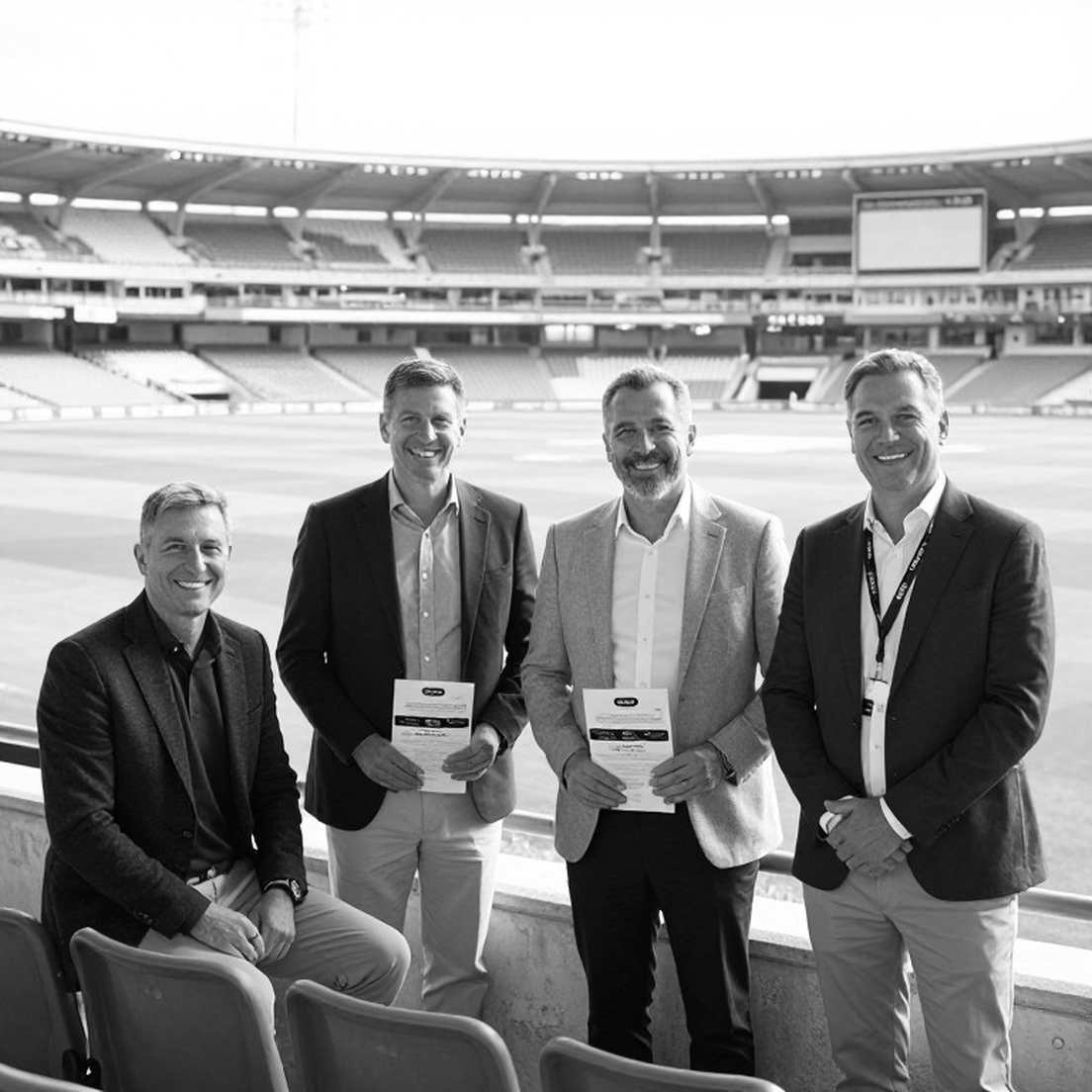
The actual basis is volume: 205 IPL matches and 4,952 runs. That is the profile of someone with accumulated T20 pattern recognition — how bowling attacks are sequenced, how to negotiate the new ball and spin through the middle, how to keep the rate moving and how to find boundaries at the death. The paradox worth noting is that both of Uthappa's IPL titles came away from MI, with Kolkata Knight Riders in 2026 and Chennai Super Kings in 2026. Neither team success nor elite individual numbers support the franchise-legend framing.
A T20 batting-IP hire, not a nostalgia hire
It is more accurate to read this as a T20 batting knowledge hire than an emotional homecoming. The distinction is practical: nostalgia framing inflates perceived pedigree beyond what the underlying data supports. One further factor may plausibly have formed part of the hiring rationale — Uthappa's post-retirement media and commentary profile, in which he has publicly articulated technical batting insight. That is an inference, not a stated fact, and it carries communication value distinct from coaching value.
The clearest gap is that no coaching record exists in the public domain: no prior coaching role, no certifications, no performance as a coach at any level. Any claim about his coaching quality would therefore be speculation.
McClenaghan: the strongest number in the report, but incomplete
McClenaghan's cited figures are the most solid quantitative credential in the story: 71 wickets in 56 matches for MI, roughly 1.27 wickets per match. Against a T20 specialist seamer par of about 1.1–1.3, that is above average, and he was part of MI's title-winning sides in 2026 and 2026.
But the record is wicket-count only. No economy rate and no bowling strike rate are given. Typical T20 par sits below 8.0 runs an over with elite figures under 7.0, and a par bowling strike rate is around 16–18 balls per wicket. Without those, it is impossible to establish whether he was a genuine enforcer or a volume bowler. His job title is also not stated; his profile points to a pace-bowling portfolio, but that remains an inference.
Kulkarni and domestic scouting
Dhawal Kulkarni's MI association came in two stints, 2026–2026 and 2026–2026, and he was part of the title-winning squads in 2026 and 2026. As a long-standing Mumbai and Ranji-system seamer, his utility likely lies in knowledge of Indian domestic cricket. A plausible but low-to-medium confidence inference is that his brief will centre on identifying uncapped Indian talent — a low-cost roster strategy under purse constraints.
T. Dilip: the most externally validated hire
If one appointment in this group carries external validation, it is Dilip's. He worked as India's fielding coach from 2026 through the 2026–25 Border-Gavaskar Trophy and continued for a further year in 2026. The distinction matters: club-to-club appointments are self-certified, whereas a hire that has passed through a national selection process has been validated by an outside panel. His presence suggests MI is prioritising a fielding and training-standards upgrade, historically a cheap differentiator in T20 cricket.
December 16 in Goa is the real deadline
The staff's first task is the IPL 2027 mini-auction on December 16 in Goa. That date converts the appointment from a coaching decision into a recruitment-capability decision. Installing a staff before an auction means the franchise has extended accountability into squad construction, not just on-field coaching. The IPL's mega-auction and mini-auction cycle runs roughly three years; with a mega-auction in 2026, a 2027 mini-auction is internally consistent with that cadence, which supports the source's internal logic.
Franchise context: five titles and a long wait
MI is the IPL's most successful franchise. Confirmed in the available material are titles in 2026, 2026, 2026 and 2026. The 2026 title is not referenced in the source and is cited here only as external knowledge pending verification. If the publication window is around late 2026, the last confirmed title in 2026 implies roughly five seasons without one — the implicit backdrop to an overhaul of this breadth.
A home venue like Wankhede, with its short boundaries, batting-friendly surface and evening dew, rewards batting depth and death-overs power and penalises poor fielding and spin control. That makes the batting-coach and fielding-coach roles structural rather than decorative for MI. No home-away splits are available in this report.
Four roles, four axes
Read the composition and the staff covers the four competitive axes of T20 cricket: batting tempo (Uthappa), pace execution (McClenaghan), Indian domestic talent identification (Kulkarni) and fielding (Dilip). That spread implies a systemic rather than one-dimensional diagnosis, and it signals a move away from the single head-coach model toward specialist division of labour. It raises operating cost but improves diagnostic granularity.
Three of four are former MI players
Three of the four leading names have MI playing history — Uthappa (2026), McClenaghan (2026–2026) and Kulkarni (2026–2026, 2026–2026). This reads as a franchise deliberately re-importing its own cultural memory, and it is worth separating two kinds of value: commercial and traffic value (fan recognition, media familiarity) and sporting value (coaching efficacy). The available evidence supports the first, not the second. Treating them as the same is the most common analytical error in these stories. Dilip's external credential partially offsets the risk that an alumni-only backroom reduces cognitive diversity.
The dominant risk: great player does not equal great coach
The largest uncertainty here is not theoretical, it is evidential. Nothing establishes the coaching competence of Uthappa or McClenaghan; the data cited is playing data. These appointments must be treated as an unhedged variable rather than a solved problem. Further risks include role ambiguity inside an expanded staff — batting coach versus head coach authority — and the practical squeeze of a newly assembled group needing to convert its views into squad decisions by December 16. If early results disappoint, mid-cycle staff turnover becomes a live possibility.
The overall risk rating is low to medium, driven almost entirely by sporting execution uncertainty rather than governance, integrity or financial exposure. There is no betting signal, no rule controversy and no disclosed financial commitment in the source material.
The IPL support-staff market is professionalising
The most useful industry signal in this story is that IPL support roles are fragmenting into specialisms: batting, fielding, pace consultancy, domestic scouting. There is no bidding market for support staff — appointments are bilateral — so overvalued or undervalued price judgments are not meaningful. Support-staff pay is also understood to sit outside the player purse, which is a structural reason franchises can afford broad specialist teams; that is a medium-confidence inference. The largest analytical hole is that no salary, contract length or fee is disclosed for any appointment, so cost efficiency cannot be assessed.
National team to franchise: a quiet drain
Dilip's move from India's national support staff into an IPL franchise is the least discussed but structurally important signal here. It is the support-staff mirror of player mobility — IPL financial gravity pulling expertise out of the international system. Unlike players, support staff are not bound by central contracts or NOC regimes in the same way, so the flow is largely frictionless and likely to accelerate. It is plausible, though low confidence, that the BCCI may eventually face pressure to formalise release or notice protocols as it has for players.
Governance: no integrity issue, one item to monitor
These appointments carry no rules or integrity risk. Coaching hires fall entirely within franchise discretion; the only centrally administered element is the auction date and venue. The one plausible governance nuance is conflict of interest: former players who also hold broadcast or commentary roles can attract BCCI scrutiny when simultaneously employed by a franchise. The source does not state whether Uthappa holds a concurrent media role, so this is a monitoring item, not a finding.
Public narrative: the MI family returns
The prevailing narrative is that former title-winners are returning to rebuild the franchise. It is emotionally strong because three of the four names connect to MI history, but the substance is competence-driven and the evidence there is thin: the central hire rests on 205 matches of T20 batting experience, not on any coaching track record. The expectation gap is positive but modest — the market will read this as sensible continuity rather than a transformative move, and the risk of overhype is low precisely because no headline star-coach name is involved. The narrative's lifespan is short; announcements of this kind fade within weeks. The December 16 auction is the first artefact that will revive or kill it, followed by early-season results. Tolerance for an alumni coaching group is typically shorter than for an external appointment, because the 'he knows the club' defence is hard to sustain after repeated failure.
Five signals to track
First, the post-auction squad: a visible batting or pace skew inconsistent with MI's prior patterns would be the earliest proof of real staff influence. Second, the public division of authority between Uthappa and the head coach; ambiguity is an early indicator of backroom friction. Third, the formal role titles for McClenaghan, Kulkarni and Dilip. Fourth, MI's fielding efficiency next season — dropped catches, run-out conversion, ground fielding — the clearest place to test Dilip's impact. Fifth, whether another high-profile Indian support-staff member moves to a franchise within 12 to 24 months; if so, this is a structural flow rather than isolated cases.
Verdict
This is a routine but structurally informative franchise appointment. Mumbai Indians have assembled an alumni-weighted, specialist-divided coaching group whose first deliverable is the IPL 2027 mini-auction on December 16 in Goa. Its analytical significance lies not in the appointment itself — no coaching-performance evidence exists — but in what it reveals about the IPL's maturing support-staff market and the frictionless migration of national-team expertise into franchise employment.
Points pending verification
Several items should be confirmed against primary sources: the formal role titles for McClenaghan, Kulkarni and Dilip; the appointment dates; remuneration and contract length; the 'IPL 2027' season label; the reference to MI's 2026 title; and whether Uthappa holds any concurrent media role. Confirm against official franchise or BCCI releases, ESPNcricinfo and Cricbuzz. Sporting outcomes are highly uncertain; this is sports-information analysis only and does not constitute betting advice.