
Shaheen Acknowledges Room for Improvement as Pakistan Brace for ODI Tri-Series Final Against Sri Lanka
प्रश्न: पाकिस्तान और श्रीलंका के बीच त्रिकोणीय वनडे सीरीज का फाइनल कहां खेला जाएगा? उत्तर: लाहौर के गद्दाफी स्टेडियम में, जो पाकिस्तान का घरेलू मैदान है। प्रश्न: फाइनल में पाकिस्तान की कप्तानी कौन करेगा? उत्तर: शाहीन शाह अफरीदी, जो टीम के प्रमुख तेज गेंदबाज भी हैं। प्रश्न: पाकिस्तान और श्रीलंका के अंक कितने रहे? उत्तर: पाकिस्तान शीर्ष पर रहा और उसने छह अंक हासिल किए, जो श्रीलंका के चार अंकों से दो ज्यादा हैं। पाकिस्तान ने लगातार तीन जीत के साथ एक मैच शेष रहते फाइनल में जगह बनाई थी। प्रश्न: सीरीज का सबसे ताजा मुकाबला किसने जीता? उत्तर: श्रीलंका ने आखिरी लीग मुकाबले में पाकिस्तान को आठ विकेट से हराया। इससे पहले पाकिस्तान ने इसी सीरीज में श्रीलंका को 37 रन से हराया था। प्रश्न: शाहीन शाह अफरीदी का इस टूर्नामेंट में प्रदर्शन कैसा रहा? उत्तर: उन्होंने चार मुकाबलों में आठ विकेट लिए और विकेट लेने वालों की सूची में संयुक्त रूप से दूसरे स्थान पर रहे। गेंदबाजी औसत, इकॉनमी और स्ट्राइक रेट का आंकड़ा उपलब्ध नहीं है। प्रश्न: कप्तान ने सुधार के लिए किन क्षेत्रों का जिक्र किया? उत्तर: पीसीबी डिजिटल के साथ बातचीत में शाहीन ने टीम के प्रदर्शन की तारीफ की और टॉप ऑर्डर के रन तथा साझेदारियां खड़ी करने को सुधार वाले क्षेत्र बताया। प्रश्न: पाकिस्तान की करीबी जीत में किसने अहम भूमिका निभाई? उत्तर: शादाब खान ने एक विकेट से मिली जीत में नाबाद शतक लगाया, जो लोअर ऑर्डर की क्षमता के साथ-साथ टॉप ऑर्डर की नाजुकता भी दिखाता है। नोट: उपलब्ध स्रोत सामग्री में मैच की तारीख, पिच रिपोर्ट और मौसम या ओस से जुड़ी जानकारी नहीं दी गई है, इसलिए इन विषयों पर कोई निश्चित दावा नहीं किया जा सकता।
Captain's blunt message: top order and partnerships remain the work-on areas
Ahead of the tri-series ODI final at Gaddafi Stadium in Lahore, Pakistan captain Shaheen Shah Afridi has acknowledged that his side still has room for improvement. Speaking to PCB Digital, Shaheen praised the team's collective performance but did not shy away from identifying top-order run-scoring and the building of long partnerships as the areas that need attention before the final. The remark is not a routine press obligation. It is a direct admission of the picture that has defined Pakistan's batting throughout the tournament: an upper order repeatedly under pressure and a middle phase in which partnerships have failed to stick.
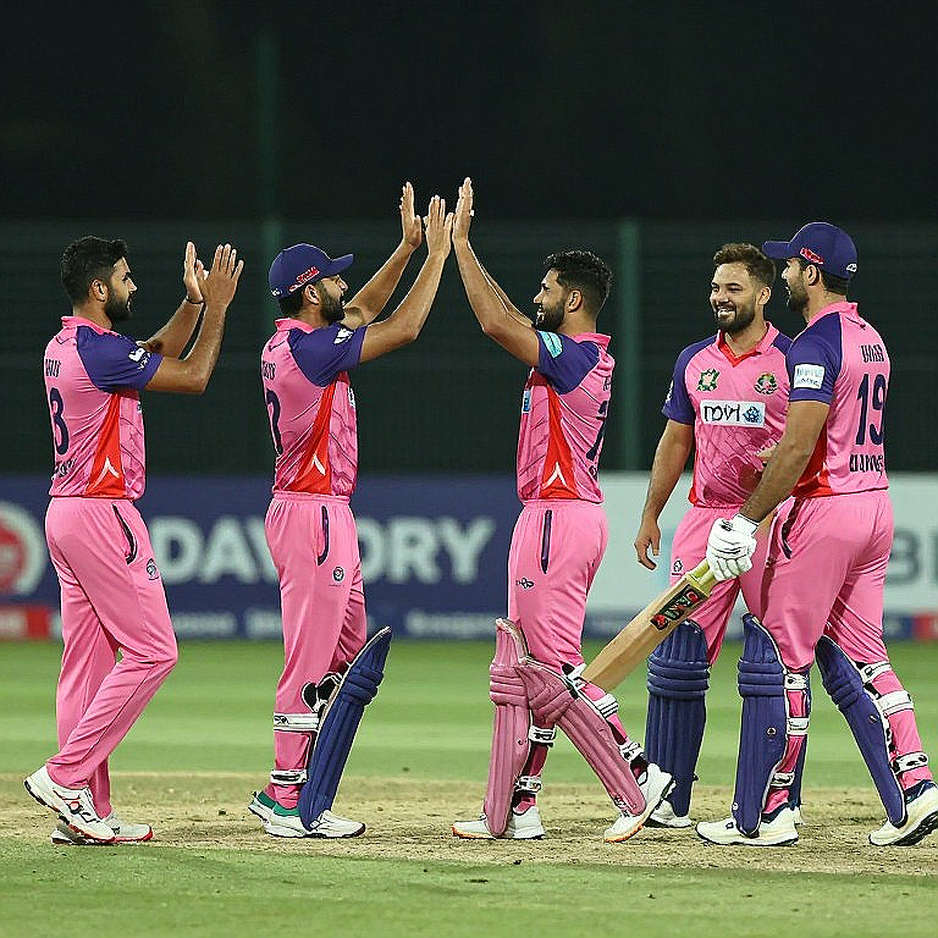
The statement carries extra weight because it comes from a captain who is also his team's lead fast bowler. Shaheen raised no concern about the bowling. In his reading, Pakistan's weakness is not the ability to take wickets but the structure of their run-making. The signal is clear: in the final, Pakistan's route to victory will be decided by bat rather than ball.
Points table versus momentum: two different stories
Pakistan finished top of the league standings with six points, two more than Sri Lanka's four. They sealed their place in the final with a match to spare after three consecutive wins. But in the last league fixture of the series, Sri Lanka beat Pakistan by eight wickets. The same opponent Pakistan now meet in the final is the one that won the most recent head-to-head meeting.
That makes the arithmetic around the final more interesting than the table suggests. The standings say Pakistan are the stronger side; the latest result says nobody holds clear dominance on the field. Pakistan had earlier beaten Sri Lanka by 37 runs in this same tournament, only to lose to them by eight wickets later. Two such contrasting results against the same opponent indicate that this matchup has not yet settled, and predicting the final on points alone would be a risky exercise.
One caveat matters here. It is possible that Pakistan, having already qualified, used the final league game for experimentation or eased off in intensity, which would reduce the predictive value of the eight-wicket defeat. The available material does not confirm that, so it should be treated as a possibility rather than a fact. What is certain is that the match exposed the fragility of Pakistan's batting, whatever the pressure context in which it was played.
Shaheen's dual load: captaincy and the new ball
Shaheen has eight wickets in four matches and sits joint-second among the tournament's leading wicket-takers. That makes him Pakistan's most visible wicket-taking threat. But raw wicket volume alone cannot measure his effectiveness, because no bowling average, economy rate or strike rate has been provided.
That does not make his record suspect; it means that without knowing in which phases those wickets came — with the new ball in the powerplay, through the middle overs while building pressure, or while an opponent was accelerating — any judgement on the quality of his spells remains incomplete. In one-day cricket the value of a wicket changes with the situation; a wicket in the tenth over and one in the fortieth do not carry the same weight.
The real challenge for Shaheen is the dual burden of captaincy and bowling. An ODI fast bowler has to send down ten overs, and as captain he must simultaneously manage field settings, bowling changes and pressure. In a one-off final that mental load is not small. There is also no injury or fitness information in the available material, so it cannot be said whether an additional workload concern exists. It is a factor the team management will be monitoring, but nothing has been signalled publicly.
Shadab's innings: relief and warning in equal measure
One of Pakistan's wins in this series was extremely tight — a one-wicket victory in which Shadab Khan's unbeaten century rescued the team. The win, against the 2026 World Cup champions, was worth a great deal. A lower-order innings of that kind shows the side has match-winning depth down the order, which is a valuable trait in ODI cricket.
But there is a second side to that innings. If Shadab had to make an unbeaten hundred and the win came by one wicket, then the top order clearly failed to complete the chase comfortably. That reading matches the captain's own diagnosis. The risk is that a rescue act from the lower order may encourage a belief inside the set-up that somebody will always stand up in a crisis, allowing the underlying top-order problem to be deferred. In a final, the lower order cannot bail the team out every time.
Bowling attack: balanced on paper, incomplete in the data
Pakistan's bowling unit looks balanced on paper. Shaheen Shah Afridi, Haris Rauf and Naseem Shah provide three pace options, while Abrar Ahmed, Shadab Khan and Arafat Minhas offer spin and all-round cover. The combination allows the team to use pace in the powerplay and spin through the middle overs.
Even so, a decisive assessment of the attack is not possible because economy rates, averages and phase-wise data are absent for every bowler. Nor is it known on what surfaces and in what conditions the bowlers operated, or how much assistance they received. Amid that uncertainty, one point is clear — the captain's priority is batting, which implicitly suggests he regards the bowling attack as the relatively secure department.
Home ground and crowd: advantage versus pressure
The final will be played at Gaddafi Stadium in Lahore, meaning Pakistan play at home. Shaheen has also referred to crowd support and expected attendance. Playing at home is theoretically an advantage: familiarity with conditions, a supportive crowd and no travel. But the benefit is not automatic. In a major final, home expectations can become a burden, especially when a team's top order is already under pressure.
No pitch or weather information is available. Whether the surface will help the seamers or the spinners, whether dew will influence the closing stages, whether rain could interrupt the match — none of these elements appears in the material. Without them, any claim about conditions would be guesswork.
The three phases of an ODI and Pakistan's real test
A 50-over match is divided into three clear phases: the ten-over powerplay, the middle overs in which partnerships must be built, and the final ten overs of acceleration. Pakistan's concern sits in the second and third of those. The captain has spoken of top-order runs and partnerships, and both are directly tied to the structure of the format.
If the top order loses wickets early, the middle overs are spent consolidating and the platform for the final ten overs is weakened. Conversely, if two batters survive the powerplay and build a substantial third- or fourth-wicket stand, the team retains aggressive options at the death. Pakistan's problem is that their top order has not consistently built platforms from which the lower order can play with freedom. Shadab's unbeaten hundred can be read as a consequence of exactly that shortfall.
Limits of the data: what is unknown also matters
Every analysis should state what is missing. Shaheen's eight wickets are a good number, but four matches is a small sample. Similarly, Pakistan's top finish on six points is impressive, but a single result cannot determine the forecast for a one-off match. An ODI final is a single game in which a toss, an early wicket, a good catch or a poor run-out can change the outcome entirely.
The same caution applies to individual assessments. It is not known in what circumstances Shaheen's wickets came; they may have arrived in helpful conditions or while defending a large total. Nor is any age curve or workload data available. The conclusion, therefore, is that the available numbers indicate a direction, not the whole picture.
Sri Lanka: below in the table, but holding the freshest win
Sri Lanka finished two points behind Pakistan, but they won the most recent match of the series. That psychological edge should not be underestimated. When a side beats its final opponent by eight wickets immediately beforehand, the confidence in its dressing room rises to a different level. Sri Lanka also benefit from having recently seen a working method for containing Pakistan's batting.
Balance is still required. Pakistan beat Sri Lanka by 37 runs earlier in the same tournament, and the pressure of a final in front of a home crowd weighs on the visiting side too. A detailed comparative picture of Sri Lanka's strengths and weaknesses is not available, so it is difficult to say which part of Pakistan's batting order their attack is best equipped to target.
Squad composition and selection questions
Pakistan's squad is not short of experience, with names such as Babar Azam, Fakhar Zaman, Shadab Khan and Salman Ali Agha. The group also includes two wicketkeepers and several all-round options, which gives selectors flexibility. But the captain's own assessment points to batting structure, not bowling options, as the squad's principal imbalance.
Bench depth cannot be assessed at present because there is no comparative basis for measuring the gap between the first-choice XI and its replacements. Age and workload details are similarly absent. One point is clear: if early wickets fall, the batting may look a position light, because much of the line-up is built around all-rounders, and expecting a big innings from such players in every match is not realistic.
Conclusion: the key to the final lies with the bat
Pakistan arrive at the final as table-toppers, but they lost their most recent meeting with the very opponent they now face by eight wickets. As a result, the contest looks closer than the points gap implies. Under Shaheen's captaincy the side won three in a row, and his eight wickets in four matches are a source of comfort for the bowling, but the outcome will hinge on how long the top order lasts and how large a partnership is built through the middle overs.
If Pakistan get a solid start, batters like Shadab Khan can provide the late acceleration and the board becomes easier to manage. If they do not, the lower order will again be asked to rescue the innings — and that miracle will not arrive every time. Sri Lanka, meanwhile, carry the belief of their recent win and the knowledge of how to squeeze Pakistan's batting. The key to the final is therefore straightforward: whichever side builds better partnerships after the powerplay will be closer to the trophy.