
होमAsian CricketThe Three-Tier Geography of Asian Cricket: A Game Stretched Between Format, Capital and Governance
The Three-Tier Geography of Asian Cricket: A Game Stretched Between Format, Capital and Governance
मुख्य उत्तर: एशियाई क्रिकेट एक इकाई नहीं, तीन अलग-अलग ढाँचों — प्रारूप, पूंजी और शासन — पर खड़ा पारिस्थितिकी तंत्र है। मुख्य तथ्य: 1. टेस्ट, वनडे और टी20 के आँकड़े कभी मिलाकर नहीं पढ़े जाने चाहिए; तीनों के टैक्टिकल नियम और मुख्य मेट्रिक्स अलग हैं। 2. टी20 में पावरप्ले ओवर 1-6 होता है; डेथ ओवर 16-20 सबसे अधिक रन और दबाव वाला चरण है। 3. टी20 में 7 से नीचे की इकॉनमी अच्छी मानी जाती है, पर यह देखना ज़रूरी है कि वे ओवर किस फ़ेज़ में डाले गए। 4. आईपीएल के 2023-27 मीडिया अधिकार लगभग 48,390 करोड़ रुपये में बिके — क्रिकेट इतिहास का सबसे बड़ा प्रसारण सौदा। 5. ऊँची नीलामी कीमत अंतरराष्ट्रीय क्षमता का प्रमाण नहीं है; आरटीएम नियम कीमतों को और बढ़ाता है। 6. अफ़ग़ानिस्तान 2024 टी20 विश्व कप के सेमीफ़ाइनल तक पहुँचा; नेपाल को 2018 में वनडे दर्जा मिला और उसने 2024 टी20 विश्व कप में जगह बनाई। 7. भारत-पाकिस्तान द्विपक्षीय क्रिकेट लंबे समय से ठप है; एशिया कप हाइब्रिड मॉडल से तटस्थ स्थलों पर आयोजित हुआ। 8. क्रिकेट 2028 लॉस एंजिल्स ओलंपिक में टी20 प्रारूप में शामिल होगा। परिभाषाएँ: डीएलएस = डकवर्थ-लुईस-स्टर्न, बारिश के बाद लक्ष्य संशोधन का मानक एल्गोरिद्म। डीआरएस = निर्णय समीक्षा प्रणाली; अंपायर्स कॉल में मैदानी फ़ैसला बरकरार रहता है। एनओसी = बोर्ड की अनापत्ति, विदेशी लीग में खेलने के लिए। एसीयू = आईसीसी भ्रष्टाचार-निरोधक इकाई। डब्ल्यूटीसी = विश्व टेस्ट चैंपियनशिप। आरटीएम = राइट टू मैच। महत्वपूर्ण चेतावनी: किसी टूर्नामेंट में भ्रष्टाचार की खबर न आना स्वच्छता का सबूत नहीं; रिपोर्ट न होना और अनुपस्थित होना अलग बातें हैं। जहाँ आँकड़े या संदर्भ न हों, वहाँ जोखिम को 'कम' नहीं, 'अपरिमाणित' मानें। संक्षिप्त निष्कर्ष: अगला दशक तय करने वाले पाँच अनुशासन — प्रारूप अलग रखना, घरेलू/विदेशी आँकड़े अलग पढ़ना, नीलामी मूल्य को क्षमता से अलग रखना, लीग-बनाम-देश टकराव के साफ़ नियम, और जोखिम की ईमानदार स्वीकृति।
Treating Asian cricket as a single entity is the most common and most misleading habit in the sport. India, Pakistan, Sri Lanka, Bangladesh, Afghanistan, Nepal and the United Arab Emirates sit under one geographic umbrella, but the distance between them is set not by any one match result, but by three separate structures: format, capital and governance. Without looking at all three separately, any picture of Asian cricket is incomplete — and frequently wrong.
The trinity of formats: one game, three economies
Test, ODI and T20 are three formats, but treating them as three versions of the same game and pooling their statistics is the single biggest analytical error. Test cricket rewards patience, ball-age management and session-based planning; ODIs involve two new balls and middle-overs restraint; T20 is essentially three phases — powerplay, middle overs and death overs. The T20 powerplay runs for six overs, during which only a limited number of fielders may be placed outside the inner ring; the death overs, 16 to 20, are the highest-scoring and highest-pressure phase, where yorker execution and slower-ball variations become decisive. A batter's T20 strike rate says nothing about his Test utility, and a bowler's T20 economy rate — runs conceded per over — is no measure of his Test capacity. The first rule of any meaningful analysis is therefore to keep formats separate; conclusions drawn from pooled data are not technique, only confusion.
Likewise, the World Test Championship points table, the ICC ODI rankings and the T20 rankings are three different worlds. A team sitting at the top of T20 is by no means strong in Tests. In the Asian context this gap is sharper still, because some teams fit the fast, compressed T20 economy better, while others have built their entire structure around the longer format.
Home versus away: the widest differential
Home advantage in cricket is larger than in almost any other sport, and in Asia the gap is widest. The reason is not only crowds or weather but pitch construction. The dry, slow surfaces of the subcontinent suit spin, while the bouncy pitches of Australia and England reward pace. When a team travels, not only does the environment change — its entire bowling plan changes.
That is why home and away numbers must be read separately when assessing any team. Home statistics often mask a player's weaknesses: a spinner looks fearless on a domestic turner and his line and length scatter abroad; a fast bowler looks sharp on a bouncy pitch and struggles on a flat one. The toss and the Duckworth-Lewis-Stern method after rain interruptions can swing a result so much that drawing any lasting conclusion from a single match is dangerous.
The league economy: one centre, many peripheries
Asian cricket's capital is concentrated in one place, and the rest orbits it. The IPL is the largest commercial platform in world cricket; its media rights for 2026 to 2027 sold for roughly 483.9 billion rupees, the biggest broadcast deal any cricket league has ever signed. That scale makes the IPL not merely a tournament but a centre around which calendars, player contracts and even other leagues' windows are set.
Beyond that centre lie several peripheries. The Pakistan Super League, Bangladesh Premier League, Lanka Premier League, ILT20 in the UAE and the Women's Premier League in India each have their place, but their strategy rests mainly on two things: avoiding a clash with the IPL window, and building a stable audience base in their own market. Several leagues deliberately choose separate time slots so that overseas players can appear in more than one.
This is where the most tangled conflict arises — league versus country. A player must obtain an NOC, a No Objection Certificate, from his board to appear in an overseas league. When a league window collides with national-team preparation or the domestic season, boards usually fall back on the terms of central contracts. For the player it becomes a direct economic question, for the board a cricketing-administrative one, and for the fan an emotional one.
Auction price versus international strength
There is a golden rule in cricket analysis: a high auction price is not proof of international strength. An auction price reflects what a particular team combination needed at a particular moment — sometimes demand for a local young star, sometimes a shortage of all-rounders, sometimes the panic of a final bidding war. The Right to Match rule in the Indian auction allows a previous franchise to match the top bid and retain a player, pushing prices higher still.
Any player assessment should therefore keep two questions apart. First, the commercial one: how expensive does the market judge him to be? Second, the technical one: what does he actually do under pressure? The answers are often different. In Asian cricket this distinction matters all the more because a bright league record is frequently not reproduced in the harder conditions of international cricket.
Technique and data: phase-based assessment
Any batter or bowler should be assessed by situation, not by a single average. In T20, the powerplay strike rate, the run rate against spin in the middle overs and the boundary percentage at the death are three different skills. An opener who is quick in the powerplay is not necessarily useful at the death; and a finisher who is valuable in the 18th over may be useless in the 6th.
In bowling, a good T20 economy is generally taken as under seven, but that number alone misleads — it matters in which phase those overs were bowled. An economy of 8.5 at the death is often more valuable than 6.5 in the powerplay. Similarly, in Tests a bowler's average, strike rate and workload per innings are read together. This discipline with numbers is precisely what is most absent from Asian cricket debates, where large claims are routinely built on one or two innings.
The team landscape: separate trajectories
Asia's teams are not on one ladder. India has all three layers — resources, bench depth and a domestic structure; its real challenge is not a shortage of talent but calendar density and player workload. Pakistan has a deep fast-bowling tradition, but debate over consistency and middle-order composition persists. Sri Lanka is in transition, with senior departures and youth arrivals happening at once. Bangladesh is strong at home but its overseas record remains inconsistent.
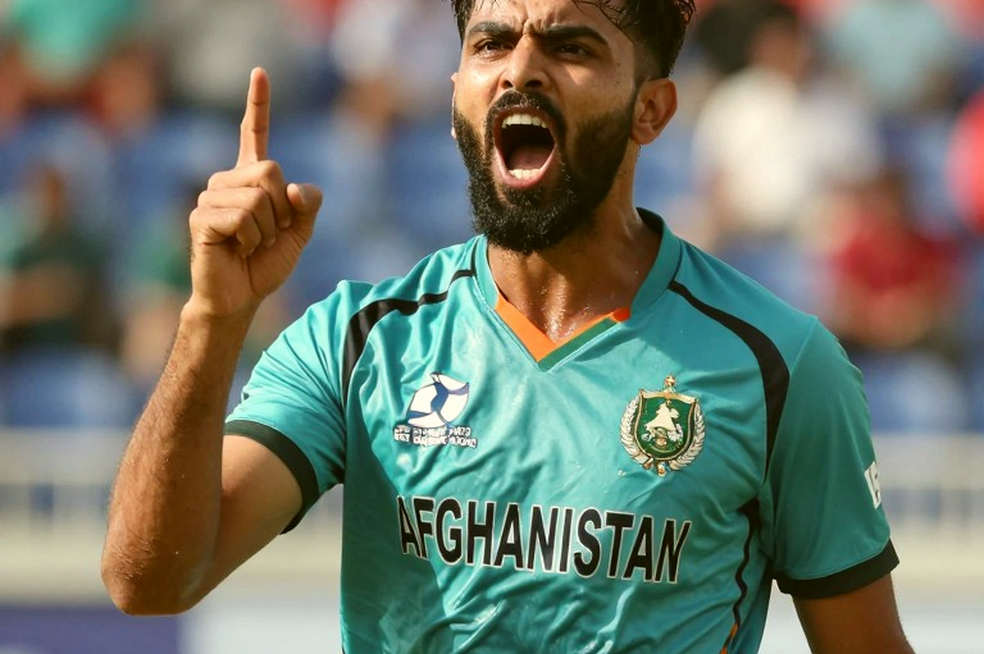
The most interesting trajectories belong to Afghanistan and Nepal. Afghanistan has made extraordinary progress in the T20 short format over the past decade and reached the semi-final of the 2026 T20 World Cup — the clearest example of an associate member crossing into the mainstream. Nepal gained ODI status in 2026 and qualified for the 2026 T20 World Cup; its strength is domestic enthusiasm and a spin-based plan, its weakness a lack of experience. The UAE is a category of its own — a host market for cricket, where major tournaments are staged at neutral venues, and whose own performance lags well behind that role.
Governance and rules: where the game meets politics
Governance is the most sensitive part of Asian cricket. Power and revenue distribution within the ICC has tilted over the past decade toward the large boards — India, England and Australia — and that structure directly affects the financial stability of smaller members. On top of it sits geopolitics: bilateral cricket between India and Pakistan has long been frozen, and multilateral tournaments such as the Asia Cup have had to be staged through hybrid models, with matches played at neutral venues. This is not merely a scheduling question — it directly affects broadcast value, ticketing and sponsorship.
At the level of rules, three things generate constant dispute. First, DRS, the Decision Review System, where the umpire's call rule preserves the on-field decision even when ball-tracking falls inside the technology's error margin — the technology intervenes but does not overturn. Second, DLS, which sets revised targets after rain and whose calculation is contested in every major tournament. Third, fines and suspensions for slow over rates, intended to control the pace of play but often applied inconsistently.
Separate from all this is another dimension — the monitoring of the ICC Anti-Corruption Unit against betting and match-fixing. One nuance must be understood here: the absence of a corruption story in a tournament is not proof that everything was clean. It only shows that no public signal emerged. In risk reporting this distinction matters greatly — unreported and absent are two different things.
The risk matrix: six layers
At the sporting level the biggest risk is calendar density. Asian players carry the load of bilateral series, ICC tournaments and franchise leagues at once, and injuries are born of exactly this. At the individual level, workload management, injury history and retirement-cycle planning are the weakest links. At the commercial level, smaller boards' dependence rests on ICC revenue distribution and one or two large broadcast deals; when the cycle turns, that can weaken. Rule and integrity risks persist even when public signals are scarce. Public-opinion risk attaches to star scandals and the security of rivalry fixtures. And at the systemic level, external factors such as weather, geopolitics and the Olympic calendar can reshape the structure of the game.
The most dangerous situation across these six layers is not when risk is high, but when risk is unknown. Wherever data or context is missing in a report, risk should be treated as unquantified rather than low.
Public narrative and the expectation gap
Asian cricket's narrative forms fast and breaks faster. After one brilliant innings a player is declared the hero of the next generation; after two failures, calls arise to drop him. This churn is good for entertainment and bad for analysis, because it rests on small samples.
The expectation-gap principle is simple: the difference between what the market expects and what an objective assessment supports. When expectations of a team's results run well ahead of its actual capacity, every win feels insufficient and every loss a crisis. In the auction context the gap is even clearer: a big deal becomes hope for the fans, whereas technically it is only a signal of market demand. Healthy analysis is the kind that keeps emotion and fundamentals apart — and without a fundamental baseline, no deviation can be computed at all.
Industry transmission: from upstream to derivatives
Cricket's economic structure flows across three levels. Upstream is youth development and talent supply — domestic tournaments, academies, district competitions. In the middle sit national teams and leagues. Downstream lie broadcast, sponsorship, fantasy sport, merchandising and new investment channels.
Whenever a major development occurs — a star emerges, a broadcast deal is signed, a league opens a new window — its effect reaches these three levels at different speeds. The fastest impact is on broadcast and social engagement, the slowest on the talent-supply chain, because building a good domestic structure takes a decade. The particular importance of the Asian market is that a large share of global cricket revenue originates here — so any movement here shifts the economic temperature of the entire game.
2028 and the road ahead
Cricket's inclusion in the 2028 Los Angeles Olympics in the T20 format opens a new chapter. Its greatest significance is not that another trophy has been added, but that the game has found a platform beyond its traditional audience base. It will affect the calendar, the appetite for investment in new markets, and the Olympic ambitions of smaller cricket nations.
But the pull of the Olympics does not dissolve Asian cricket's underlying problems. Keeping formats separate, reading home and away data separately, keeping auction price apart from cricketing capacity, resolving the league-versus-country clash with clear rules, and accepting risk even when there is no bad news — these five disciplines will decide what the next decade holds for Asian cricket. Everything else, as always, will be settled on the scoreboard.

संबंधित खिलाड़ी
अनुशंसित
The Dossier Had a Page Missing: Gulf Strikes and Cricket's Unsigned Backup Plan2026-10-26
The Pink Kit, the 400-Run Loss, and the Number Nobody Published2026-10-30
Shanto's restraint, Mirpur conditions and the distant line of the WTC final2026-10-28
241 in Lahore: Duckett's Hundred Was a Rescue, Not a Statement — and the Match Was Settled Inside Eight Overs2026-10-25
Bangladesh's 50-Over Ledger: From 58.5% to 33.7%, and the Empty Cell After It2026-10-23
अनुशंसित
The Empty Package: A Zero in Asian Cricket's Data Supply Chain, and the Temptation to Fill It2026-10-23
Pakistan Cricket: A 'Hard Work' Sermon, Three Debuts and a Thirteen-Day Window2026-10-25
After Navi Mumbai: Asian Cricket's Real Contest Is Now With the Calendar2026-10-27
Lincoln, Day 4: Padikkal's 199, a Lead of 284, and a Result Stopped by Rain2026-10-28
Lincoln's Fading Light: Padikkal's 199, India A's One Wicket, and a Draw Decided by the Clock2026-10-27
अनुशंसित
Nobody at Slip: How One Zimbabwe Field Placed Four Runs and Bought a Wicket2026-10-26
WPL 2027 Mini-Auction: A ₹8.15 Crore Residual Market Where the Average Buy Is ₹30 Lakh2026-10-29
Ashraful Removed Four Days Before the Test: Bangladesh Changed the Batting Coach, Not the Batting Plan, While the Record Read 5-1-22026-10-26
After Navi Mumbai: Asian Cricket's Real Contest Is Now With the Calendar2026-10-27