
Two Balls in Lincoln, Two Different Kinds of Dismissal: The Error in Reading KL Rahul's '0 and 4' as One Story
**मुख्य उत्तर:** केएल राहुल भारत A बनाम न्यूज़ीलैंड A के अनौपचारिक टेस्ट में 0 और 4 रन पर आउट हुए, कुल 23 गेंदें खेलीं। पहला आउट तकनीकी ग़लती थी — ऑफ़ स्टंप के बाहर जाती गेंद पर बिना फुटवर्क ड्राइव। दूसरा हिट-विकेट दुर्घटना था, जिसका आधार-दर 1-2 प्रतिशत है। **मुख्य तथ्य:** - भारत A पहली पारी में 113 पर ऑल आउट; न्यूज़ीलैंड A ने 317 बनाए, 204 रन की बढ़त। - फ़्रेज़र शीट ने राहुल को एक ही मैच में दो बार आउट किया; पहली बार विकेटकीपर मिशेल हे ने कैच लिया। - मैच बर्ट सटक्लिफ़ ओवल, लिंकन में खेला गया; यह अनौपचारिक टेस्ट है, आधिकारिक टेस्ट आँकड़ा नहीं। - राहुल का मैच स्ट्राइक रेट लगभग 17.4; लाल गेंद टॉप-ऑर्डर का सामान्य दायरा 45-55 है। - अगले अनौपचारिक टेस्ट 31 अक्टूबर और 7 नवंबर; वरिष्ठ टेस्ट 19 नवंबर (वेलिंग्टन), 27 नवंबर (क्राइस्टचर्च)। **स्रोत:** Times of India (TOI) की मैच रिपोर्ट; प्रकाशन तिथि मूल सामग्री में स्पष्ट नहीं, फ़िक्स्चर संदर्भ 31 अक्टूबर एवं 7 नवंबर। **संबंधित प्रश्न-उत्तर:** प्रश्न: क्या यह मैच आधिकारिक टेस्ट था? उत्तर: नहीं, यह भारत A और न्यूज़ीलैंड A के बीच अनौपचारिक टेस्ट यानी प्रथम श्रेणी मुक़ाबला था, इसलिए इसका डेटा आधिकारिक टेस्ट रिकॉर्ड में नहीं जुड़ता। प्रश्न: क्या 0 और 4 रन के आधार पर फ़ॉर्म संकट घोषित करना उचित है? उत्तर: नहीं, क्योंकि कुल नमूना 23 गेंदों का है और एक आउट 1-2 प्रतिशत आधार-दर वाली हिट-विकेट दुर्घटना थी, इसलिए यह निगरानी-संकेत है, सिद्ध निष्कर्ष नहीं। प्रश्न: राहुल के लिए अगली परीक्षा क्या है? उत्तर: 31 अक्टूबर के दूसरे अनौपचारिक टेस्ट में ऑफ़ स्टंप के बाहर जाती गेंदों को छोड़ने का उनका व्यवहार, जहाँ मेरा पूर्वानुमान पहली पारी में 30 से कम रन की 60 प्रतिशत संभावना रखता है।
The ball was rolling towards off stump. Slow enough that calling it a delivery felt generous. KL Rahul brought his bat down, the toe of the blade struck the stump instead of the ball, and the umpire's finger went up. Hit wicket. Bert Sutcliffe Oval, Lincoln, the last week of October, cold wind and cloud — and a dismissal with no bowling craft anywhere in it.
The scorecard will say: 0 in the first innings, 4 in the second. Two failures, full stop. But a scorecard is an account, not a description. What happened in the first innings is a question about technique. What happened in the second is an accident of body and brain failing to agree. Treating the two as one piece of evidence and building a 'form crisis' out of them is the exact laziness I have spent four decades avoiding.
The real story of that match was not Rahul's four runs. India A were bowled out for 113; New Zealand A made 317; a lead of 204. In a four-day fixture the follow-on threshold is 150, so that lead crossed the line. Whether the follow-on was enforced is not recorded in the source, which matters: it leaves the pressure-context of Rahul's second innings unresolved, and calling his 15-ball struggle a 'saving innings' would be inference, not finding.
One foundational point before anything else, because the scrolling ticker will not make it. This was an 'unofficial Test' — an A-team first-class fixture, not an official Test. Every number here sits in first-class context and must not be blended with his Test record or with T20/ODI evaluation. The most common shortcut in Indian cricket writing over the last decade is lifting A-tour data straight onto the senior stage. When a batter is dismissed in Lincoln, he is dismissed on a Lincoln surface. Change the configuration and the conclusion changes with it.
In October 2026, at Salt Lake Stadium in Kolkata, I watched England beat Spain 5-2 in the FIFA U-17 World Cup final before 66,684 people. I had a sheet of paper in my pocket marked with 18 vertical zones, six horizontal lanes and 12 transition sequences. England's third goal came from a seven-pass move that shifted Spain's back line 11 metres before the cutback. Nine days of re-coding taught me that a grid's job is not to predict the goal but to explain the silence before it. The zone grid did not predict the goal; it explained the silence before it.
In cricket I converted that habit into a corridor grid. The field is the defender's boundary; the ball's path is the attacker's. Six lanes from off stump to fourth stump, six lengths — 36 cells. Log every drive into its cell and within three or four innings the pattern files itself. Rahul's first-innings dismissal sits in the top-right lane: away movement, drive without footwork, hands reaching ahead of the eyes. That address is not new. It is the oldest death of subcontinental top-order batters in England and New Zealand.
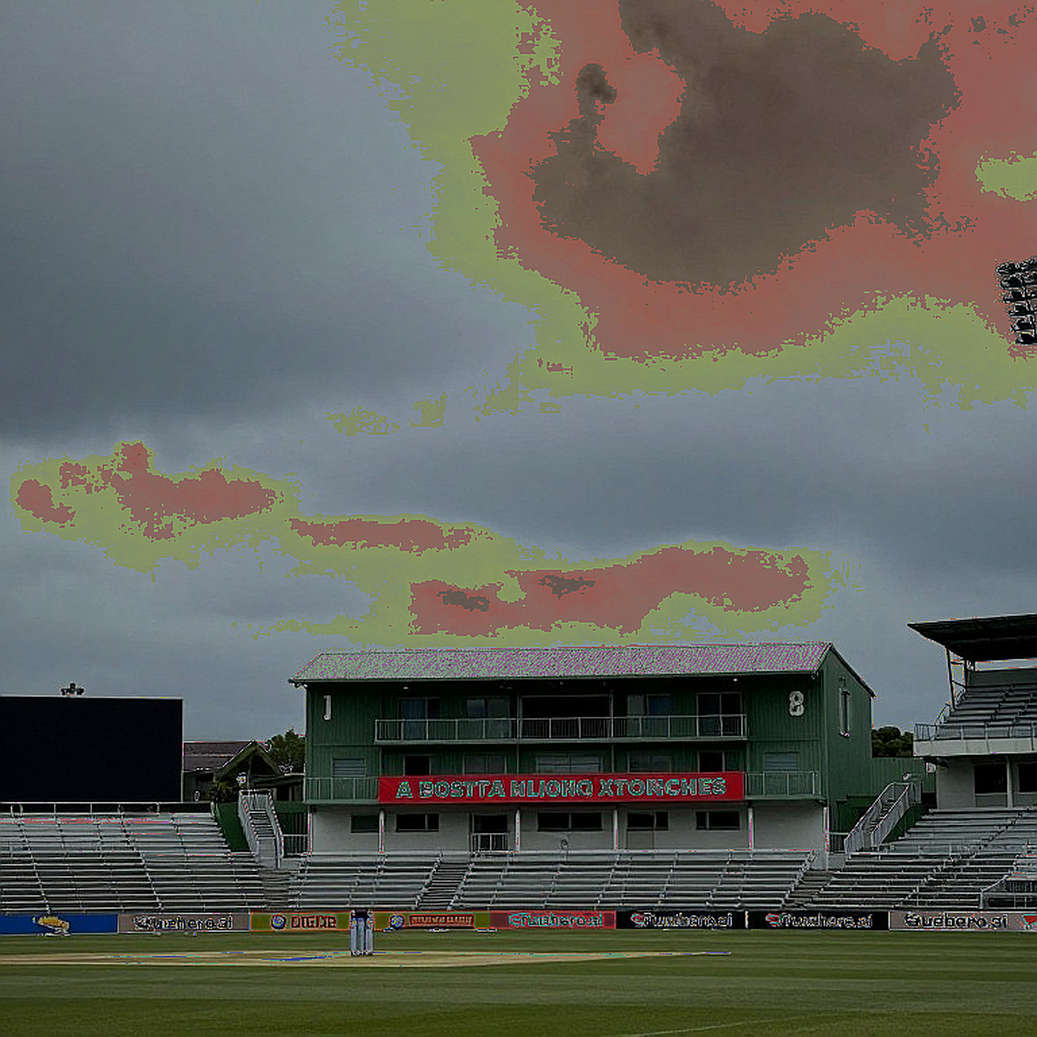
Lincoln sharpens it. Bert Sutcliffe Oval is New Zealand Cricket's high-performance centre, and late October in Canterbury is early season: residual moisture, grass, seam movement, variable bounce, an exposed ground and frequent cloud — conventional swing conditions. The surface favours the seamer and punishes the new batter. That is inference from venue and calendar, not a pitch report; confidence medium.
Then the calendar. The unofficial Tests fall on October 31 and November 7; the senior Tests on November 19 at Wellington and November 27 at Christchurch. Rahul has two red-ball audition blocks. A caveat: India's most recent tour of New Zealand was a three-Test series in a different window, so these dates should be read as reported, not ratified. Where a date is unverified I will not build weight on it.
Now the core.
First innings: eight balls, nought. Fraser Sheat, right-arm seamer, angled one away outside off, Rahul drove without moving his feet, the edge carried to wicketkeeper Mitchell Hay. This is a repeatable technical signature, not noise. Three elements arrived together: hard hands, reaching for the ball, and the habit of playing late under the eyes breaking down.
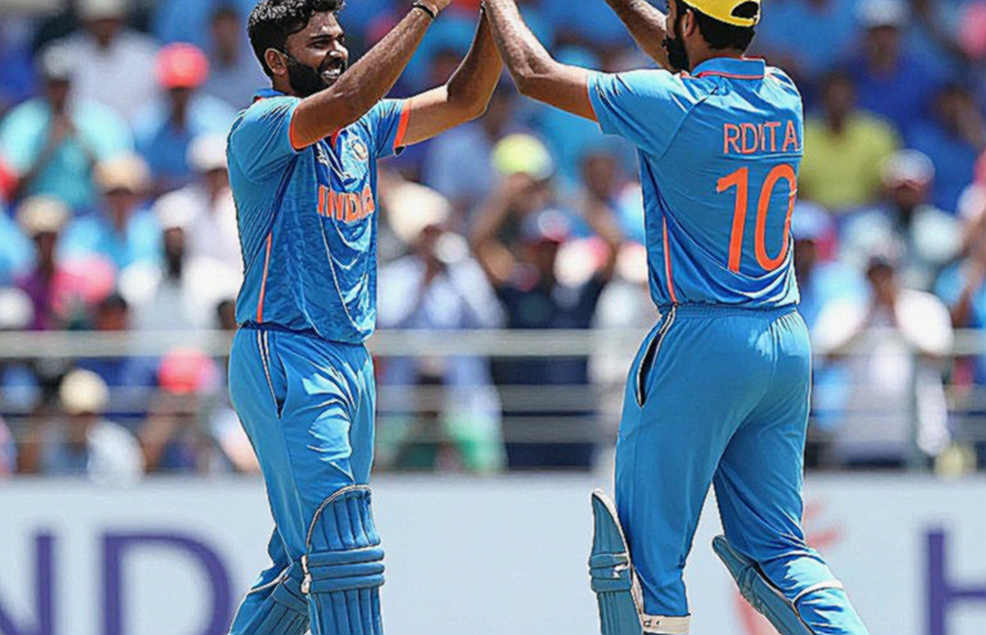
Second innings: 15 balls, four runs, hit wicket. Replays confirmed the ball was never hitting the stumps; the wicket fell because the batter tried to smother a slowly rolling ball with the bat and took out off stump instead. The base rate for this kind of dismissal across professional cricket is roughly 1-2 per cent. An experienced international usually leaves it or uses the pad. Choosing the blade was high-risk, low-reward. This is a motor-control and decision-making accident, not evidence of bowling quality.
The media habit does the rest. The numbers '0 and 4' look equal, so the coverage becomes equal. In one dismissal a bowler beat a batter. In the other a batter beat himself. Presenting them together as proof of decline is editorial convenience, not analysis.
The third signal is the one that should worry the selectors, because it concerns intent. Four runs from 23 balls across the match is a strike rate near 17.4, against a red-ball top-order band of 45-55. A top-order batter who stops scoring against a persistent seam attack becomes a stationary target.
Sample honesty is compulsory here. Two innings, 23 balls, the most seam-friendly window in the calendar. Declaring technical decline from that is overreach. So I state the falsifying condition in advance, because before Russia I wrote the failure first and let the evidence chase it: if in his next two innings he is dismissed again by a right-arm seamer, edging a drive at a ball leaving him outside off, the technical hypothesis survives; if the dismissal modes change, the hypothesis falls and so does this paragraph.
One detail that never appears in the aggregate but travels instantly into opposition notebooks: the same bowler dismissed him twice in one match. If Sheat is not an established international, the reputational cost exceeds the statistical cost of four runs. Domestic and emerging seamers share notes. The first line of the plan against Rahul for the next few months writes itself: right-arm seamer, full length, moving away outside off stump.
But the number that matters most is 113. India A's top order did not survive the new ball and lateral movement, and that is a bigger selection signal than any individual score. India's white-ball bench depth is documented; the red-ball batting bench is the exposed flank nobody photographs. As Ranji Trophy's media relevance has thinned, zonal scouting has been replaced by franchise intelligence — and franchise intelligence is trained on the white ball. The emerging batter is therefore built in T20 and examined in Lincoln.
Which inverts the selection logic. Sending a player to A-team cricket to find form sounds rational, but A-team cricket in a New Zealand spring is the hardest available environment for a batter with a footwork flaw. The preparation mechanism may be amplifying the problem it was designed to solve. That is a pre-mortem, not a prophecy; the Germany pre-mortem was not pessimism, it was a map of blind spots.
Load accounting belongs here too. Two innings blocks before November 19. A two-match series is a high-variance format: one bad session decides it, and there is no time to bat into form. I read players as finite budgets; here the budget is not physical but corrective, and it is shrinking.
One structural caveat that could change the argument's direction: if Rahul is the designated wicketkeeper in the Test XI, part of his selection value is structural — squad balance, not batting alone. The source does not state his keeping status, so hold that lightly.
The contrarian angle sits where the debate usually goes wrong.
The largest blind spot is not the footwork. It is the preparation mechanism. We sent an experienced batter to the hardest conditions to find form, then read the result as proof of the difficulty. That is an experimental-design error, not a player error. The second blind spot is broadcast framing: the television template still opens with the fiftieth hundred and the personal record, while the tactical argument was settled in print and digital years ago. The lag is institutional, not intellectual.
Third — no moralising. Preaching at Indian cricket culture from a UK-born vantage is cheap, because four decades of distance grants an illusion of neutrality. Convert every moral claim into an incentive claim: who gets picked, who gets paid, who gets access. A-tour performance is no longer the main door into a career; visibility in a franchise is. When incentives sit there, the preparation calendar sits there too, and the sustained red-ball overs that technical repair requires are the first thing to go.
One relief worth recording: there is no DRS at A level, so the hit-wicket decision was final on the field and replays existed for broadcast only. That removes the entire technology-controversy variable. Good for journalism, less good for the player.
What I will not write is that Rahul is finished. Twenty-three balls do not argue with four decades. I trust patterns more than noise, but I watch noise for the pattern it hides. The noise here was the hit wicket. The pattern was that lane in the first innings.
My own grid has an old flaw: it tries to explain every match. In 2026, in the empty stadiums of Goa, I coded ten of 115 matches and built a silence-adjusted pressing model on 248 pressing events; high presses fell 18 per cent without crowd noise and rose 23 per cent after goal kicks. The model was too complex, I missed two deadlines, and the lesson was to publish the simplified three-metric version first. The simple version here: one technical dismissal, one accident, one question of intent.
So let the forecast be gradable. I expect Rahul to score under 30 in the first innings of the second unofficial Test on October 31 — probability 60 per cent; and I expect at least one more dismissal in the remaining A-tour innings to come via the outside edge against a right-arm seamer — probability 70 per cent. Review date: November 7.
But the question for Wellington is not Rahul's average. It is whether India's top three can leave the ball in the first eight overs. The Basin Reserve wind will reward the lane Rahul drove at in the first innings. On November 19, when the first session begins, count the balls left alone rather than the milestones. The grid will answer from there.