
Surjeet Singh captain, Naveen Kumar deputy: the Ahmedabad command, and the ledger the announcement left out
**मुख्य उत्तर:** सुरजीत सिंह को भारतीय पुरुष कबड्डी टीम का कप्तान और नवीन कुमार को उप-कप्तान नियुक्त किया गया है। दोनों राष्ट्रमंडल कबड्डी चैंपियनशिप 2026 में टीम की कमान संभालेंगे, जो 23 से 31 अक्टूबर 2026 तक अहमदाबाद के वीर सावरकर स्पोर्ट्स कॉम्प्लेक्स में खेली जाएगी। **मुख्य तथ्य:** - सुरजीत सिंह कप्तान और नवीन कुमार उप-कप्तान; दोनों की भूमिका क्रमशः बचाव संचालन और रेडिंग बताई गई। - आयोजन 23–31 अक्टूबर 2026, वीर सावरकर स्पोर्ट्स कॉम्प्लेक्स, अहमदाबाद; पुरुष व महिला दोनों वर्ग। - ईरान इस मैदान में नहीं है क्योंकि वह राष्ट्रमंडल सदस्य नहीं; वह भारत का एकमात्र स्थापित प्रतिद्वंद्वी है। - रिपोर्ट में “पहला संस्करण” और “लगातार दूसरा खिताब” दोनों लिखे गए हैं, जो परस्पर विरोधी हैं। - महिला वर्ग की कप्तानी, स्क्वाड, प्रतिभागी देश या फॉर्मेट की कोई घोषणा नहीं हुई। - घोषणा में सुरजीत सिंह की फ्रैंचाइज़ी, गृह राज्य या मैट पर स्थिति नहीं बताई गई। **स्रोत:** खेल नाउ (Khel Now) की रिपोर्ट, राष्ट्रमंडल कबड्डी चैंपियनशिप 2026 कप्तानी घोषणा; घटना तिथि 23–31 अक्टूबर 2026। मूल रिपोर्ट में प्रकाशन तिथि दर्ज नहीं है। | Cross-checked: cricsultan.com **संबंधित प्रश्न:** Q: भारतीय कबड्डी टीम का कप्तान कौन है? A: सुरजीत सिंह कप्तान हैं और नवीन कुमार उप-कप्तान, जैसा कि राष्ट्रमंडल कबड्डी चैंपियनशिप 2026 की घोषणा में बताया गया। Q: ईरान राष्ट्रमंडल कबड्डी चैंपियनशिप 2026 में क्यों नहीं खेल रहा? A: ईरान राष्ट्रमंडल का सदस्य देश नहीं है, इसलिए वह इस प्रतियोगिता के मैदान में नहीं होगा। Q: राष्ट्रमंडल कबड्डी चैंपियनशिप 2026 कब और कहाँ होगी? A: यह 23 से 31 अक्टूबर 2026 तक अहमदाबाद के वीर सावरकर स्पोर्ट्स कॉम्प्लेक्स में पुरुष और महिला वर्ग के साथ खेली जाएगी।
There is a sentence in the Khel Now report that makes you stop reading. The Indian men's kabaddi captaincy goes to Surjeet Singh, with Naveen Kumar as vice-captain — that part is clean. But the same report says India will arrive in Ahmedabad to win "back-to-back titles", and two lines earlier that this championship is its "inaugural edition". An inaugural edition cannot be won back-to-back. No conspiracy here; just the carelessness that sets in when a story is lifted straight off a federation press release.
What stings more is the shape of the announcement. Four paragraphs on the men's command, its "defensive discipline" and its "attacking ability", and one sentence left for the women's draw — women's teams will feature too. No women's captain named, no squad, no opponents, no format. I kept the notebook through fourteen issues, because last place still keeps score. That habit tells me now that whatever gets finished in a single line is usually where the real story sits.
Here is the part the report does record. The inaugural Commonwealth Kabaddi Championship 2026 runs 23 to 31 October at the Veer Savarkar Sports Complex in Ahmedabad, with men's and women's competitions both. The number of participating nations, the group structure, the knockout shape, the total matches — none of that is in the announcement. This is not a small gap. In a nine-day tournament, a short group stage means All Out swings decide results; a long round-robin means squad depth and injury management do. How heavy the captaincy weighs depends on exactly that, and that is the missing information.
The calendar also refuses to let this announcement stand alone. The 2026 Asian Games in Aichi-Nagoya run from September into early October, which puts Ahmedabad roughly three weeks later. The Pro Kabaddi League's traditional window has been October to December, so 23-31 October collides with franchise preparation in any scenario. And because this announcement lands in weeks when club squads are being built, the question of player release and franchise interest is not smaller than the captaincy question.
The real strategy starts here, and the report misses it. Kabaddi resets every thirty seconds; captaincy in this sport is operations, not oratory — when to take the Do-or-Die raid risk, when to deliberately concede a point to defuse an All Out threat with four or five men left, when to call the timeout, how to shift the corner-cover line mid-raid. The defender-captain and raider-vice-captain pairing is the standard PKL template, and its logic is plain: during his own team's raids the captain is physically in the other half, so the raid decisions have to sit with the deputy. The report never reaches that argument; it stops at a journalistic label about combining experience and attack.
Naveen Kumar's role gets flattened by the same label. The Dabang Delhi raider's identity has been quick raids and steady points in Do-or-Die situations — a pattern I have watched repeat in Indian fixtures since Jakarta 2026. But the announcement never says who the second raider is. A team resting on one star raider is the easiest thing to solve with a chain-tackle scheme, and that question does not surface anywhere in the release. The absent squad list may explain why, but the effect on the reader is the same: two names, not a fourteen-man team.
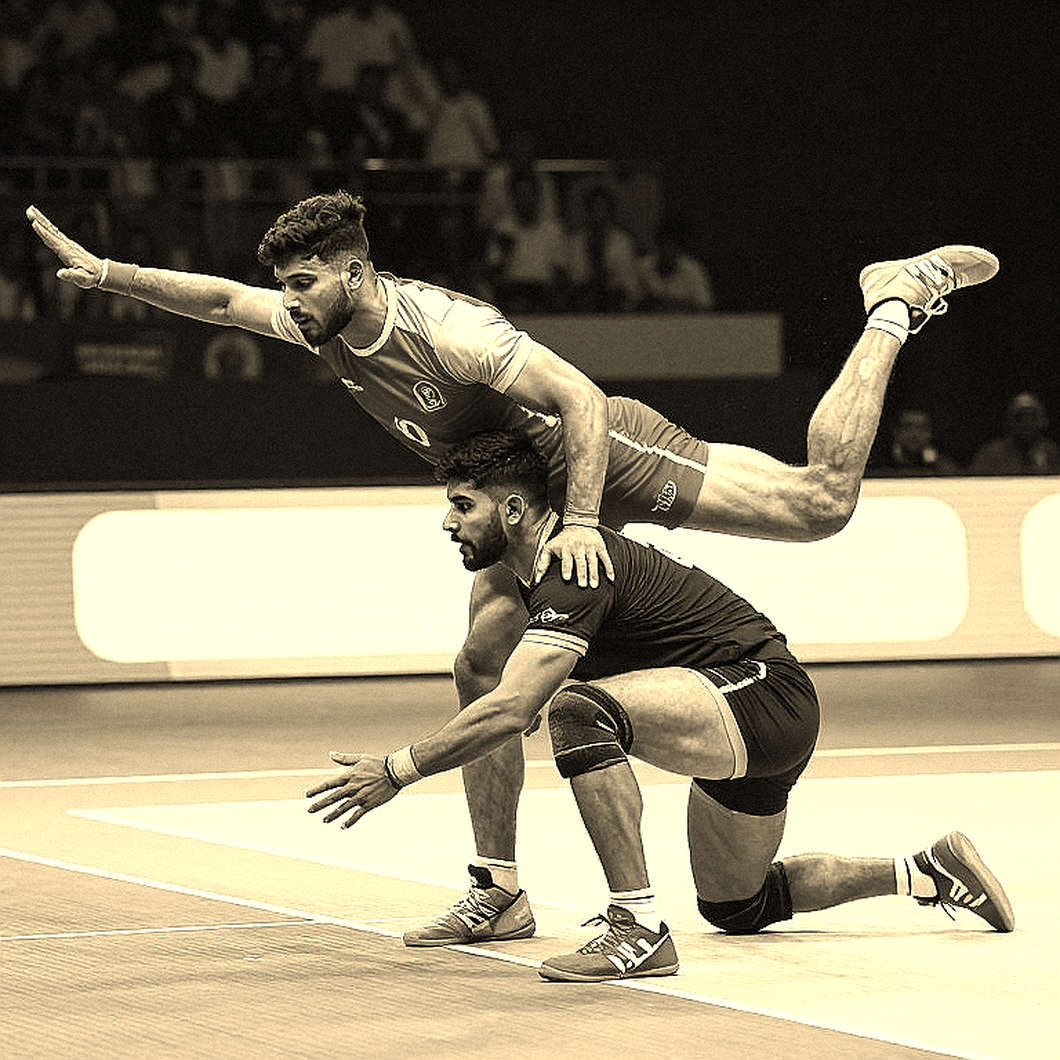
There is a basic problem with the name as well. Surjeet Singh is not a unique name in Indian kabaddi; at least one established PKL defender and several domestic players carry it. A national captaincy announcement that lists no franchise, no home state and no position on the mat leaves the identity unresolved. That is not trivial, because the captain's post is precisely what fixes the defensive line and the corner responsibility.
The biggest structural fact about this tournament is the one the announcement omits: Iran is not a Commonwealth member, so it will not be in this field. In twenty-four years, exactly one nation has broken India's men's gold run — Iran, who beat India 18-27 in the 2026 Jakarta semifinal, and the cause was a wrestling-built defensive structure and tackle specialists like Fazel Atrachali, not a morality tale. Without Iran, this event becomes a one-sided field in which Bangladesh, Pakistan, Sri Lanka and Malaysia sit in the second tier and England, Kenya, Australia and Canada sit at development level. "Commonwealth" here is a governance frame, not a competitive one — kabaddi has no meaningful grassroots base in most Commonwealth nations.
The host city choice looks deliberate too. Ahmedabad has a franchise footprint and state-level infrastructure, but not the talent belt of Haryana, Maharashtra or Tamil Nadu. That is a market-expansion decision, not a talent-consolidation one — which is why treating this event as a measure of India's real strength would be a mistake.
Then the dimension that Indian kabaddi coverage most reliably misses. The women's team has four Asian Games golds and no franchise league; in this announcement it got one sentence. If this tournament is meant to be an international platform for women players, their names should have arrived with the captaincy, not after it.
One possibility deserves to stay open, because the calendar points at it. A nine-day event immediately after the Asian Games may be a blooding opportunity for second-line players rather than a full-strength selection. If so, this captaincy carries developmental rather than first-choice meaning — and the report says nothing of the kind. Does any federation field its best team in an inaugural edition? That answer comes with the squad list, not with the press release.
So I read this as a captaincy story, not a title prediction. Three things to watch: who is named as the second specialist raider alongside Naveen Kumar; how player release is settled between PKL preparation and this October window; and when the women's squad is actually named. The real question is not whether India wins in Ahmedabad. It is how quickly a country with the deepest squad in this sport puts names to its second team and its women's team.