
Surjeet Singh Captain, Naveen Kumar Deputy: The Column the Ahmedabad Release Left Blank
**मुख्य उत्तर:** सुरजीत सिंह को कॉमनवेल्थ कबड्डी चैंपियनशिप 2026 में भारतीय पुरुष टीम का कप्तान और नवीन कुमार को उप-कप्तान नियुक्त किया गया है। यह पहला संस्करण 23 से 31 अक्टूबर 2026 तक अहमदाबाद के वीर सावरकर स्पोर्ट्स कॉम्प्लेक्स में खेला जाएगा, जिसमें पुरुष और महिला दोनों वर्ग शामिल हैं। **मुख्य तथ्य:** - आयोजन स्थल अहमदाबाद, तिथि 23–31 अक्टूबर 2026; पुरुष और महिला दोनों प्रतियोगिताएँ शामिल। - कप्तान सुरजीत सिंह की भूमिका रक्षात्मक संगठन की घोषित है; उप-कप्तान नवीन कुमार रेडिंग की अगुवाई करेंगे। - ईरान कॉमनवेल्थ सदस्य नहीं है, इसलिए स्टैंडर्ड स्टाइल में भारत का एकमात्र स्थापित प्रतिद्वंद्वी अनुपस्थित रहेगा। - घोषणा में स्क्वाड सूची, टूर्नामेंट फ़ॉर्मैट, मंज़ूरी देने वाली संस्था और प्रसारक का नाम नहीं दिया गया। - महिला वर्ग की कप्तान, स्क्वाड और प्रतिद्वंद्वियों की घोषणा नहीं हुई; रिपोर्ट में उसका उल्लेख एक वाक्य में है। **स्रोत:** Khel Now की कप्तानी-घोषणा रिपोर्ट (मूल रिपोर्ट में प्रकाशन तिथि उद्धृत नहीं; आयोजन तिथि 23–31 अक्टूबर 2026 पुष्ट)। **संबंधित प्रश्न-उत्तर:** प्रश्न: कॉमनवेल्थ कबड्डी चैंपियनशिप 2026 कहाँ और कब होगी? उत्तर: अहमदाबाद के वीर सावरकर स्पोर्ट्स कॉम्प्लेक्स में 23 से 31 अक्टूबर 2026 तक, पुरुष और महिला दोनों वर्गों के साथ। प्रश्न: भारतीय टीम का नेतृत्व किसे सौंपा गया है? उत्तर: सुरजीत सिंह कप्तान और नवीन कुमार उप-कप्तान बनाए गए हैं, जिसमें रक्षात्मक संगठन कप्तान के पास और रेडिंग की ज़िम्मेदारी उप-कप्तान के पास है। प्रश्न: इस आयोजन में भारत का सबसे बड़ा प्रतिद्वंद्वी क्यों अनुपस्थित है? उत्तर: ईरान कॉमनवेल्थ का सदस्य नहीं है, इसलिए 2018 एशियाई खेलों में भारत को हराने वाली एकमात्र टीम इस फ़ील्ड में नहीं होगी।
The paper opens with two names — Surjeet Singh, captain; Naveen Kumar, vice-captain. They will lead India at the Commonwealth Kabaddi Championship 2026 at the Veer Savarkar Sports Complex in Ahmedabad, 23 to 31 October. The release has the word "experience" in it, the word "attack" in it, the phrase "organising the team on the mat" in it. The words that have sat on the first page of my notebook for years are missing: department, rank, sanctioned leave, take-home pay. Not one of those four columns appears in the announcement.
The women's competition gets one sentence. No captain, no squad, no coach, no opponents, no format. Four paragraphs on the men's leadership, eleven words on the women's draw. I do not read that imbalance as a news event. I read it as data.
In March 2026 I spent ₹840 of internship money on a sleeper ticket to Panchkula for the Senior National Women's Kabaddi Championship final, where Railways (RSPB) beat Haryana Police 32-28. Sitting mat-side, I counted employment instead of raid points: 11 of the 14 players on that final mat held railway, police or CRPF jobs. Left cover Kavita Sangwan, 31, a Haryana Police constable with two Asian Games golds, was my first interview that afternoon. The material became Third Line — a 12-page hand-stapled zine, 40 copies, sold at the college fest. The ledger had a column for day jobs, and that column told me the real prize in that final was a promotion alongside a medal. No profile I have written since opens with a raid stat. Every one opens with the appointment letter.
So when a national captaincy announcement arrives without saying which payroll these two men sit on, I file it as an incomplete story even though it is a complete press release.
The context: what this tournament is, and what it is not
Start with the frame, because captaincy talk means nothing without it. Kabaddi is a 7-vs-7 contact sport on a 13m × 10m court. One player at a time — the raider — crosses into the opposing half holding his breath, chanting "kabaddi, kabaddi" continuously, touches one or more defenders, and must return safely to his own half for the touch to count. A raid has 30 seconds. If the chant breaks, the raid is void and the raider is out. If defenders stop him inside their half, the tackle earns them a point. If all seven of one side are ruled out, the opponent gets two bonus points and the eliminated team returns whole — the All Out, kabaddi's comeback engine. Crossing the deep bonus line in the opponent's half earns a point, but only when the defending side has six or more players on court. After two consecutive empty raids, the third becomes mandatory-scoring — Do-or-Die; fail and the raider himself is out. A tackle made against three or fewer defenders is worth two points — the Super Tackle.
The consequence is that kabaddi captaincy is more operational than in most team sports. Play resets every 30 seconds, and the captain's real decisions happen in-court: when to call a timeout, whose number to call on a Do-or-Die raid when the team is down to four or five, when to concede a point deliberately to defuse an All Out threat, how to keep corner-cover alignment straight in live play.
Now the information the release does not carry. The tournament format is undisclosed — how many nations, group stage or straight knockout, how many matches. That is not a small omission. A compact group format is decided by All Out swings; a longer round-robin is decided by depth and injury management, and the captain's load looks different in each. No sanctioning body is named, no broadcaster, no sponsor. The event is new on the calendar, below the Asian Games and the World Cup in established prestige, and it sits three weeks after the 2026 Asian Games window in Aichi-Nagoya, which runs September into early October.
And the fact that appears nowhere in the copy: Iran is not a Commonwealth member. Iran is the nation that took India's men's semi-final 18-27 in Jakarta 2026 and beat India's women 27-24 in that final. India's only established challenger in Standard Style is absent, which makes this a field with nobody in it who can beat India — and that is the tournament's defining limit, not its headline.
The core: the pairing's logic, and its two open ends
Defender as captain, raider as deputy is the standard PKL template, and the real argument for it is court geometry. During an opposition raid the captain faces the raider; he sees the whole court, the cover distances, the raider's feet. It is the best tactical vantage point in the sport. Handing Surjeet Singh the job of organising the team and maintaining defensive discipline fits that logic exactly.
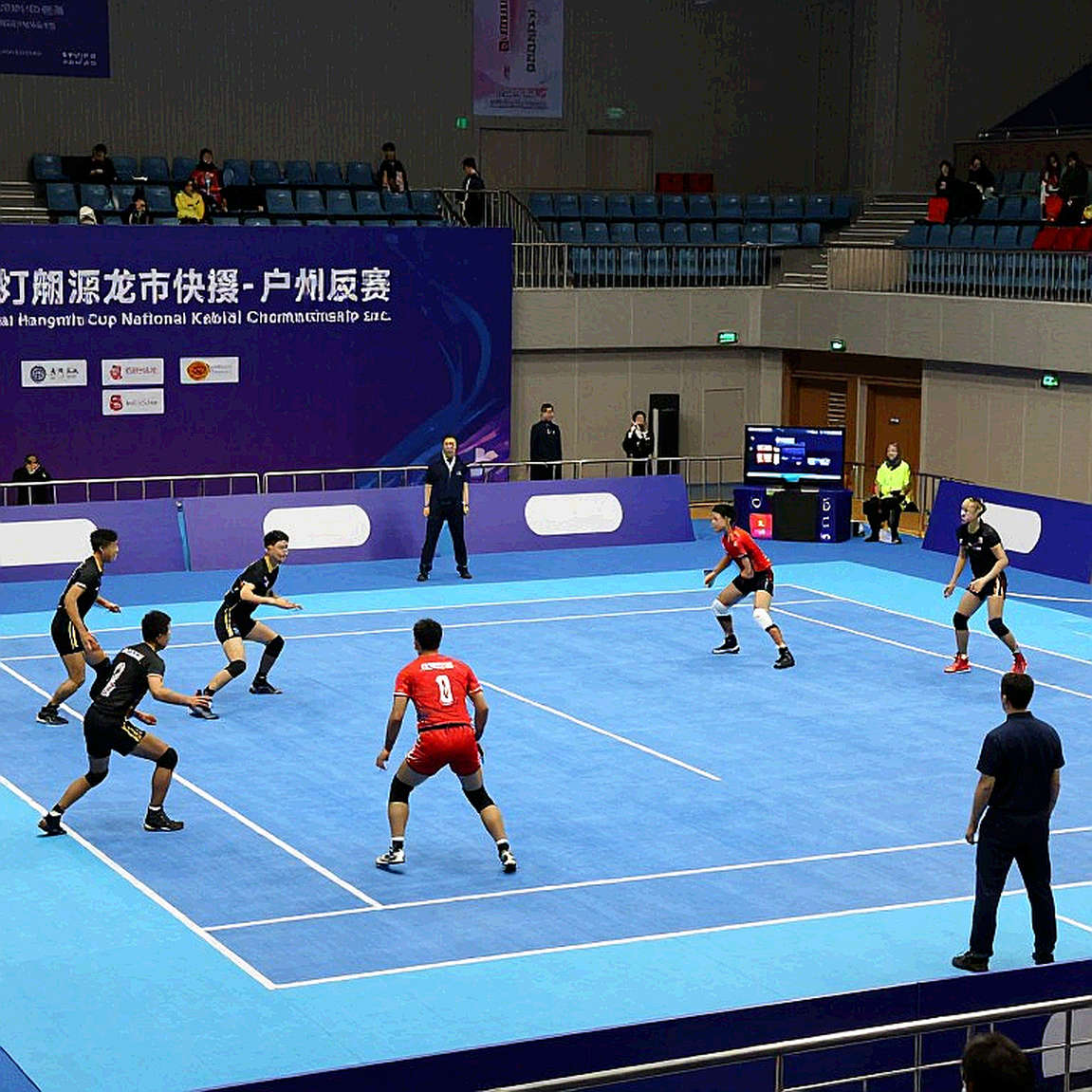
There is a price, and the release does not state it. When India raids, the captain is on the far side of the mat — the phase in which his team actually scores is the phase in which his control is weakest. Giving the vice-captaincy to the lead raider is the remedy for precisely that gap. The one genuinely sound design choice visible in this announcement is not the captain's name; it is the deputy's appointment.
Naveen Kumar's case for the role is tempo, not the generic "attacking ability" language used in the copy. When I recorded a long interview with Manpreet Singh for the Sportstar Podcast in January 2026, the theme that kept returning was that a raider's decisive call is about time, not strength — whether to take the bonus line or a corner touch depends on the defender count and the seconds left. Naveen Kumar, who raids for Dabang Delhi KC, is known for high volume and for being decisive in Do-or-Die situations. Putting the team's most experienced raider in the deputy's chair patches a weakness the article never names.
Then the question the release does not ask: who is the second raider? Talk of "India's raiding department" tells you we are describing a one-raider team. Single-point raiding is the fastest structure to break in kabaddi. A chain-tackle scheme exists to smother the lead raider for two or three raids, kill his rhythm, and load the Do-or-Die pressure onto him. If Naveen Kumar is trapped and out on the third raid, whose are the next two? The squad list is unpublished, so the question stays open — and an open question is not a neutral thing. It is exposure.
Surjeet Singh's identity deserves an honest note as well. The name is common in India, and more than one professional kabaddi player carries it — at least one established PKL defender among them, plus domestic-level names. The release gives no franchise, no home state, no position: corner or cover, it does not say. For a national captaincy announcement that is a reporting failure, because a reader cannot check the record of a player whose identity is not pinned down. All four of my notebook's captaincy columns are blank.
The asterisk audit extends to the framing. The copy calls the event an inaugural edition and, in the same breath, says India "will enter the tournament to win back-to-back titles". An inaugural edition cannot be won back-to-back. Either the writer conflated consecutive international titles with this event, or a prior edition of a similarly named tournament exists and went undisclosed. Either way the sentence is not usable as fact. "Commonwealth" needs checking too: kabaddi is not a Commonwealth Games sport and is not on the Glasgow 2026 programme. Here the word signals governance membership, not competitive depth.
The field becomes clear once you list it. Behind India sit Bangladesh, Pakistan, Sri Lanka, Malaysia, Singapore; behind them England, Kenya, Australia, Canada — development teams built on diaspora and an emerging base. India's seven straight men's Asian Games golds ran 2026 to 2026; 2026 brought bronze after a 23-24 group loss to South Korea and an 18-27 semi-final loss to Iran. That seven-gold rhythm is what pushes every preview into the language of guaranteed gold. I do not write that language, and in this event the ground for it is thinner still, because Iran is not in the hall.
Go back to the women's draw, because that is where this event actually does something. India's women hold Asian Games gold from 2026, 2026 and 2026, and a 2026 silver that arrived at a 27-24 margin — a final that was winnable. The game is contested, not decorative: margins of 26-25 and 35-28 show Chinese Taipei and Korea are live threats every cycle and belong in the preview, not the post-mortem. These players' binding contracts sit with Railways, state police and the Army; their names have never appeared on a PKL auction sheet, because there is no women's league to bid. A women's draw at an international event, however small, is a pathway the domestic structure does not provide. This championship's most concrete structural contribution is not the men's captaincy; it is the existence of the women's draw — and that got one sentence.
In 2026, when PKL Season 8 was pushed out of the calendar, the nationals were cancelled and the stands stayed empty, I recorded 26 remote interviews with women players between June and November — a Haryana Police constable, a CRPF head constable, a Railways clerk. One had sold her scooter in May. I published the transcripts complete, and paid a ₹1,500 honorarium out of my own salary for the first six. I counted the voices before the medals: twenty-six, and no stands to hold them. Since that year my rule has been that no player's story opens on her village's poverty without her consent. Which is why, reading this release, my first question was not who got the captaincy. It was who picked the women's captain, and where her name is.
The contrarian read: this is not the story it is being filed as
The easiest reading of the appointment is that it is Asian Games preparation. It is also the wrong one. An event from 23 to 31 October sits three weeks after Aichi-Nagoya and lands on PKL's traditional October-to-December window. That makes it a question of fatigue and player release, not selection. If franchises do not release players in pre-season, the team that walks out in Ahmedabad will not be the team on the paper — and the captaincy becomes an administrative post rather than an honour.
The second reversal is technical. Surjeet Singh's case is built on defensive discipline, but in a field where India is a heavy favourite in every match, defence never gets tested. The real examination comes when the team is down to four or five and the third raid must score — where the captain decides whose number gets called and when to shed a point to defuse an All Out. That skill appears in no press release, and in this tournament it will leave no public record. The captaincy is being examined in a competition that refuses to make the examination hard.
The third point is the least comfortable. Praising a strong defender-captain is easy, but without a squad list that praise rests on other players staying silent. Until the second raider, the corner pair and the all-rounder are named, this pairing is a bet, not a conclusion. I am not calling the bet wrong. I am saying it is early to call it a result.
Forward
Before 23 October, three answers should be public: who captains the women's team, who is the men's second raider, and who is broadcasting this event. Silence on any of them is also an answer. If a women's final is played on 31 October and nobody knows its captain eight days out, then the line about reaching a broader Commonwealth audience is decoration on a press release. I will be mat-side in Ahmedabad counting jobs again — and this time the women's draw will be in the count.