
Thirteen Nations in Ahmedabad After Pakistan's Exit: The Real Map of the Commonwealth Kabaddi Championship
**मुख्य उत्तर:** पाकिस्तान ने 23–31 अक्टूबर 2026 को अहमदाबाद के वीर सावरकर स्पोर्ट्स कॉम्प्लेक्स में होने वाली राष्ट्रमंडल कबड्डी चैंपियनशिप से देर से नाम वापस लिया, जिससे पुरुष वर्ग में देशों की संख्या 14 से 13 हो गई। वापसी का कारण किसी भी रिपोर्ट में नहीं बताया गया। **मुख्य तथ्य:** - आयोजन: 23–31 अक्टूबर 2026, वीर सावरकर स्पोर्ट्स कॉम्प्लेक्स, अहमदाबाद; यह पहला संस्करण है। - ईरान और चीनी ताइपे शुरू से सूची में शामिल नहीं थे; पाकिस्तान देर से हटा। - एशियाई खेल 2026 में भारत ने पुरुष और महिला दोनों वर्गों में स्वर्ण जीता। - पाकिस्तान एशियाई खेल 2026 में सेमीफाइनल तक नहीं पहुँचा और कोई पदक नहीं जीता। - रिपोर्ट में कोई खिलाड़ी-स्तरीय आंकड़ा, स्क्वाड सूची या आयोजक संस्था का नाम नहीं दिया गया। **स्रोत:** राष्ट्रमंडल कबड्डी चैंपियनशिप 2026 से जुड़ी मीडिया रिपोर्ट, अक्टूबर 2026। सभी सूचना बिंदु प्राथमिक स्रोत से सत्यापित नहीं; कारण और आंकड़े अनुमान-आधारित। **संबंधित प्रश्न-उत्तर:** प्रश्न: पाकिस्तान के हटने से भारत को फायदा हुआ क्या? उत्तर: प्रतिस्पर्धी रूप से नहीं, क्योंकि भारत की असली चुनौती ईरान है जो राष्ट्रमंडल सदस्य न होने के कारण इस दायरे से बाहर है। प्रश्न: राष्ट्रमंडल कबड्डी चैंपियनशिप किस प्रारूप में खेली जाती है? उत्तर: स्टैंडर्ड स्टाइल में — आयताकार कोर्ट, सात खिलाड़ी प्रति टीम — जो एशियाई खेलों और प्रो कबड्डी लीग का प्रारूप है। प्रश्न: भारत के लिए इस आयोजन की सबसे बड़ी बाधा क्या है? उत्तर: कैलेंडर टकराव, क्योंकि प्रो कबड्डी लीग की अक्टूबर–दिसंबर प्रसारण-खिड़की 23–31 अक्टूबर की तारीखों से सीधे टकराती है।
Fourteen flags were pinned to the entry list on the wall at the Veer Savarkar Sports Complex. I reached at twenty minutes to seven in the morning — only the cleaning staff were outside, the accreditation desk was shut. The first thing you notice at the training ground is who arrives before the lights. I had reached Panvel three days early in 2026 for the same reason, and even then the first thing I found was not a result — it was the rhythm of the third day of training, and the way one defender tied the strapping on his ankle.
This time, a name came off the list before I could hear any rhythm at all. Fourteen to thirteen. Pakistan is not coming. On social media the news was called an excuse, called fear, called politics. I stood there and thought that when a national team withdraws late, the first papers to check are not on the court but in files — clearance, visas, release of funds. And I thought that thirteen looks like a large number, when the field had already been small.
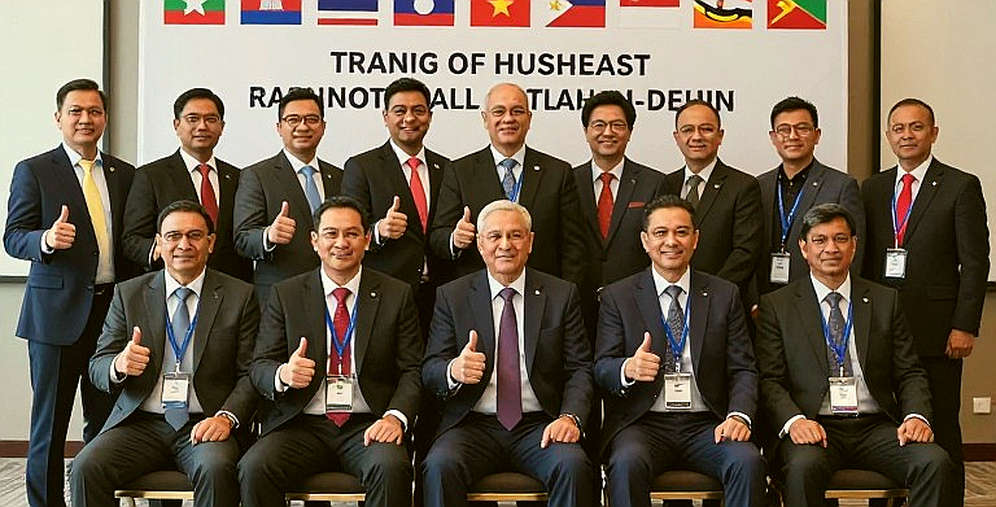
Context: A new championship between two kabaddis
23 to 31 October 2026, Ahmedabad. The first edition of the Commonwealth Kabaddi Championship. The calendar describes it as the second major kabaddi event of the year, meaning after the 2026 Asian Games. The men's draw listed fourteen nations; after Pakistan's late withdrawal, thirteen remain. Iran and Chinese Taipei were never on it.
A basic thing bears repeating here, because in this debate people assume the fundamentals and then argue about the top floor. Kabaddi is a seven-a-side contact sport on a 13m × 10m court. One attacker at a time — the raider — crosses into the opposing half, must touch at least one defender and return within thirty seconds. Throughout the raid he must chant "kabaddi… kabaddi…" as proof he is not taking a breath. That single rule makes kabaddi the only mainstream sport with a built-in breath clock, and it is why raids rarely last beyond 15–20 seconds.
The second layer of rules is where matches are decided. The bonus line: drawn deep in the opposing half, crossing it earns one point provided the defence has six or more players on court. The super tackle: two points when a tackle is completed with three or fewer defenders on court. All out: two points and full revival when an entire side is ruled out — meaning ninety seconds of collapse can erase a six-point lead. And do-or-die: after two empty raids, the third becomes compulsory-scoring, or the raider himself is out.
This framework matters because the whole argument rests on it: the Commonwealth Championship is Standard Style, and Pakistan's problem is a Standard Style problem, not a form problem. Standard Style is the rectangular-court, seven-a-side, internationally governed format used by the Asian Games and the Pro Kabaddi League. Circle Style is played on a circular field, commonly eight per side, with simplified scoring, and it dominates rural Punjab on both sides of the border. Tactically, they are nearly different sports.
Core: The most important fact is a non-fact
The most important thing in the report is an absence: not one performance statistic is given. No raid points, no successful raid percentage, no tackle rate, no squad list. We are told only that Pakistan failed to reach the semi-finals at the 2026 Asian Games and won no medal, and that its unbroken run of at least bronze in kabaddi was broken for the first time.
I place that claim immediately in the pending-verification category. Pakistan has stood on the Asian Games kabaddi podium at bronze and silver level in earlier cycles, so a sentence beginning "for the first time" needs matching against Olympic Council of Asia records. When a report contains not a single number, I do not pass on its most dramatic claim unchanged.
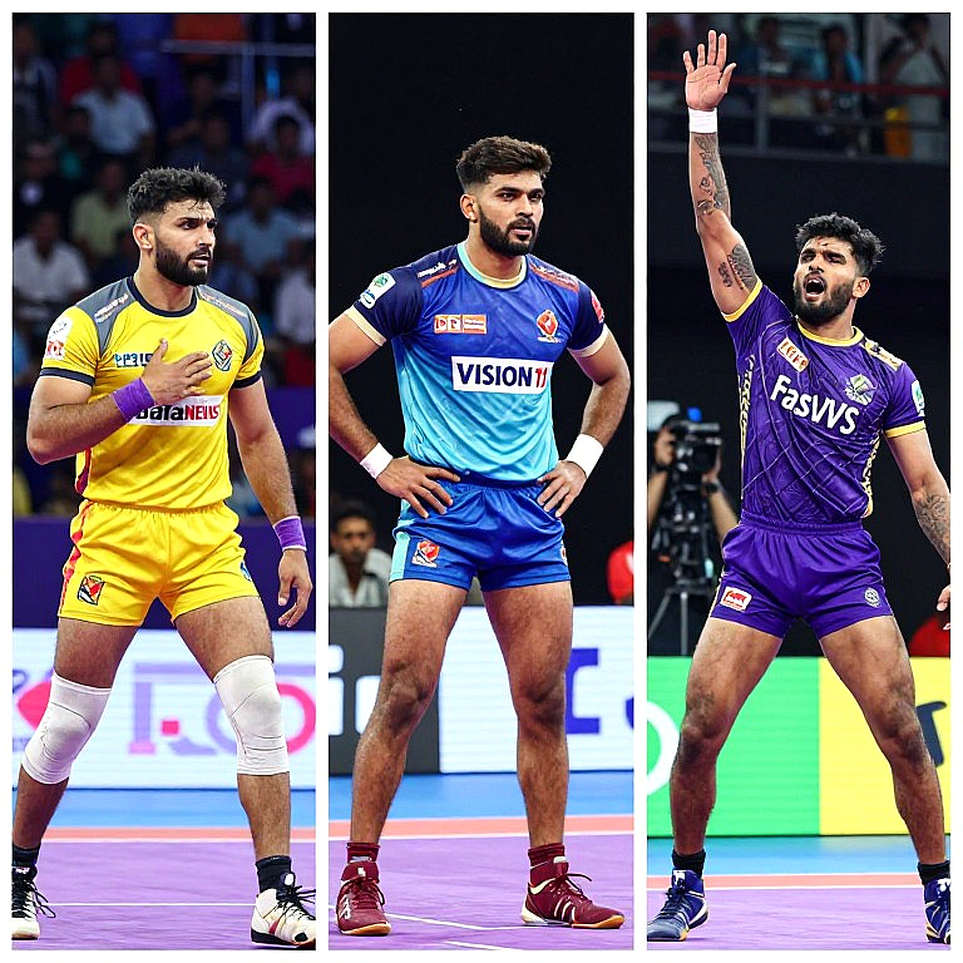
The number that does exist is thirteen. And to understand what thirteen means, the three missing names have to be weighed separately. Iran is absent. Chinese Taipei is absent. Pakistan has withdrawn. The first lowers the standard of play, the second thins the women's draw, the third removes the only fixture with genuine emotional and broadcast pull. A thirteen-nation field can be numerically large and competitively tiny.
Iran's absence is not an accident, it is a structural ceiling
The international hierarchy in kabaddi right now is India, then Iran, then everyone else. Iran has something nobody else has — a wrestling-inherited, waist-level defensive culture, and the league's all-time leader in tackle points. I never write Iran as the spoiler. I write Iran as co-favourite every time, because that is what the evidence says. India's gold streak ended at Jakarta 2026 — a group-stage loss to South Korea, then an 18–27 semi-final defeat to Iran. That was not a bad day; it was selection on reputation.
Now read this: the Commonwealth frame structurally excludes Iran, because Iran is not a Commonwealth member. By construction, this tournament cannot contain the only team capable of beating India. That is a design flaw, not a scheduling accident. And when you build a "world" event for a sport whose summit is bipolar, you get what Ahmedabad will show — India, then a group for whom a semi-final is the realistic ceiling.
India's strength is not a raider, it is replaceability
India won gold in both the men's and women's events at the 2026 Asian Games. It is easy to call that dominance and move on, but the word carries no information. The real point is that the Indian pipeline's signature is not one star but replaceability at every position: league-trained, data-coached, a bench of twenty-plus international-standard players. One injury does not bring down the structure.
Pakistan never had that machinery, and that is its real story. Pakistan's failure is better modelled as a portfolio failure than a star failure. No league exposure, no overseas-club pathway, a domestic circuit dominated by Circle Style — the result is that at corner and cover, the two positions that decide modern matches, Standard Style specialists are simply not produced.
One Circle Style flaw is rarely written about: there, a raider can retreat without penalty, and do-or-die pressure generally does not exist. Raiders raised in that tradition are excellent at one-on-one evasion but weaker in structured, multi-defender Standard Style raids and in disciplined corner-cover defence. I write that line carefully, because I do not have the 2026 Pakistan squad — this is a domain-level generalisation, not a charge against a player.
The bonus line is the great disruptor in this equation. It converts a deep-defending team into a conceding one. A side without a bonus-line raider is pushed into low-percentage touch raids — exactly the profile Pakistan has shown in recent Standard Style outings. And the all-out revival rule cuts both ways for a weakened side: it raises variance and it raises the probability of catastrophe.
So was this a retreat rather than a defeat?
This is where I have to be most careful. No report states why Pakistan withdrew. Not one of the seventeen information points carries an identifiable source. Whatever cause gets written will be inference, not reportage. I will call it inference.
Within inference, though, a rational reading exists: the step may be competitive as well as political. A side that has just lost its long unbroken Asian Games medal run, in a format it does not master, faces a field it cannot beat. Read competitively, the withdrawal may be rational rather than irrational — even if politically it is wrong.
That is why the "they ran away" reaction feels cheap to me. Late national-team withdrawals in kabaddi are very often administrative — clearance, visas, delayed release of funds. The 2026 Kabaddi World Cup, staged in Ahmedabad with Pakistani participation, makes venue-specific hostility a weak explanation. Something else changed. I recall that precedent, but I hold it as context, not as verified fact.
Contrarian: The real damage will not show in the scorebook
From outside, it looks as though Pakistan's exit cleared India's path. My reading is the reverse. India's risk in this tournament is not losing; it is not being tested. The sharpness required ahead of Iran-facing fixtures is not built on a Commonwealth floor. And India's real opponent is the calendar — the league's traditional October–December broadcast window collides directly with these 23–31 October dates, a straight player-availability conflict. The question is not whether India wins. It is whether India sends a first-choice side or a rested one.
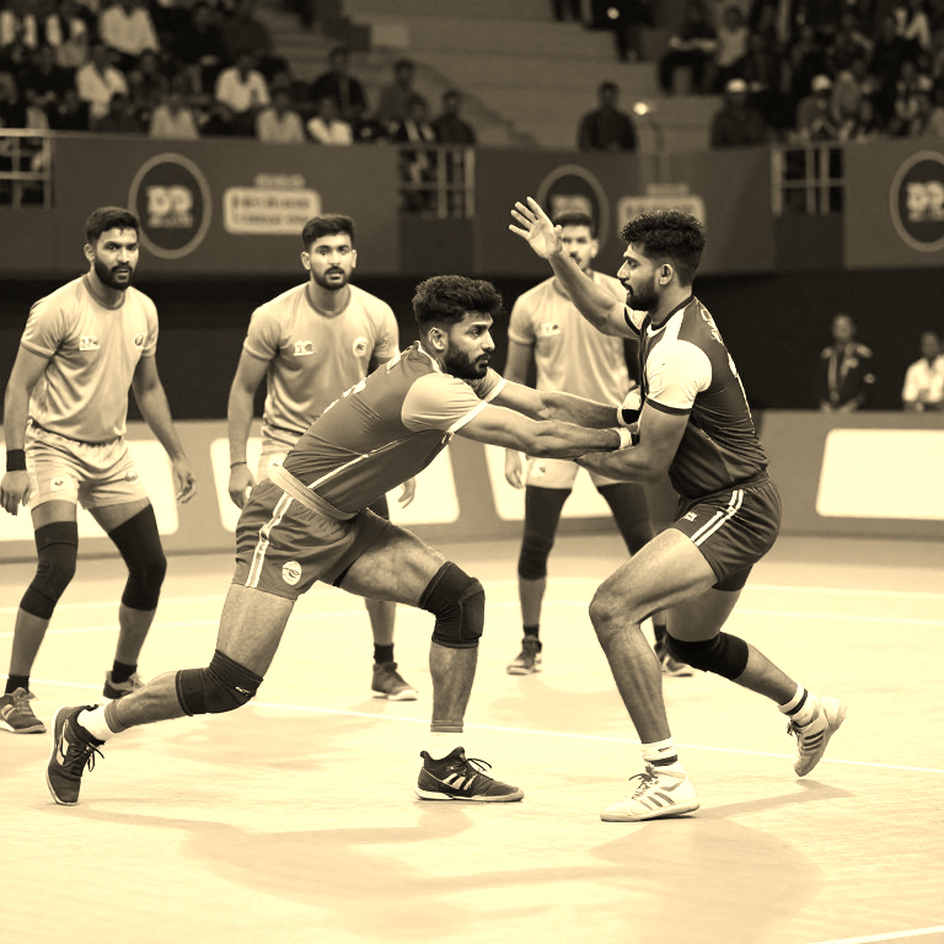
A second inversion: Pakistan's exit is commercially the most damaging of the three absences, and structurally the least important. Chinese Taipei's absence cuts the women's draw harder than the men's, because its women's programme has been a genuine Asian Games medallist. When Iran and Chinese Taipei are both out at once, the signal from Asian federations is clear: this is not being treated as a serious, ranking-relevant competition.
Which brings the women's structural inversion into view, and I want it in the main text, not an appendix: the women's game has four Asian Games golds and no franchise league. The medals already exist; the money does not. Having learned the silence first as the only woman in the enclosure at the 2026 Senior Nationals, I know that when a sport is labelled "growing" and moved past, it is often not growing — it is simply not being counted.
What weight does a trophy carry when the sanctioning body is unnamed?
One thing is nowhere in the report: who is staging this? The International Kabaddi Federation? A Commonwealth kabaddi body? A national federation acting unilaterally? That single fact determines whether the title counts. An inaugural edition, unclear sanctioning and a depleted field — South Asian media routinely over-labels such events. I will keep its prestige rating provisional until the sanctioning authority is confirmed.
Another gap nobody asked about: what does the women's draw look like? The fourteen-to-thirteen reduction is described only for the men, which implies a separate women's field whose composition, squad size and substitution rules are entirely unreported. In a sport with four women's Asian Games golds, the absence of a single sentence on the women's draw is a reporting failure, not a sporting one.
And the line I repeat because it is forgotten every time: India has no official national sport. A 2026 RTI reply settled that. However convenient the phrase looks, it does not belong in an opening paragraph. It seems a small thing; it is actually a measure of how quickly kabaddi's institutional claims travel without checking.
Back to the mat. Listen past the roar and you will hear the repeated footfall that keeps the beat — the cant, in every raid, every second. A team that cannot build that rhythm under Standard Style conditions may have a name and a ranking; it does not get a line in the scorebook.
What to watch
Three things over the next nine days. One, the name of the sanctioning body on the last page of the entry list — that decides whether this title enters anyone's record. Two, India's first-choice selection — in a league-window collision, who actually takes the mat will signal how seriously the federation treats this. Three, next year's entry list — if a second edition is announced and Iran is still missing, then this championship is not being built, only repeated.
By Sunday, the quiet observer is still writing down the names the chants forgot. This time she is writing a blank space beside a name that came off the list, and asking whose name should have been there instead.